


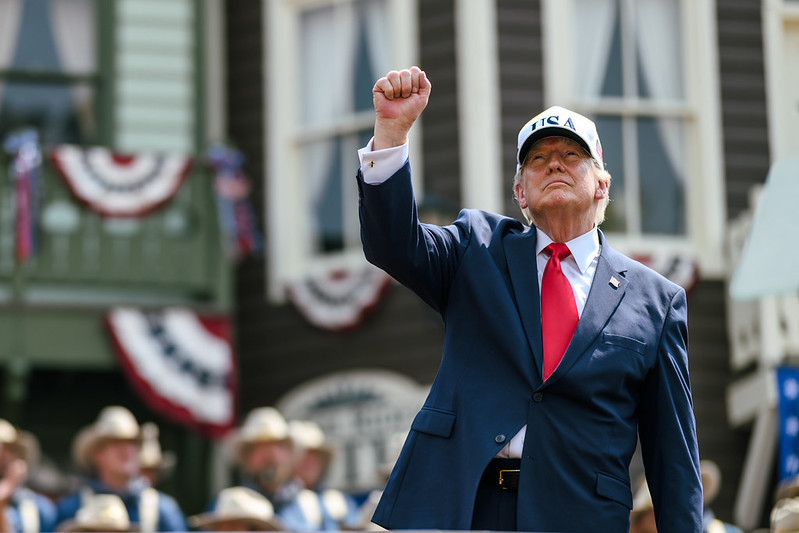
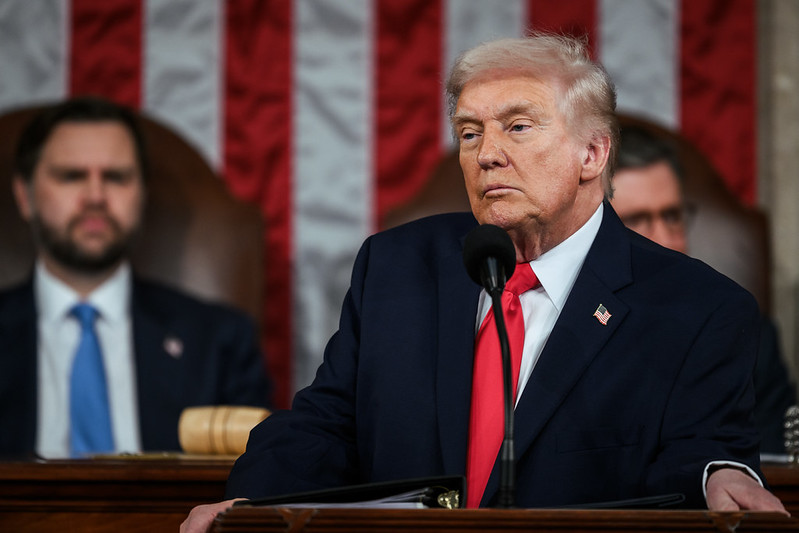
In open Congressional testimony, Assistant Secretary of State Michael DeSombre clarified that the pending US$14 billion arms package to Taiwan does not depend on negotiations with China and remains guided by the longstanding “Six Assurances,” which pledge not to consult with Beijing on arms behind Taipei’s back. Picture source: The White House, July 1, 2026, flickr, https://www.flickr.com/photos/whitehouse/55369695002/in/album-72177720334515709.
Prospects & Perspectives No. 38
Washington Reassures (and Worries) Taiwan
After months of contradictory and ambiguous statements, the Donald Trump administration two weeks ago finally clarified its position on U.S. arms sales to Taiwan. In open Congressional testimony, Assistant Secretary of State Michael DeSombre clarified that the pending US$14 billion arms package to Taiwan does not depend on negotiations with China and remains guided by the longstanding “Six Assurances,” which pledge not to consult with Beijing on arms behind Taipei’s back.
DeSombre’s endorsement was significant because President Trump has been rather circumspect on the issue. During Trump’s visit in May to Beijing to meet with Chinese leader Xi Jinping, Trump said “I made no commitment either way” when pressured privately by Xi on the historically large arms sale. His response suggested he had postponed it only to create a positive environment for the summit and that the weapons package may still be forthcoming. In comments that surely rattled Beijing, Trump further mused that he might break with precedent and speak directly to Taiwanese President Lai Ching-te before reaching a final decision, noting “I have to speak to the person that right now is, you know, you know who he is, that’s running Taiwan.”
Reassurances and conflicting statements
Trump also made some highly concerning statements for Taipei, both before and after the summit. For example, prior to boarding his flight for Beijing, Trump stated that he would raise U.S. arms sales to Taiwan with Xi — a brazen and blatant violation of the Reagan-era “Six Assurances” and likely a violation of the spirit if not the letter of the Taiwan Relations Act (TRA) of 1979 that seeks to ensure the island-nation’s security in the face of mounting Chinese threats. Later, after the summit, Trump said in an interview that U.S. arms sales to Taiwan were a “very good negotiating chip for us,” suggesting that Washington’s commitment to Taipei is dependent on the state of U.S.-China competition and thus arms sale packages could be curtailed or eliminated if Trump and Xi made headway.
When asked by the U.S. House of Representatives Committee on Foreign Affairs subcommittee in late June to confirm whether advancing the arms sales depended first on talks with Beijing, DeSombre responded “correct,” adding “I think we can assure you that whenever we meet with China, they raise the questions of Taiwan and Taiwan arms sales … So, it’s something that is always discussed with them, but that is not in any way a deviation from the Six Assurances.”
His statement was aimed at putting all the confusion to rest. But in reality, the issue of U.S. arms sales is just the tip of the iceberg in terms of this administration’s credibility gap on supporting Taiwan.
Blaming the victim
In another alarming comment after the summit, Trump, for example, blamed recent cross-Strait tensions squarely on Taiwan, not China. He ignored Beijing’s rising aggression toward Taiwan, including routine military incursions into Taiwan’s air defense identification zone (ADIZ) and Chinese military drills that at times have encircled the island and even fired ballistic missiles near it, and instead he came up with a scenario devoid of facts. Trump said: “I’m not looking to have somebody go independent,” suggesting, erroneously, that Lai was pushing an independence agenda in Taiwan. To the contrary, Lai, similar to his Taiwan-centric predecessor Tsai Ing-wen, has assiduously avoided the sensitive issue of sovereignty.
Trump further suggested that the U.S., especially within the context of the ongoing war against Iran, might not be in a good position to help defend Taiwan. He argued “And, you know, we’re supposed to travel 9,500 miles to fight a war. I’m not looking for that. I want them [Taiwan] to cool down. I want China to cool down.” However, Trump has repeatedly expressed frustration that Taiwan remains the global hub for semiconductor manufacturing — essential components for AI and a top priority of the administration — which make the island geostrategically valuable even when he would rather ignore it.
After his meeting with Xi, Trump remarked that all semiconductor manufacturing should leave Taiwan for the U.S., because “it’s a heated situation.” This type of comment should convince Taipei to keep its top-tier status in semiconductors, if only to preserve American attention during Trump’s tenure. Indeed, Trump’s National Security Strategy exclusively refers to Taiwan from an economic and commercial lens rather than as a fellow democratic state worthy of assistance against a ruthless authoritarian regime, suggesting that once Taiwan’s economic value is diminished, then the U.S. commitment will accordingly drop.
For his part, Secretary of State and National Security Adviser, Marco Rubio, argued just after the Trump-Xi summit that “U.S. policy on the issue of Taiwan is unchanged as of today and as of the meeting that we had here today.” He added that “It would be a terrible mistake” for China to pursue reunification “by force or through any coercive means,” expressing continuity with past U.S. statements and actions.
But of course, in this administration — as in any administration but especially this one — the only voice that truly matters is arguably that of the president. And Trump has made himself abundantly clear: he wants to have a better relationship with China, and seems more than willing to sacrifice certain aspects of the U.S.’ relations with Taiwan, such as arms sales, for something of at least equal or greater value. He seems to see little intrinsic value in Taiwan other than as a bargaining chip against Beijing in wider U.S.-China competition — a stark departure from how every past administration, including Trump’s first, treated Taiwan.
Conjugating with uncertainty
Taiwan must sense the gravity of the moment, but has tried to play it cool. Following the Trump-Xi summit, Taipei released a statement lauding Trump for his “continued support for cross-Strait security since his first term” and expressing the need for “close cooperation between Taiwan and the U.S.” in future. In a recent interview, Taiwan’s envoy to the United States, Alexander Tah-ray Yui, noted: “I don’t feel any concern that we’re being sort of traded off to the Chinese in any way. There’s lots of things going on between the United States and Taiwan, not only the security aspect, but also on trade, investment, science and education.” Indeed, Taiwan is hoping that its recent trade and investment deal with the U.S. and things like its increased defense spending might serve as a check on Trump’s worst instincts.
But the damage may already have been done. Trump’s recent comments fuel the view that he is unreliable when it comes to defending Taiwan, and that he wants a better relationship with Beijing. He is willing to blame and leverage Taiwan to get what he seeks, even if he, at times, seems to be committed to maintaining the status quo in the Taiwan Strait. Indeed, it’s fair to wonder whether Trump is just bluster and that no amount of reciprocation from China would suffice, given the high risks of selling out Taiwan. In the immediate term, it remains unclear whether Taiwan will actually receive its arms package, and if so in ways that do not violate the Six Assurances. The silver lining for Taiwan, however, is that senior officials around Trump — namely DeSombre and Rubio — still believe that the U.S. should continue to provide arms to Taiwan based on the same pre-Trump 2.0 criteria. Of course, much remains to be seen, and actions speak louder than words.
For now, at least, this is a new and potentially precarious position for Taiwan. Trump is suggesting that Washington’s commitment to Taipei is decreasingly a core strategic principle, and that this could intensify as he seeks accommodation with Beijing. Still, while Taiwan could conceivably be sacrificed at the altar of American interests, Taiwan has also proven quite a valuable asset within that same competition, suggesting that the island-nation is safe even during Trump’s tumultuous tenure in office.
(Derek Grossman is Professor of political science and international relations at the University of Southern California.)
Related Content
Implications of the U.S. Tariff Policy on Global Economics and Taiwan’s Response
President Trump’s National Security Strategy and Tensions Across the Taiwan Strait
The Honduran Presidential Election: Impact on Ties with Taiwan
Boycotts, Power Politics, and the Future of the G20
Trump and the Axis of Disorder
Second Thomas Shoal Redux and Beijing’s Strategic Limitations
Reading Korea’s Early Autumn Winds: Trump Abruptly Scales Down a Major Joint Exercise
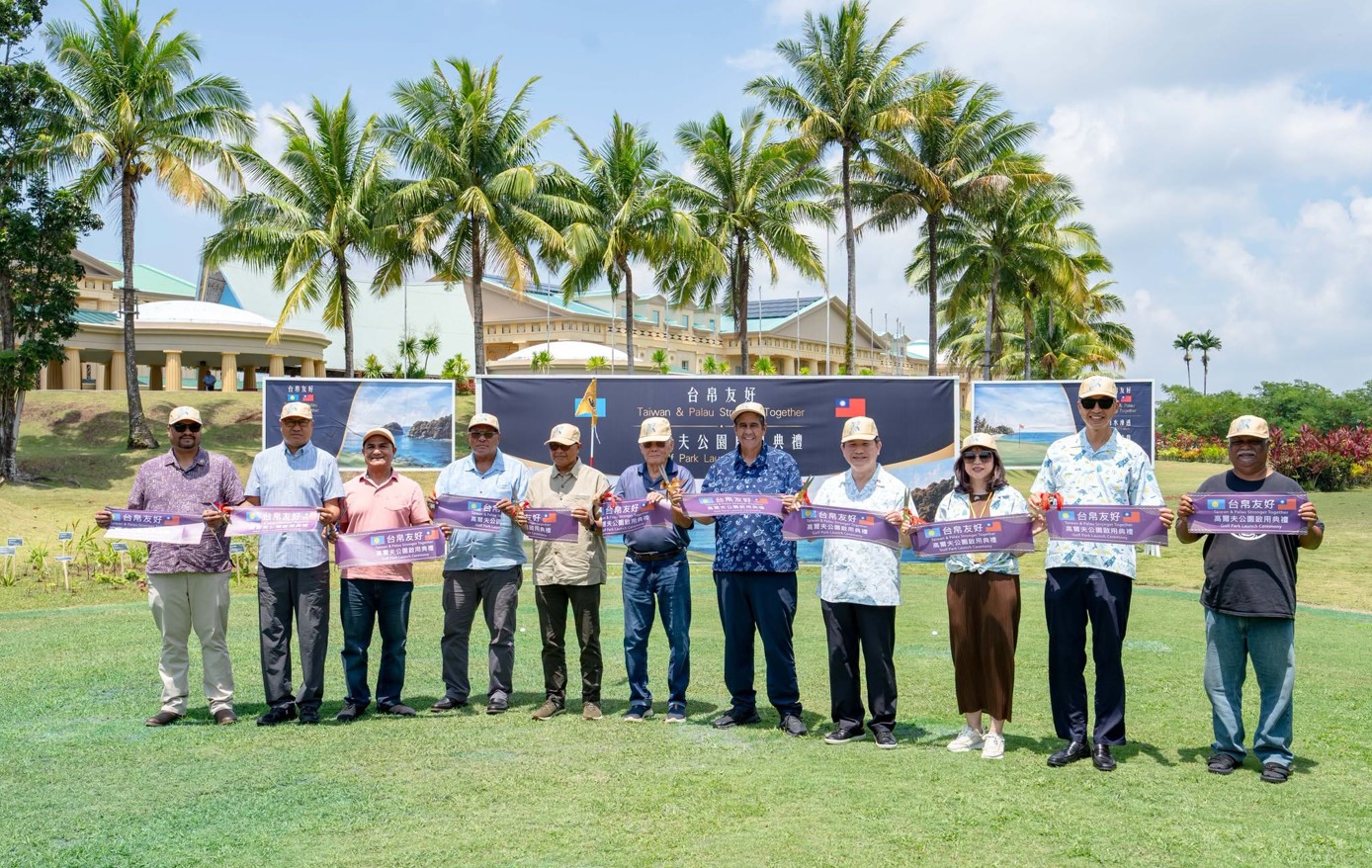
The Pacific Islands Forum’s Leaders Meeting in Palau: Steering a Course Between Charybdis and Scylla?
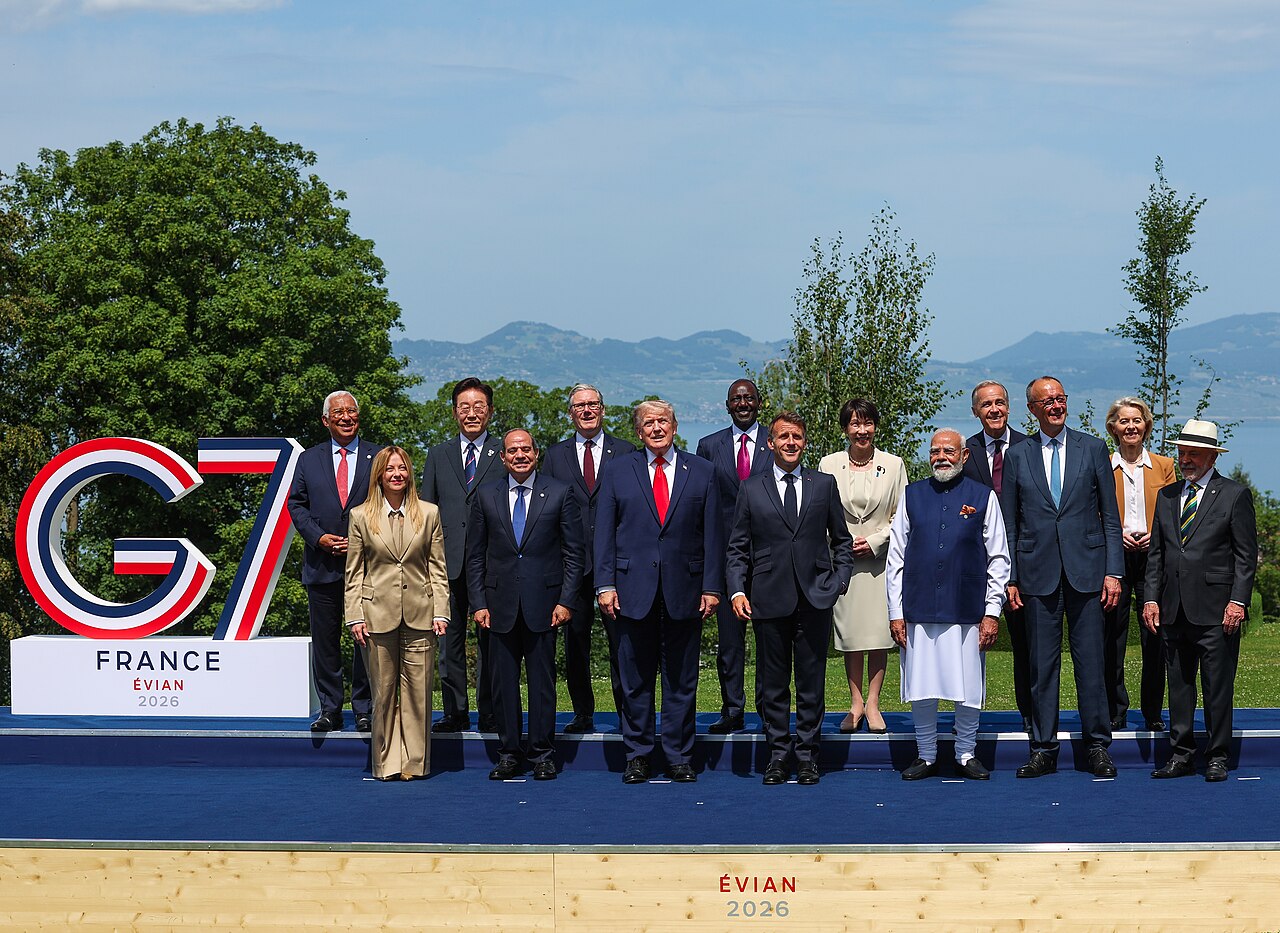
The G7 Leaders’ Summit in France: An Unexpected Success
What Does the U.S. War Against Iran Mean for the Indo-Pacific?
The U.S. Supreme Court Rules on Trump’s Tariffs: What Does This Mean for Taiwan?
A Geopolitical Inflection Point: The Deeper Implications of the U.S.-Taiwan Reciprocal Tariff Agreement for Bilateral Relations
 Facebook
  Youtube
  Twitter