

Implications of the U.S. Tariff Policy on Global Economics and Taiwan’s Response


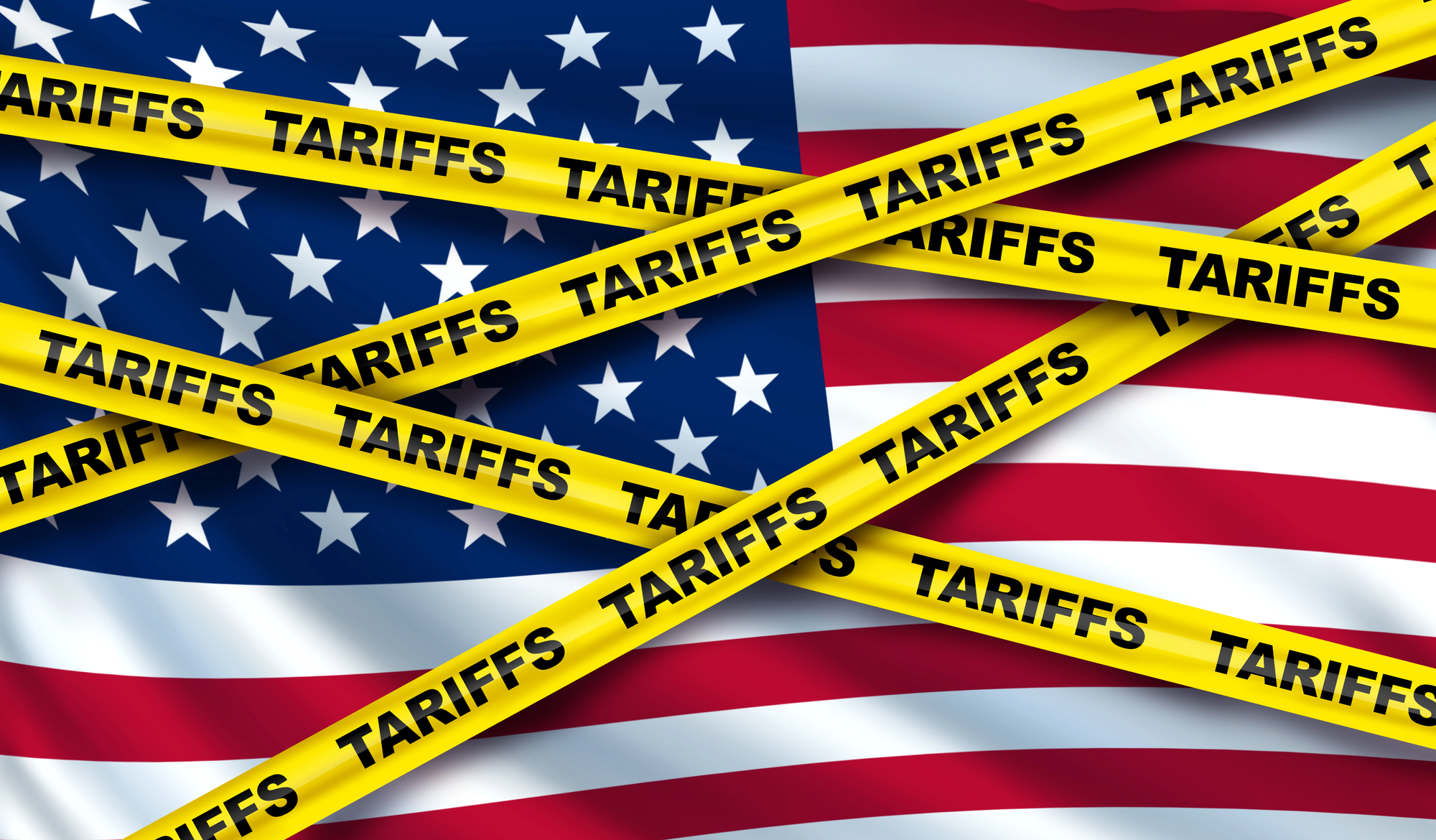
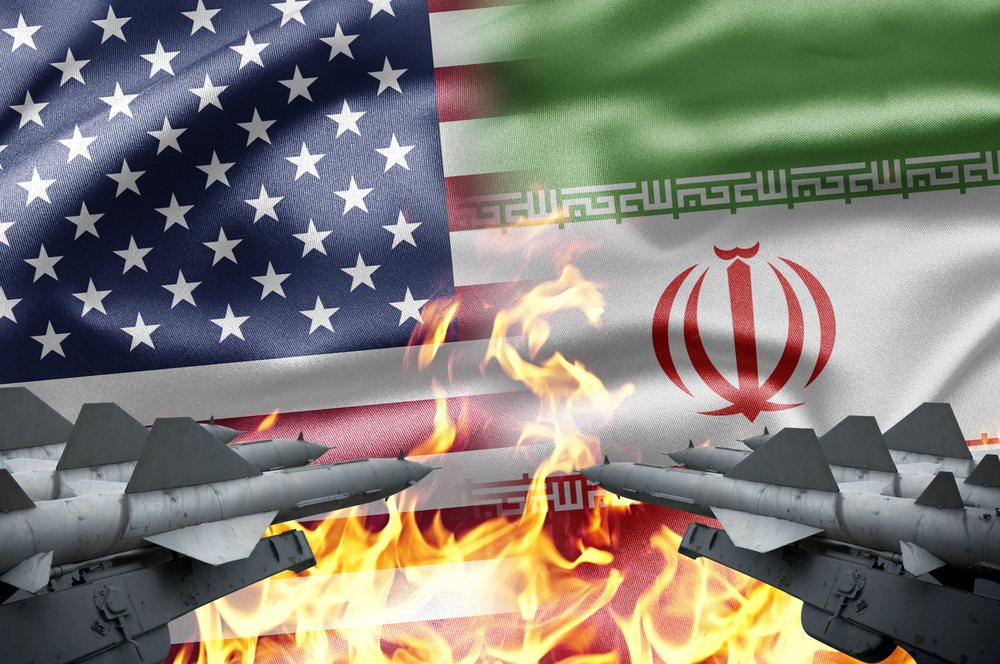
President Donald Trump’s introduction of the Reciprocal Tariff policy in 2025 marked a significant departure from the global trade practices that had predominantly favored liberalization and free trade since the late 20th century. Picture source: Depositphotos.
Prospects & Perspectives No. 15
Implications of the U.S. Tariff Policy on Global Economics and Taiwan’s Response
By Roy Chun Lee
Introduction
President Donald Trump’s introduction of the Reciprocal Tariff policy in 2025 marked a significant departure from the global trade practices that had predominantly favored liberalization and free trade since the late 20th century.
Trump’s approach, as part of the Make America Great Again (MAGA) campaign, prioritized protective tariffs and trade barriers. Tariffs are now policy tools to achieve two major objectives, namely trade re-balancing and re-industrialization. This shift not only disrupted established global supply chains but also had ripple effects across international economies. Countries — including Taiwan — that have built a strong supply chain relationship with the U.S. are all in an emergency mode to address the impacts. The consequences of the “MAGA tariff” approach are likely to produce long-term and permanent changes to global trade, technology and investment dynamics. Taiwan’s strategic responses to this are critical in ensuring not only its position within the global supply chain but also economic competitiveness in the long run.
Trump, the Tariffs Man
Upon taking office in 2017 for his first administration, President Trump criticized existing trade agreements and practices as unfair to the US. His administration viewed tariffs — taxes levied only on imported goods — as leverage to address, inter alia, trade imbalances and intellectual property theft, especially concerning China. The most prominent move was the imposition of tariffs on a comprehensive list of Chinese origin goods, escalating into what became commonly known as the U.S.-China trade war.
While many of the China-focused tariffs from Trump 1.0 remained valid throughout the Joe Biden administration, the global “Reciprocal Tariff” that was announced in April 2025, when President Trump returned to the White House for the second time (Trump 2.0), marks a significant shift in his administration’s trade strategy.
First, the central idea of reciprocal tariffs is to levy tariffs on all imported goods proportional to the tariffs and non-trade barriers the originating countries apply to U.S. exports, thereby aiming to correct trade imbalances by making all exporting countries face equivalent trade costs.
Second, tariffs rates are not “reciprocal” in mathematical terms after negotiations, as most countries still have to pay a lowered rate when most tariffs are removed against U.S. goods.
Third, for some partners, Taiwan included, the reciprocal tariff negotiations came with an investment element, which is novel in recent trade negotiations. Taiwan originally received a sweeping 32% tariffs, which was later reduced to 20% in August 2025 after initial rounds of negotiations.
A major setback to Trump’s reciprocal tariffs took place in February 2026, when the U.S. Supreme Court ruled 6-3 that President Trump exceeded his constitutional authority by invoking the International Emergency Economic Powers Act (IEEPA) to impose reciprocal tariffs on almost all trading partners. This decision has significant implications for global trade dynamics, presidential power, and international economic relationships.
This did not change Trump the tariff man. After the Supreme Court ruling, comprehensive tariffs remain the center of Trump 2.0 trade and investment agenda, and the administration has so far maintained its 2026 tariff revenue forecast at US$250 billion. On the same day President Trump terminated the executive order on reciprocal tariffs, Trump immediately invoked Section 122 of the U.S. Trade Act of 1974, determining that the U.S. faces “fundamental international payments problems,” and announced an additional (i.e., cumulative) 10% tariff on global goods as a supplement.
This Plan B is not a perfect substitution, as it can only impose a maximum of 15% tariff, and unless Congress authorizes an extension, the tariff will expire in July 2026. There are however Plan C and Plan D: the U.S. Trade Representative (USTR) at the same time also announced a new round of Section 301 (of the 1974 Trade Act) investigations into unfair trade practices, primarily targeting drug pricing, forced labor issues and food-related measures. Treasury Secretary Scott Bessent suggests that tariffs will return at the end of the 150 day mark to the same level before the Supreme Court ruling.
MAGA tariffs create significant uncertainties to global economics
The governments of all U.S. major trading partners, Taiwan included, all opted to address the unilateral MAGA tariff through dialogue and negotiations. This avoids a key short-term impact, namely trade wars through retaliatory tariffs against the U.S.
The disruption to global economics is still significant because of the uncertainties, even after most negotiations have concluded. The first and foremost uncertainty is the “floating” tariff rate problem. Since April 2025, tariffs rates have been amended repeatedly for many partners, and the exception lists updating constantly as well. Tariff rates float not only under the reciprocal tariff regime, they float again when the U.S. moves from one legal basis to the other. This makes business forecast and logistics planning extremely difficult, for both short and long terms.
The second uncertainty is the outcome of the negotiation. Multiple and parallel negotiations are taking place with the U.S. by partners, with very different request and demand list from the U.S. In the case of Taiwan, for example, in addition to the market access elements, a major part of the negotiation concerns investment commitments to the U.S. To add to the complexity, Taiwan is negotiating to manage the potential Sec 232 tariffs on semiconductor and other electronic end products that were under investigation at the time of negotiation. To ensure it receives the best treatment, Taiwan, along with Japan, South Korea and the EU, made substantial investment commitment (e.g. US$250 billion by Taiwan, US$550 billion by Japan). The implementations of investment commitments, including the timeframe and procedural arrangements, remain uncertain. The impact on trade flows, as investment in the manufacturing sector create both increase and decrease forces on trade, also remains uncertain.
Taiwan’s response: achievements with strategic meaning
The U.S. has always been a key market, a major source of technology and a crucial security ally to Taiwan. This renders the options available to Taiwan to response to the Reciprocal Tariff limited. In 2025, the U.S. raised to become the largest export market for Taiwan, accounting for 30.9% of export (surpassing China’s 26). More importantly, the U.S. market growth rate stands at an amazing 78% in 2025 (by comparison, growth rate for China is 13.2%).
For Taiwan’s crown jewels — its semiconductor industry, especially the industry leader Taiwan Semiconductor Manufacturing Company (TSMC) — U.S.-based clients are the most significant source of contracts and revenue: 75% of TSMC’s revenue came from customers headquartered in the U.S. and Canada in 2025. As most U.S.-based clients are doubling down their presence on U.S. soil, TSMC and others are also making substantial investments (US$165 billion by TSMC alone) in the U.S. to better serve their client
Against this underlying structure, pursuing preferential trade terms with the U.S. (by benchmarking main competitors such as Japan, South Korea and the EU), and reducing the uncertainties of trade, have been Taiwan’s negotiation objectives from the outset. Achieving these objectives, however, is a big challenge. First and foremost, Taiwan’s trade surplus with the U.S., in both absolute terms and growth, is significantly higher than that of Japan and South Korea. Second, despite the strong bipartisan support in U.S. Congress, political communication channels with the administration are subject to relative constrains. Third, both South Korea and Japan enjoy much better negotiation knowledge due to previous experiences in negotiating free-trade agreement with the U.S., while Taiwan never had such luxury.
As such, the outcome of the Taiwan-U.S. negotiations that were concluded in January and February 2026 have to be considered as a major achievement. Taiwanese products received the same tariff rates as Japan, South Korea and the EU, with over 2,000 items exempted; Taiwan’s investment commitment is proportionate to the relative economic size (therefore the lowest among the four), and the U.S. agreed to work with Taiwan to facilitate the creation of science park industrial clusters in the U.S. In return, Taiwan has agreed to remove tariffs on most U.S.-originated products and made comprehensive commitments on reforming non-tariff measures.
Politically, these outcomes are also a gain for Taiwan. The knowledge of working directly with cabinet-level senior officials is invaluable. The communication channels and working groups created for the implementation phase are also critical for reducing uncertainty and misjudgment. More importantly, the process puts Taiwan on the front page of the U.S. trade agenda.
Certainly there will be domestic impacts that the Taiwanese government needs to manage with care. U.S. agricultural products that were already competitive before the deal are now entering Taiwan tariff-free. Automobiles, including German and Japanese brands, will also be tariff-free. Sectors that are still paying 15% tariffs after the deal will need assistance. From a strategic perspective, however, it is a great opportunity for Taiwan to remove tariff protections and to undertake meaningful structural reforms that have been delayed due to the lack of negotiations on a free-trade agreement.
(Roy Chun Lee is Associate Research Fellow, Taiwan WTO & RTA Center, Chung-Hua Institution for Economic Research.)
Related Content
Washington Reassures (and Worries) Taiwan
Second Thomas Shoal Redux and Beijing’s Strategic Limitations
Reading Korea’s Early Autumn Winds: Trump Abruptly Scales Down a Major Joint Exercise
The G7 Leaders’ Summit in France: An Unexpected Success
What Does the U.S. War Against Iran Mean for the Indo-Pacific?
The U.S. Supreme Court Rules on Trump’s Tariffs: What Does This Mean for Taiwan?
A Geopolitical Inflection Point: The Deeper Implications of the U.S.-Taiwan Reciprocal Tariff Agreement for Bilateral Relations
Trump’s National Security Strategy and the Future of the World Order
President Trump’s National Security Strategy and Tensions Across the Taiwan Strait
The Honduran Presidential Election: Impact on Ties with Taiwan
Boycotts, Power Politics, and the Future of the G20
Recent U.S.-China-South Korea Summitry and Implications for Taiwan
 Facebook
  Youtube
  Twitter