

China-US Strategic Competition in Latin America: Opportunities for Taiwan


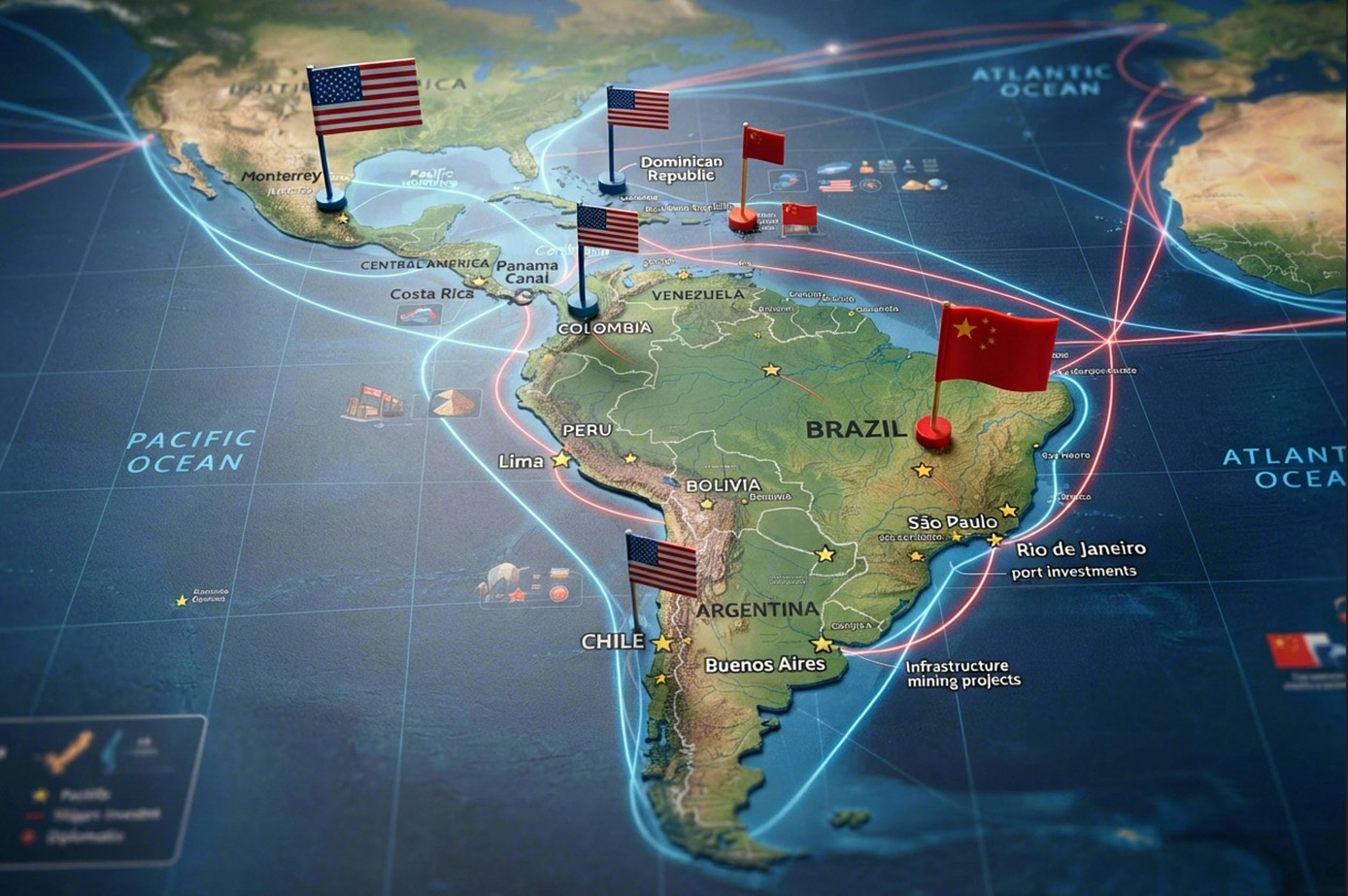
The second Trump administration has introduced significant changes to U.S. foreign policy, particularly in Latin America and the Caribbean (LAC). The objective of these changes is to re-establish American predominance in the Western Hemisphere and to mitigate the economic and political influence of non-regional countries. One of those countries is the People’s Republic of China. Picture source: Depositphotos.
Prospects & Perspectives No. 60
China-US Strategic Competition in Latin America: Opportunities for Taiwan
By Carlos Eduardo Piña
The second Trump administration has introduced significant changes to U.S. foreign policy, particularly in Latin America and the Caribbean (LAC). The Trump administration considers this region to be its natural sphere of influence. The objective of these changes is to re-establish American predominance in the Western Hemisphere and to mitigate the economic and political influence of non-regional countries, some of which are potential adversaries of the U.S. One of those countries is the People’s Republic of China (PRC).
This confrontation has increased the level of friction between the two countries in the region over the past few months, reminiscent at times of the Cold War period. Should this current state of affairs persist over the coming years, there is the likelihood of Taiwan deriving benefits in both economic and political terms in the LAC region. This assertion is founded on the premise that Taiwan could be regarded as a more reliable foreign investor by the U.S. than the PRC. Taiwan could capitalize on the void left by the PRC and emerge as a player that could replace some of its investments and trading partnerships in the region.
US-China strategic competition during the second Trump administration
In November 2025, the U.S. government implemented a hemispheric strategy known as the “Donroe Doctrine,” a revised iteration of the traditional Monroe Doctrine. This strategy was formally articulated in the 2025 National Security Strategy and encompasses three primary components. The primary strategy involved the implementation of a regional plan for the augmentation of U.S. political influence. This was followed by the establishment of a regional security coalition known as "The Shield of the Americas.” Additionally, the term “Greater North America” was introduced, encompassing all Caribbean Basin countries and the entire North American region, including European territories such as Greenland.
The primary objective under the Doctrine is to mitigate the influence of the PRC in the LAC region. Washington considers the PRC to be a strategic economic competitor that threatens its regional hegemony.
Consequently, the Trump administration has utilized all available national resources to impede Chinese companies from engaging in or overseeing regional critical infrastructure projects, including those pertaining to telecommunications, ports, airports, and energy. Furthermore, there has been an escalation in U.S. military presence in the region, with an apparent attempt to curtail the potential operations of the People’s Liberation Army (PLA).
Despite the PRC’s reluctance to engage directly with the U.S., it is cognizant of the necessity to formulate robust responses to challenges posed by the U.S. to its presence in Latin America and the Caribbean. Beijing is pursuing three distinct strategies in parallel. The initial point is of a rhetorical nature, serving to underscore the incongruity between Washington’s bullying tactics and the principles of a rules-based international system and good diplomatic practice. The second strategy is legal in nature and is intended to counter the coercive measures taken against its companies in Latin America in accordance with international law. Finally, the PRC has emphasized that the complexity and extent of its economic relations with the region would be too significant to be dismantled within a limited timeframe.
The PRC in Latin America
The PRC’s engagement with Latin America in the 21st century has been primarily economic in nature, with the objective of increasing the PRC’s presence in almost all the regional countries. In order to comprehend the significance of this phenomenon, it is imperative to recognize the substantial growth in trade volume between China and LAC. According to data from UN Comtrade, the value of trade between these two regions increased from US$12 billion at the beginning of the current century to US$565 billion in 2025, marking a 47-fold increase. This has resulted in the PRC assuming the position of the second-largest trading partner in the region.
In addition, data disclosed by the Academic Network on China and Latin America and the Caribbean (Red China-ALC) during the initial quarter of the century indicates that Chinese companies executed 742 direct investment transactions, encompassing greenfield projects and mergers and acquisitions, with a cumulative value exceeding US$200 billion. This figure includes 294 projects under the Belt and Road Initiative, with a total value exceeding US$129 billion.
Moreover, since 2008, Chinese banks have granted US$120 billion in infrastructure and commercial loans, thus establishing the country as a primary creditor in the region, surpassing the World Bank and/or the Inter-American Development Bank in this capacity.
The economic strength of the PRC has facilitated advancements in various domains. For instance, in an endeavor to augment its political and diplomatic influence, Beijing has instituted an institutional framework with countries in the region around the China-Community of Latin American and the Caribbean Countries (CELAC) Forum. This bilateral framework encompasses political, academic, cultural, and diplomatic spheres, as well as economic ones, under the umbrella of the regional version of the Belt and Road Initiative (BRI).
Beijing has successfully persuaded regional countries that its investments, loans, and trade are intended solely to benefit both parties and promote joint development. Many of the region’s leaders view China’s arrival as an economic opportunity that will lead to development and growth. Specifically, the Central American countries that switched diplomatic recognition from the Republic of China (Taiwan) to the PRC have received non-repayable loans, infrastructure projects, scholarships, and cash transfers from Beijing as a token of appreciation for accepting the “One China” policy or principle.
Nevertheless, this economic integration has also exerted deleterious effects on the region. With regard to trade, a study by the Center for the Opening and Development of Latin America (CADAL) found that trade with the PRC has widened Central America’s trade deficit, ensuring greater benefits for the former. Free trade agreements signed separately by the PRC with Costa Rica, Nicaragua, and Ecuador did not result in the anticipated favorable trade dynamics for the aforementioned countries.
Consequently, China’s integration with the region over the past 25 years has yielded a combination of positive and negative outcomes. The economic integration of China has had a positive impact on regional economies, primarily by connecting them to the Chinese market, creating new value chains, and facilitating major infrastructure projects, massive direct investments, and large loans.
Nevertheless, a considerable number of these economic activities have had a detrimental effect on regional economic development. In certain instances, there has been a recurrence of the center-periphery configurations that the region had previously exhibited in conjunction with other centers of authority. It is evident that these activities have also fostered corruption and environmental damage.
Opportunities for Taiwan
Taiwan could confront a range of challenges and opportunities in its interactions with Latin American and Caribbean countries. Taipei could leverage its privileged position as a key U.S. ally to strengthen ties with LAC countries, capitalizing on its expertise in technology, semiconductors, and electronics to promote investment in these countries through the establishment of commercial and cultural offices.
Mexico is perhaps the most relevant example of how Taiwanese economic engagement could be successful in LAC. Since 2023, at least six Mexican state governments have explored the possibility of attracting investment from Taiwan. It is noteworthy that the governors of four Mexican states adjacent to the U.S. border – Chihuahua, Sonora, Baja California and Nuevo León – have actively pursued Taiwanese investment, proffering their competitive advantages in terms of productivity and serving as a conduit for the export of their products to the U.S. market.
Consequently, Mexico has arguably experienced a surge in Taiwanese investment over the past two years. In the state of San Luis Potosí, Sinbon Electronics has inaugurated a manufacturing facility with an investment value of US$27 million, dedicated to the production of cable harnesses and interconnect systems for customers in the Americas. Another company, Pegatron, has been operating in the state of Nuevo León, manufacturing electronic products used in the production of computers, phones, artificial intelligence, and online servers. Concurrently, Foxconn is constructing a substantial manufacturing facility in the south-western state of Jalisco, with the objective of supplying NVIDIA with AI-related products.
These investments have facilitated Taiwan's emergence as Mexico’s third-largest import partner during the initial seven months of 2026. This figure denotes a substantial increase of 251% over a span of twelve months, amounting to approximately US$55 billion.
Approximately three hundred Taiwanese companies are currently operating within Mexico, employing around seventy thousand people and with FDI stocks amounting to US$1.4 billion. This has occurred despite the present Mexican government’s ongoing engagement with the PRC. In contrast to the case of Mexican products procured from the PRC, the U.S. government has not impeded trade between Mexico and Taiwan by Taiwanese entities. This has enabled Taiwanese companies to capitalize on the strategic competition between China and the U.S.
The pivotal question arising from these significant milestones achieved in Mexico concerns the potential for Taiwan to emulate its accomplishments in other Latin American and Caribbean nations.
This potential could be actualized in advance in countries such as Colombia, Brazil, Argentina, Ecuador, Peru, and Chile, where Taipei maintains operational commercial and cultural offices. With the exception of Brazil, the other countries on the list are politically and ideologically aligned with the current U.S. government, a factor which could facilitate Taiwanese entry into those countries.
Concurrently, Taipei stands poised to regain lost ground in Central America, a development compounded by recent diplomatic setbacks. The equivocal outcomes in Honduras subsequent to the transition in diplomatic relations from Taiwan to the PRC have paved the way for Tegucigalpa to re-establish commercial ties with Taiwan. This issue resurfaced after Honduras experienced a reduction in profits due to a decrease in shrimp sales to Taiwanese companies in favor of PRC customers. The issue was of such significance to the nation that it contributed to the electoral defeat of the former ruling party in the previous year's presidential elections.
Conversely, Taiwan could explore the prospect of bidding on infrastructure projects in Latin America and the Caribbean, with a particular focus on countries where the PRC has been banned due to pressure from the U.S. A number of these projects are in the telecommunications and energy sectors, and Taiwan has the potential to participate in them in partnership with U.S. companies.
Decoupling the PRC’s political and economic relations with LAC countries while minimizing adverse economic consequences has emerged as a pivotal challenge for Washington in the 21st-century regional context. However, Taiwanese companies have identified a strategic opportunity to their advantage. In response, Beijing has imposed sanctions and is considering the implementation of economic and political coercive measures to prevent a potential Taiwanese investment boom throughout the region. In recent developments, the implementation of these measures has had ramifications for officials in Paraguay and Belize, thereby indicating the possibility of a prospective future trend in other nations.
One thing is clear beyond these actions: The contemporary period of economic growth in Taiwan within the LAC region is characterized by the opportunity presented by the U.S.’ strategic emphasis on constraining China’s expanding influence in the Western Hemisphere. In the ensuing years, particularly in the period leading up to 2028 – the concluding year of President Trump’s second term in office – it is highly probable that Taiwan will endeavor to consolidate its trade relations and investment ties with the region to the greatest extent possible. Consequently, Taiwan’s international standing could be enhanced in comparison to its position prior to the inauguration of the Trump administration.
(Carlos Eduardo Piña is a Venezuelan political scientist who works as a political risk consultant and specialises in researching Latin American politics and China–Latin America relations.)
Related Content
After Two Trump-Xi Summits: Competing Within Limits
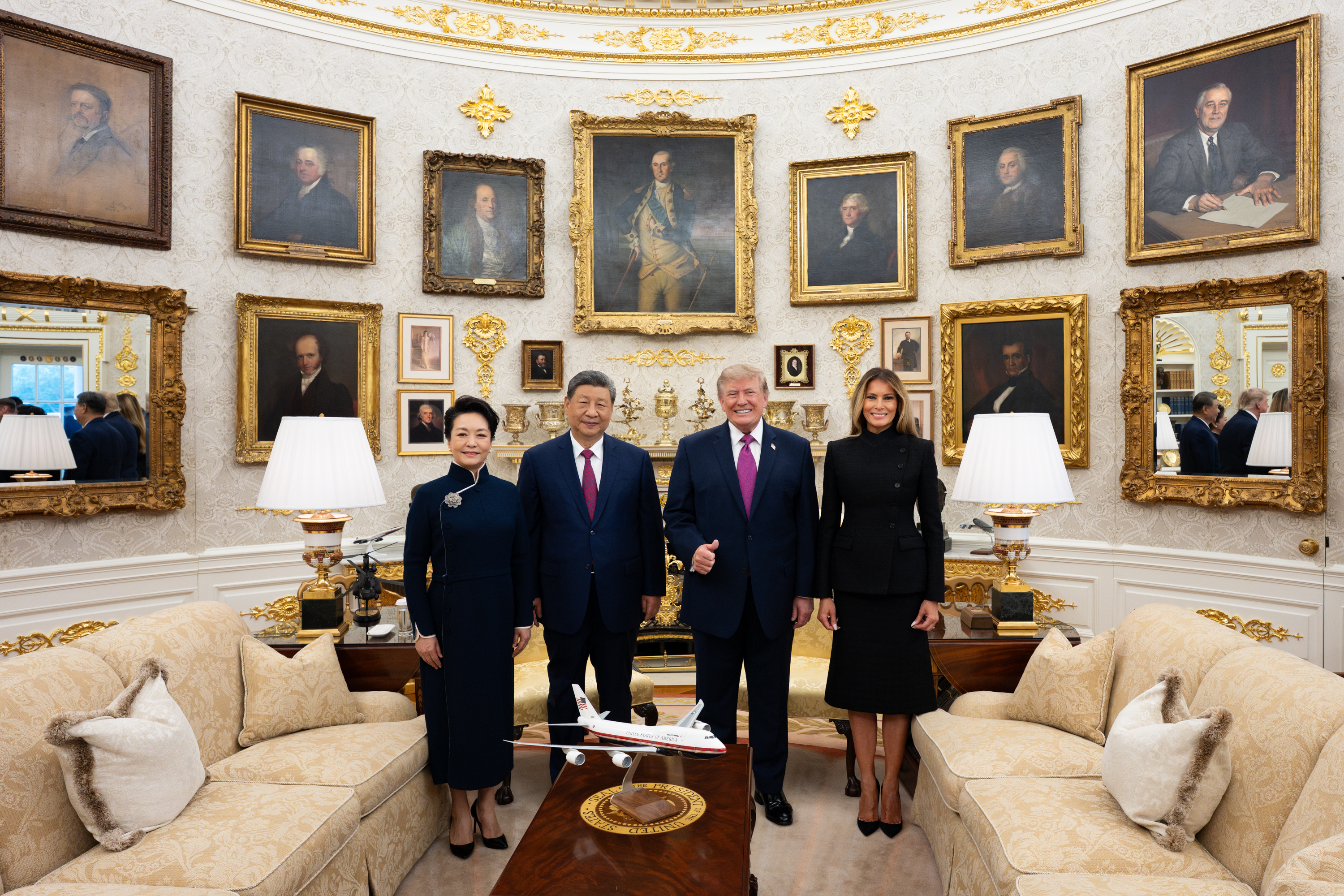
Strengthened Yet Threatened Relations: Taiwan’s Diplomatic Ties with Latin American Countries
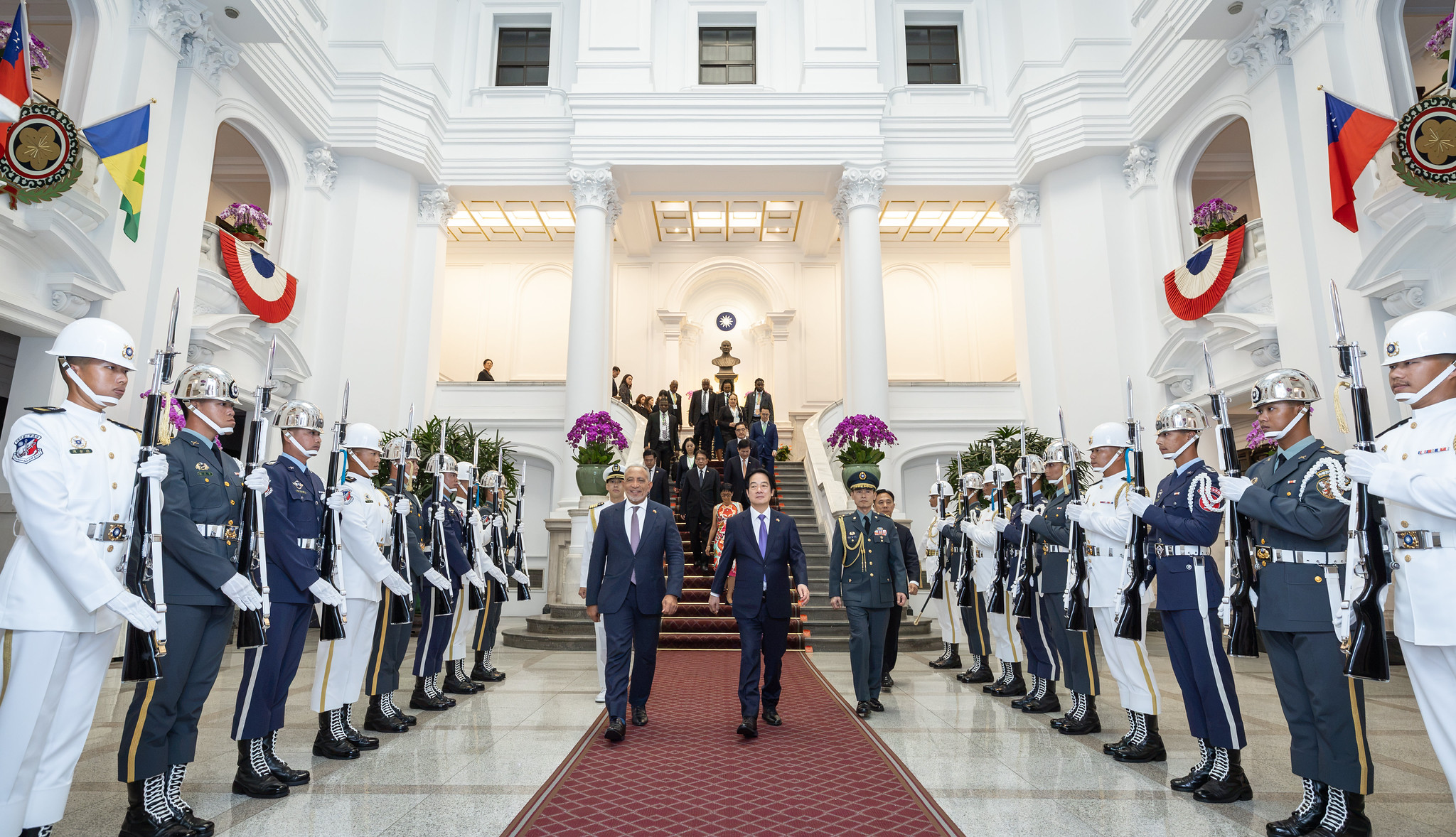
Beijing’s Intensifying Pressure on Taiwan’s Passport and Consular Affairs
Strategizing the New Southbound Policy: A Fruitful Journey of a Decade
What If the Quarantine of Taiwan Has Already Begun?
PM Carney’s Bold New Vision: The Good and the Bad
A Geopolitical Inflection Point: The Deeper Implications of the U.S.-Taiwan Reciprocal Tariff Agreement for Bilateral Relations
Feeding the Porcupine: The U.S. December 2025 Arms Sales to Taiwan
‘Tiger Head with a Snake Tail’: The PLA’s ‘2025 Justice Mission’ Exercise

The CCP’s 4th Plenum: Is China on the Right Path?
U.S. Reciprocal Tariffs and Implications for Taiwan
The Israel-Iran War and its Potential Impact on China-Taiwan and the Indo-Pacific
 Facebook
 Youtube
 Twitter