

‘Tiger Head with a Snake Tail’: The PLA’s ‘2025 Justice Mission’ Exercise


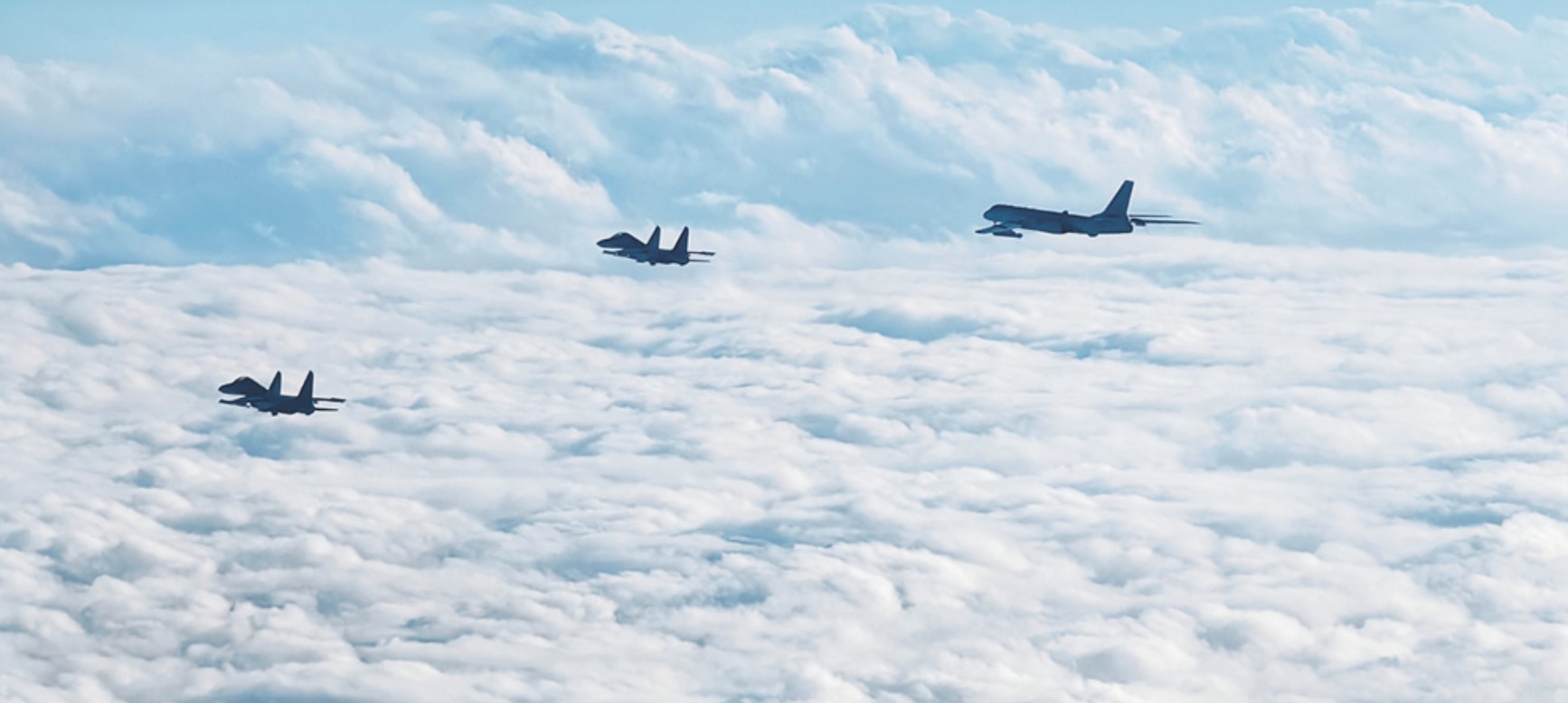
A mere three days before the end of 2025, the Chinese government suddenly announced a military exercise targeting Taiwan. However, despite the scale of this exercise, “Justice Mission” did not cause serious concern in the U.S., and even the Japanese government responded discreetly. After the exercise, there does not appear to have been any significant change in U.S. arms sales policy to Taiwan, nor in Japan’s policy regarding Taiwan Strait security. Picture source: Ministry of National Defense (China), December 31, 2025, Ministry of National Defense (China), http://www.mod.gov.cn/gfbw/wzll/dbzq/16434819.html.
Prospects & Perspectives No. 1
‘Tiger Head with a Snake Tail’: The PLA’s ‘2025 Justice Mission’ Exercise
By Ming-Shih Shen
A mere three days before the end of 2025, the Chinese government suddenly announced a military exercise targeting Taiwan. Unlike previous exercises, this one was named “Justice Mission,” underscoring the supposedly just claim that “Taiwan is a part of China” and “opposing Taiwan independence.” This exercise, like the six large-scale exercises conducted in recent years, targeted Taiwan and external powers “interference,” and featured the following characteristics in terms of timing and execution.
After the Military Crackdown on Corruption
“Justice Mission”came in the wake of the Chinese Communist Party’s (CCP) crackdown on corruption among senior generals in the People’s Liberation Army (PLA). Although He Weidong (何衛東), former vice chairman of the Central Military Commission (CMC), and Lin Xiangyang (林向陽), former commander of the Eastern Theater Command, were investigated and subsequently disappeared from public view during the 2024 “Joint Sword A” exercise, it is not known whether they played a role in the drills. Some media reports have suggested that the CMC, concerned about the Eastern Theater Command’s ability to complete the “Joint Sword A” exercise, requested that He and Lin participate in overseeing the “Joint Sword A”. The “2025 Justice Mission” exercise, following the Fourth Plenary Session of the 20th CPC Central Committee in October, and the subsequent removal of nine generals from their party and official positions for corruption, has drawn significant attention regarding command, leadership within the CMC, and the overall operational process. The Eastern Theater Command may have provided a draft plan for the latest exercise, with the CMC making the final decision. Xi Jinping’s personal involvement underscores its different significance compared to the planning by Zhang Youxia (張又俠) and Liu Zhenli (劉振立).
The New Commander’s Capabilities in the Eastern Theater Command
Prior to this exercise, it was widely believed that the newly appointed Eastern Theater Commander, Yang Zhibin (楊志斌) with his Air Force background, and Political Commissar Yang Jichun (楊繼春) with his Rocket Force background, would emphasize the use of the Air Force and Rocket Force. Indeed, the PLA’s joint firepower strike capability against Taiwan relies heavily on the capabilities of the Air Force and Rocket Force. During the latest exercise, more than 130 PLA Air Force (PLAAF) aircraft were deployed on the first day, breaking previous records. (Although there were videos of J-20 fighter jet deployments, no actual footage was released.) For its part, the Rocket Force did not conduct live-fire exercises: while there were forward deployment drills, no official videos were released, thus obscuring its role. Only the Army Group Corps conducted rocket launches. Contrary to the earlier claims of Rocket Force mobilization, this is the first indication that a “Tiger Head with a Snake Tail” — the exercise started strong but ended weakly.
Similarities between ‘Justice Mission’ and previous exercises
In the 2024 serial exercises, the PLA had already practiced scenarios such as port blockade, firepower strikes, and resisting foreign intervention. The 2025 exercise introduced the concept of “preventing external military intervention”, and the PLA mentioned “seizing comprehensive controls” (奪取綜合制權) and “external three-dimensional deterrence” (外線立體懾阻) for the first time. This suggests a new priority on preventing external military intervention during a PLA invasion of Taiwan. Although the terminology is different, it is largely similar to past segmented operations targeting Taiwan and foreign assistance. Cross-Strait operations cannot deviate from these patterns: the differences lie in the number of aircraft and ships deployed, the number of days of the exercise, and whether live-fire drills are conducted. Joint operations involving naval vessels and coast guard ships already occurred in the 2024 exercise, and the coast guard’s intrusion into restricted and limited waters off the outlying islands of Kinmen and Matsu was a staple of every exercise before — the “Justice Mission” exercise was no exception. The Long-range Rocket Brigade already conducted live-fire exercises during the “Strait Thunder” exercise in April 2025. Repeating similar drills will therefore not have a significant deterrent effect on Taiwan. This further proves that the PLA lacks new tactics and force deployments for operations against Taiwan, making it easy for adversaries to grasp its operational tempo and intentions.
China’s Shortcomings in Cyber Warfare and Cognitive Warfare
During the 2022 exercises, the PLA Strategic Support Force employed cyber warfare tactics to infiltrate and disrupt the information operations of the Taiwanese government and civilian sectors. For example, prior to the exercises, the official websites of the Presidential Office, the Ministry of National Defense (MND), the Ministry of Foreign Affairs (MOFA), and Taiwan Taoyuan International Airport were attacked and paralyzed. On the day of then-House Speaker Nancy Pelosi’s visit to Taiwan in August 2022, some convenience store screens displayed the message “Warmonger Pelosi, get out of Taiwan” (戰爭販子裴洛西滾出台灣) and similar issues were reported on billboards at the Xinzuoying High Speed Railway Station. After Pelosi’s departure, MND confirmed that its web site had been under a denial-of-access attack starting at 11:04 PM on August 3, with services restored at 12:30 AM on August 4 after emergency measures were taken. The MOFA website was not back online until the morning of August 4. Taiwanese authorities discovered that a large number of IP addresses from China and Russia were linked to this attack.
However, after the Strategic Support Force was dispersed into four branches in 2024, the Information Support Force became responsible for cyber warfare. Yet, the Information Support Force was not mentioned in the public announcement of the 2025 exercise; the actual exercise did not demonstrate any cyber warfare attack patterns, nor was the mission of the Cyber Force mentioned. According to analysis by Taiwan’s National Security Bureau, there were no targeted cyberattacks during the exercise, and the number of cyberattacks only increased slightly compared to normal times. This proves that the Cyber Force did not participate in this exercise, and the joint operational capabilities of the Eastern Theater Command and the Cyber Force may not have been established yet.
Regarding cognitive warfare, the CCP conducts war propaganda and cognitive warfare with every exercise. This time, the CCP released large amounts of propaganda images and videos. For example, the “Arrow of Justice” image depicts several arrows shooting towards Taiwan, suggesting a missile attack. However, only long-range rockets were fired in sea areas at a distance of 24 nautical miles away, highlighting the discrepancy between the propaganda images and the actual exercise. This gap between the propaganda and the actual platforms used in the exercise may have undermined the propaganda value of the whole endeavor. Taking the “Shield of Justice” imagery as an example, its primary purpose is to prevent U.S. and Japanese military intervention. However, the number of naval and coast guard vessels deployed by China east of Taiwan was clearly insufficient. While the U.S. has deployed two carrier strike groups to the Indo-Pacific, China has not conducted effective blockade or anti-access/area denial (A2/AD) operations against the U.S. and Japan. In particular, no Chinese aircraft carriers were deployed, making the overall scale smaller than the “Strait Thunder” exercise in April 2025.
Firing Effectiveness of the Long-Range Rocket Brigade
In the April 2025 exercise, China used a long-range rocket brigade belonging to a group army to attack a simulated Taiwanese natural gas storage tank area. According to a spokesperson for the PLA Eastern Theater Command, this firing exercise involved a company conducting long-range live-fire drills in the relevant waters of the East China Sea, precisely striking simulated targets such as important ports and energy facilities. However, the released video shows a land-based target area, suggesting the use of footage from routine training exercises. The December 2025 rocket firing exercise was divided into two target areas, with 17 rockets fired at the northern target area and 10 rockets fired at the southwestern target area. However, the organization of a long-range rocket brigade typically consists of 12 launch vehicles per battalion and 6 per company. Each vehicle can carry 8 conventional rockets or 2 tactical missiles. The number of conventional missiles launched in this instance should all be multiples of 8 — and yet the total was 17. It is unlikely that two vehicles would launch 16 missiles from the northern target area, followed by another vehicle launching 1; or that one vehicle would launch 8 missiles to the southwest target area, followed by another vehicle launching 2, totaling 10. It is even less likely that a single vehicle would attack both the northern and southwestern targets sequentially, as the number still would not be sufficient. Clearly, there might have been launch failures or near-misses. If the launches were against ground targets, the differences in firing effect and potential trajectory could be more clearly observed.
Coordinated actions by Russia and North Korea
While the PLA was conducting military exercises around Taiwan, Russia unilaterally notified the Japanese government that Russian forces were massing troops in the disputed Southern Kuril Islands (known as the Northern Territories in Japan), and announced that it would begin live-fire military exercises lasting more than two months starting on January 1, 2026. This timing coincides with the end of the PLA’s military exercises targeting Taiwan, suggesting that the Russian drills and the PLA exercises against Taiwan may both be directed against Japan.
Furthermore, North Korea’s ballistic missile test in the Sea of Japan on January 3 was likely aimed at preventing U.S. forces stationed in Japan or the Japanese Self-Defense Forces from intervening in a Taiwan Strait conflict. In the past, Russia and North Korea have not cooperated during PLA exercises. This latest development suggests that if the PLA decides to use force to invade Taiwan, Russia will not only provide military assistance but also take supporting actions. North Korea may launch an attack against South Korea at the request of Russia and the CCP to tie down U.S. forces deployed in South Korea.
Conclusion
During the “2025 Justice Mission” exercises, the Chinese Foreign Ministry spokesperson emphasized that the reason for the exercises was the U.S. announcement of a potential sale of US$11.1 billion in defense equipment to Taiwan — suggesting that the main trigger for the exercises was an external factor. However, despite the scale of this exercise, “Justice Mission” did not cause serious concern in the U.S., and even the Japanese government responded discreetly. After the exercise, there does not appear to have been any significant change in U.S. arms sales policy to Taiwan, nor in Japan’s policy regarding Taiwan Strait security. Taiwanese public opinion reacted indifferently to the Chinese exercises, and the stock market even rose. “Justice Mission” was therefore a “Tiger Head with a Snake Tail” — the exercise started strong but ended weakly. All of this demonstrates that the deterrent effect of China’s military exercises, intended to showcase the new normal, has diminished. China will continue to conduct military exercises targeting Taiwan in response to both internal and external developments. How Beijing can successfully deter Taiwan, Japan and the U.S. at the same time remains a challenge for the Chinese leadership.
(Dr. Shen is Research Fellow, Institute for National Defense Security Research.)
Related Content
China’s ‘New New Normal’ Military Exercises Against Taiwan and Their Implications
The Specter of a Broader Regional Maritime Conundrum Over Taiwan
Feeding the Porcupine: The U.S. December 2025 Arms Sales to Taiwan
After Two Trump-Xi Summits: Competing Within Limits
Re-Establishing Deterrence in Taiwan’s Maritime Periphery Following the China-Indonesia Naval Exercise
Strengthened Yet Threatened Relations: Taiwan’s Diplomatic Ties with Latin American Countries
Beijing’s Intensifying Pressure on Taiwan’s Passport and Consular Affairs
Strategizing the New Southbound Policy: A Fruitful Journey of a Decade
What If the Quarantine of Taiwan Has Already Begun?
What Lessons Can Taiwan Take from the Situation in the Strait of Hormuz?
Washington’s China-Taiwan Annual Threat Assessment: More of the Same
What Does the U.S. War Against Iran Mean for the Indo-Pacific?
 Facebook
  Youtube
  Twitter