



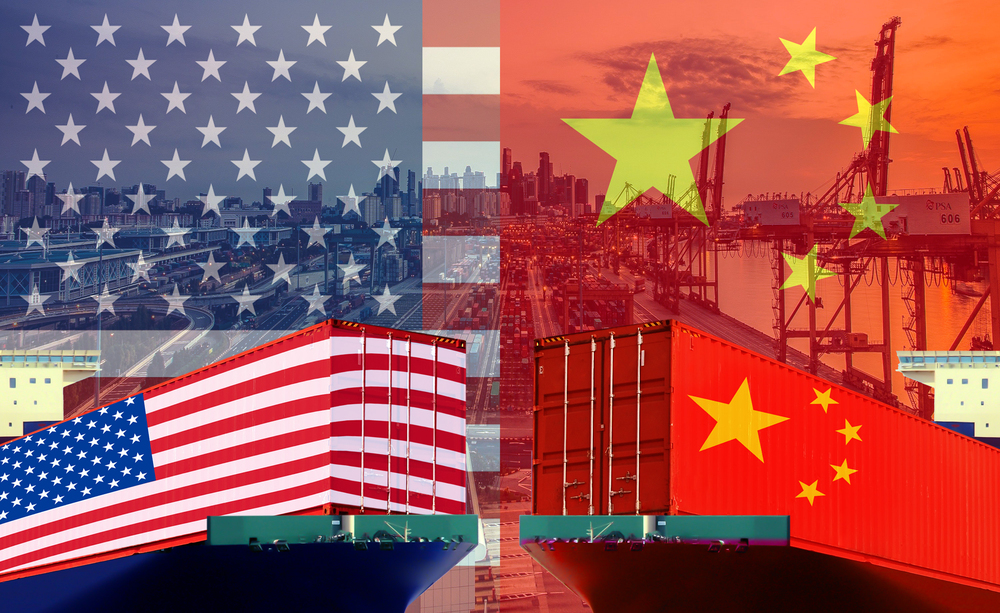
The rare earth dilemma has not disappeared. The United States will remain structurally vulnerable when the truce expires, with China retaining majority processing share for most elements. But the one-year pause bought exactly the window needed to blunt China’s most potent coercion tool. By November 2026, the card will still exist. It just won’t hit anywhere near as hard. Picture source: Depositphotos.
Prospects & Perspectives No. 66
The Rare Earth Pause: A Strategic Assessment
By Jack Herndon
On November 1, 2025, President Donald Trump and President Xi Jinping agreed to a one-year pause on escalating technology and critical mineral controls. The United States suspended enforcement of the September 2025 “50%+1” rule, which extended Entity List export restrictions to any foreign entity owned 50 percent or more by listed Chinese entities. China suspended its October 9, 2025, rare earth export controls covering 12 rare earth elements and issued general export licenses to U.S. end users.
The Core Dilemma
China’s current grip on rare earth processing is so tight that a full cutoff could halt U.S. production of key weapons platforms like the F-35 and Tomahawk missiles, crippling readiness for a Pacific conflict. At the same time, the one-year pause gives the U.S. and allies much needed runway to scale alternatives to blunt that grip before Beijing can re-weaponize it in 2026. But the pause comes at a real cost: suspending the 50%+1 rule (though new) gives Huawei and other Chinese AI developers/programs 12 months of breathing room to stockpile chips and develop workarounds, potentially allowing China to close the technological gap faster than if the rule had stayed in force.
Why Rare Earths Are the Kill-Switch
Dysprosium (Dy) and terbium (Tb) (targeted by the October export controls) make permanent magnets survive high temperatures. Without them, F-35 flight-control systems seize up in flight and precision-guided munitions lose steering capability. China processes 90-99% of global dysprosium and terbium supply. Each F-35 requires approximately 920 pounds of rare earth elements, primarily for samarium-cobalt magnets and yttrium in avionics. Virginia-class submarines require 9,200 pounds per hull.
The U.S. maintains minimal strategic reserves. Government stockpiles could cover only weeks of defense demand, while U.S. defense programs consume approximately 400 metric tons of dysprosium annually — all imported from China. Defense contractors maintain their own inventories, but these too are limited: Lockheed Martin’s CFO told investors in May 2025 that the company had rare earth materials sufficient only “through the rest of 2025.” A sustained Chinese cutoff would force production slowdowns within months.
The Timing Asymmetry
China’s leverage peaks now and is already degrading. The one-year pause covers the period when U.S. and allied processing alternatives reach initial operating capacity.
The shift is already underway. Lynas began processing heavy rare earths in Malaysia this past May (the first large-scale commercial Dy/Tb separation outside China). Canada’s Saskatchewan Research Council brought its integrated ore-to-metal facility online in summer 2024. Energy Fuels in Utah achieved pilot-scale dysprosium production in July and expects commercial separation by late 2026, with its Australian project potentially covering a third of U.S. dysprosium needs by 2027.
The real capacity surge hits 2026-2027. Australia’s Iluka and Arafura projects come online, adding thousands of metric tons of processing capacity for both heavy and light rare earths. MP Materials—now backed by a US$400 million Department of War equity stake—started metal production in January 2025 and will commission heavy rare earth separation mid-2026, with plans to scale magnet output dramatically (targeting 10,000 metric tons annually) over the next several years. Brazil’s Serra Verde expands to 5,000 metric tons annually by 2026, producing all four critical magnet rare earths. New magnet manufacturing facilities in South Carolina and Oklahoma begin coming online across 2025-2026. By 2027, these projects and others in development would add over 7,900 metric tons of annual heavy rare earth processing capacity and nearly 19,000 metric tons for light rare earths, with U.S. magnet production from planned facilities reaching approximately 19,500 metric tons by 2028—roughly matching current U.S. consumption.
This did not happen by accident. The Joe Biden administration seeded early investment through Defense Production Act awards exceeding US$439 million since 2020. The Trump administration accelerated deployment through direct equity stakes, long-term purchasing agreements, and price floors that insulate producers from Chinese market manipulation. Total government commitment across the U.S., Australia, Canada, and Brazil now exceeds US$3.7 billion.
The timing matters. The truce expires November 2026 precisely when several major facilities transition from construction to early production. By late 2027, the West will possess meaningful alternatives across the entire supply chain. China will retain dominant processing share beyond 2027, but coercive leverage degrades as alternative separation capacity scales.
Can China Play the Card Again? Yes, But…
Beijing retains the legal framework, administrative apparatus, and demonstrated willingness to deploy rare earth export controls.
But the cost-benefit calculus will have shifted. A second cutoff would inconvenience Western defense production rather than cripple it, all the while accelerating the final decoupling China seeks to prevent. With operational alternatives in the U.S., Canada, Australia, and Brazil producing thousands of metric tons annually, reimposed controls would primarily harm Chinese rare earth processors who depend on exports for revenue, while handing Western producers guaranteed government demand and elevated prices. China would trade short-term leverage for permanent loss of market share.
By November 2026, the landscape looks fundamentally different. MP Materials’ heavy rare earth separation and expanded magnet facility will be producing at scale. Iluka will be operational or near commissioning. Arafura will be months from first production rather than years. Energy Fuels will have commercial capacity online. Whether Lynas Texas delivers on schedule remains uncertain, but the broader momentum is irreversible.
China’s rare earth dominance functioned as strategic leverage precisely because it appeared irreversible. The truce converts temporary coercion into permanent erosion. Each month the pause holds, processing capacity diversifies and Beijing’s chokehold weakens. The question facing Chinese strategists is whether diminishing leverage deployed in 2026 achieves more than preserving the option for 2027 or 2028 when alternatives will have significantly eroded China’s rare earth chokehold.
Conclusion
The rare earth dilemma has not disappeared. The United States will remain structurally vulnerable when the truce expires, with China retaining majority processing share for most elements. But the one-year pause bought exactly the window needed to blunt China’s most potent coercion tool. By November 2026, the card will still exist. It just won’t hit anywhere near as hard.
(Jack Herndon is a strategic analyst who focuses on policy and strategy related to the People’s Republic of China.)
相關文章
Washington Reassures (and Worries) Taiwan

President Trump’s National Security Strategy and Tensions Across the Taiwan Strait
The Honduran Presidential Election: Impact on Ties with Taiwan

Boycotts, Power Politics, and the Future of the G20
The ASEAN Malaysia Summit: The Calm Before the Storm?

Strategic Shift from PM Abe to PM Ishiba: Will Japan’s Strategy Change?

The U.S.-China Trade War: Escalation without Strategic Direction
APEC Peru 2024: Key takeaways
Trump and the Axis of Disorder

Prospects for Foreign Policy and Taiwan-U.S. Relations under the Second Trump Administration
The Impact of China’s Suspension of the ECFA on Cross-Strait Relations

 Facebook
  Youtube
  Twitter
  Podcast