
President Trump’s National Security Strategy and Tensions Across the Taiwan Strait


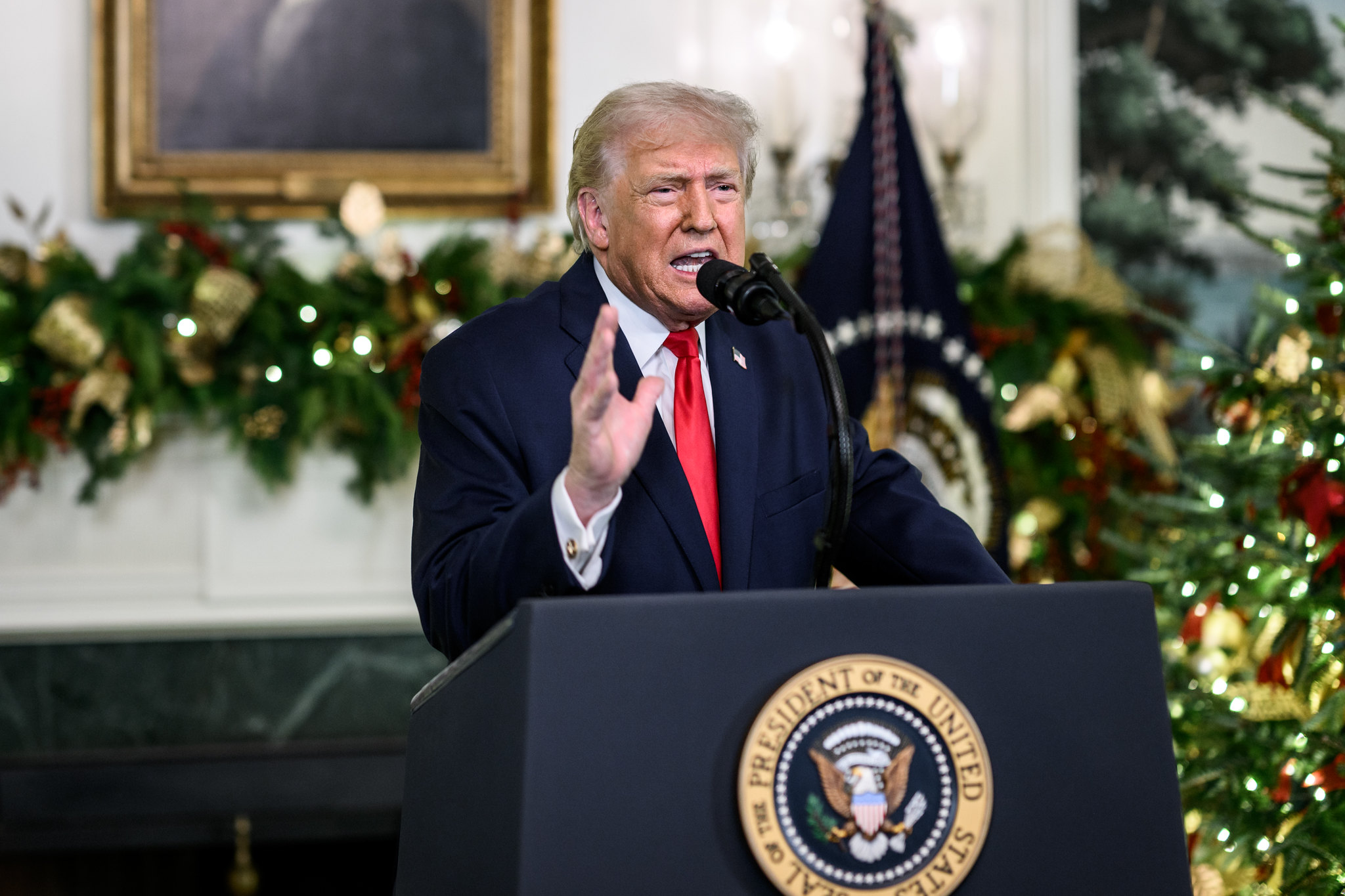
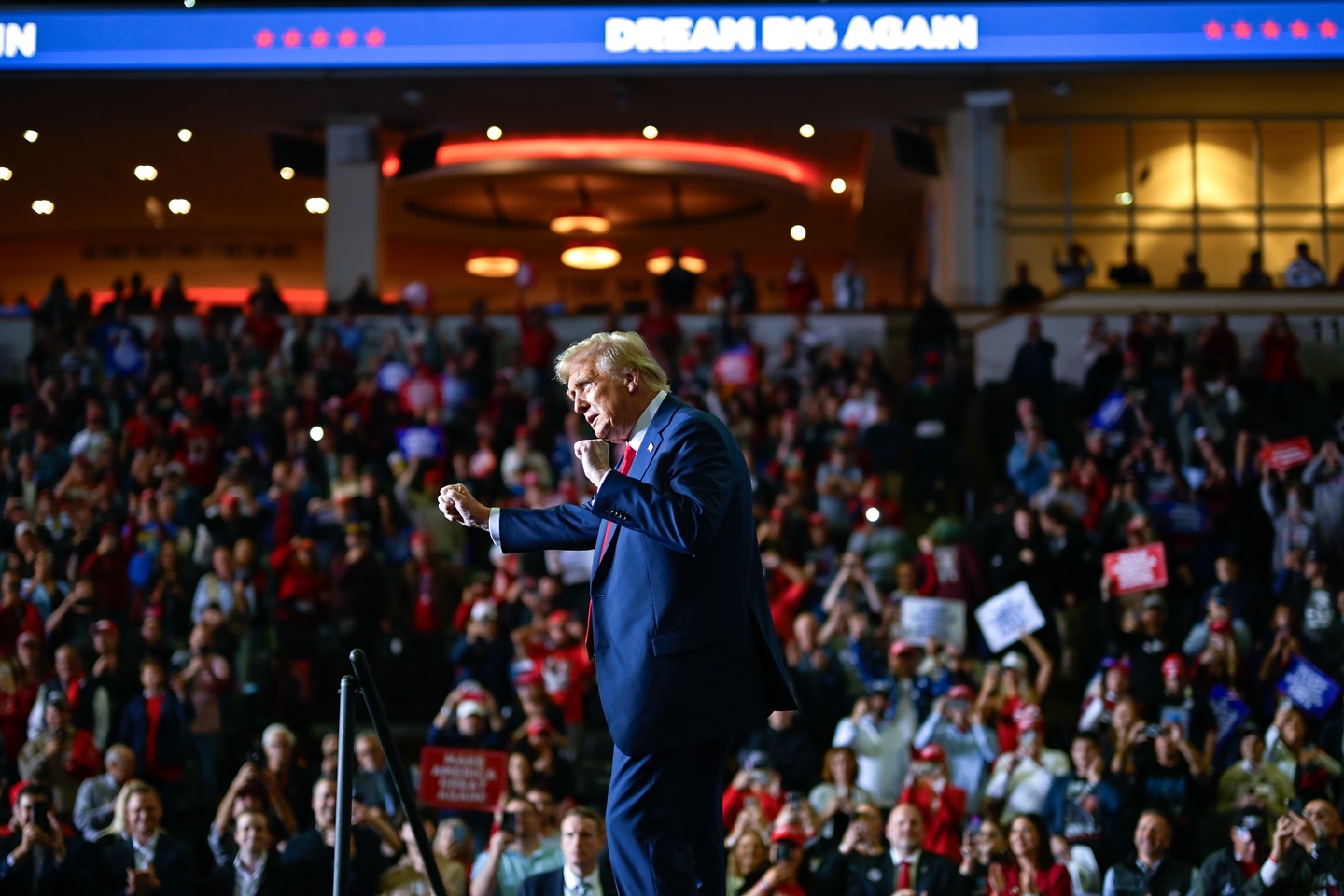
The NSS report mentions the “Indo-Pacific” and the “Free and Open Indo-Pacific” seven times, and also mentions the Quad involving the U.S., Australia, India, and Japan, indicating that the U.S. Indo-Pacific strategy will continue to be promoted. Picture source: The White House, December 17, 2025, flickr, https://www.flickr.com/photos/whitehouse/54993041062/in/album-72177720331009817.
Prospects & Perspectives No. 2
President Trump’s National Security Strategy and Tensions Across the Taiwan Strait
By Cheng-yi Lin
In November 2025, the Trump administration released the National Security Strategy (NSS) of the United States of America. The document no longer refers to China as a “revisionist power” or a “strategic competitor,” and avoids specifically targeting China by refraining from referring to it as the Chinese Communist Party. It identifies the U.S. and China as the co-leaders of a “G2” world order. However, unnamed references to China are still evident. For example, the NSS identifies challenges such as the need to end predatory industrial strategies, unfair trade practices, large-scale intellectual property theft and commercial espionage, threats to critical supply chains, the export of fentanyl exacerbating drug abuse, and malicious influence and cultural subversion.
A narrowing focus
The NSS reveals a narrowing of the U.S. focus, shifting from international leadership and democratic values to American power and preventing any other country from becoming a global or regional dominant force. Under the Trump administration’s “America First” policy, the era of “America as the world” and “managing everything” is over. The NSS places national security at the heart of economic security. The Trump administration emphasizes balanced trade, ensuring the supply of key supply chains and materials, the re-industrialization of American manufacturing, revitalizing the defense industry, energy dominance, and maintaining global financial leadership. However, President Trump’s tariff wars have made U.S. allies feel that they are suffering economic blows alongside the U.S. adversaries. International responsibilities and burdens, meanwhile, must be divided and shifted. NATO members must allocate 5% of their GDP to defense, and Japan, South Korea, Australia, and Taiwan all need to increase their defense budgets. The U.S. is the convener of the security responsibility-sharing network.
With Trump’s return to the White House, the focus of U.S. foreign affairs has shifted from the regional order of the 2017 National Security Strategy (Indo-Pacific, Europe, Middle East, South and Central Asia, Western Hemisphere, Africa) to the 2025 order (Western Hemisphere, Asia, Europe, Middle East, Africa). In Latin America, Trump’s version of the new Monroe Doctrine aims to prevent “non-Western Hemisphere competitors” from “deploying troops or other threatening capabilities” or “possessing or controlling strategically important assets” in the U.S. backyard. The Panama Canal, ports, and critical infrastructure are examples of strategic assets, and the conditions for U.S. alliances and economic assistance are predicated on weakening the influence of hostile external powers.
Disagreements with Europe
In Europe, the Trump administration’s NSS criticizes European democracy and is considered more radical than the European far-right. Besides criticizing European institutions for over-regulation, creating instability through immigration policies, and suppressing political dissent, it also calls on “patriotic European parties” to defend democracy and freedom. Trump has repeatedly stated that the U.S. needs to help European countries correct their current course of development because Europe faces a decline in Western “civilizational self-confidence” and the “prospect of civilizational erasure,” claiming that “within a few decades at the least, certain NATO members will become majority non-European.” The U.S. and Europe also disagree on how to end the war in Ukraine as soon as possible. Trump pointed out that European countries need to rebuild internal stability and strategic stability between Europe and Russia. EU officials rejected the U.S.-backed peace plan, instead advocating for continued military and financial aid to Kyiv.
Taiwan and the Indo-Pacific
The NSS report mentions the “Indo-Pacific” and the “Free and Open Indo-Pacific” seven times, and also mentions the Quadrilateral Security Dialogue (Quad) involving the U.S., Australia, India, and Japan, indicating that the U.S. Indo-Pacific strategy will continue to be promoted. Asia is the most extensive part of the report, and the emphasis on Taiwan’s security clearly reveals the source of the challenges. The report points out that the Taiwan issue is of great concern partly because of “Taiwan’s dominance of semiconductor production, but mostly because Taiwan provides direct access to the Second Island Chain and splits Northeast and Southeast Asia into two distinct theaters. Given that one-third of global shipping passes annually through the South China Sea, this has major implications for the U.S. economy. Hence deterring a conflict over Taiwan, ideally by preserving military overmatch, is a priority.”
This is the first time in a long time that the U.S. government has publicly emphasized Taiwan’s geostrategic importance. This illustrates that the advice of some U.S. think tanks, such as Defense Priorities and the Quincy Institute — to the effect that Washington should not be fixated on Taiwan’s strategic position and not consider Taiwan as a vital U.S. interest — has not found its way into the latest NSS report.
While Trump’s second term has not yet released a National Defense Strategy, his NSS report already outlines preparations for Taiwan Strait security: First, the U.S. must establish a military capable of repelling aggression anywhere within the First Island Chain, but the U.S. military cannot and should not undertake this task alone. Second, U.S. allies must accelerate and increase budgetary investment and take more concrete actions for collective defense. Third, U.S. allies need to make it easier for the U.S. military to use ports and other facilities, increase defense spending, and invest in capabilities designed to deter aggression. Fourth, the synergy of U.S. allies’ maritime security capabilities along the First Island Chain will be sufficient to achieve a force balance in the defense of Taiwan and thwart any attempt to seize it. This report specifically urges and insists on the position of Japan, South Korea, Taiwan, and Australia increasing their defense budgets.
Taiwan’s increased defense budget is not an exception; with China’s military encroachment, it is even more difficult to avoid sharing this responsibility. This reflects an international perspective ignored by Taiwan’s opposition parties, and a failure to acknowledge that the majority of Taiwanese public opinion (54%) does not want the NT$1.25 trillion special defense budget to be shelved by the Legislative Yuan. According to the Taiwan Public Opinion Foundation, only 30% support shelving it.
On December 17-18, Trump first announced a US$11.1 billion arms sale to Taiwan, then signed the National Defense Authorization Act for 2026 (NDAA). China’s Ministry of National Defense has lodged a strong protest with the U.S. regarding the U.S. arms sales plan to Taiwan, urging Washington to immediately cease arms sales to Taiwan and impose sanctions on 20 U.S. defense companies and their executives. The People’s Liberation Army also conducted blockade drills for two consecutive days in late December 2025, drawing up several blocks around Taiwan and firing 27 rockets into waters of southwestern and northern Taiwan. China’s “Justice Mission-2025” military exercise provides the best answer to the concerns and assessments of the United States and Taiwan.
(Dr. Lin is Research Fellow, Institute of European and American Studies, Academia Sinica.)
相關文章
Trump’s National Security Strategy and the Future of the World Order
Trump and the Axis of Disorder
Washington Reassures (and Worries) Taiwan
The G7 Leaders’ Summit in France: An Unexpected Success
What Does the U.S. War Against Iran Mean for the Indo-Pacific?
The Honduran Presidential Election: Impact on Ties with Taiwan
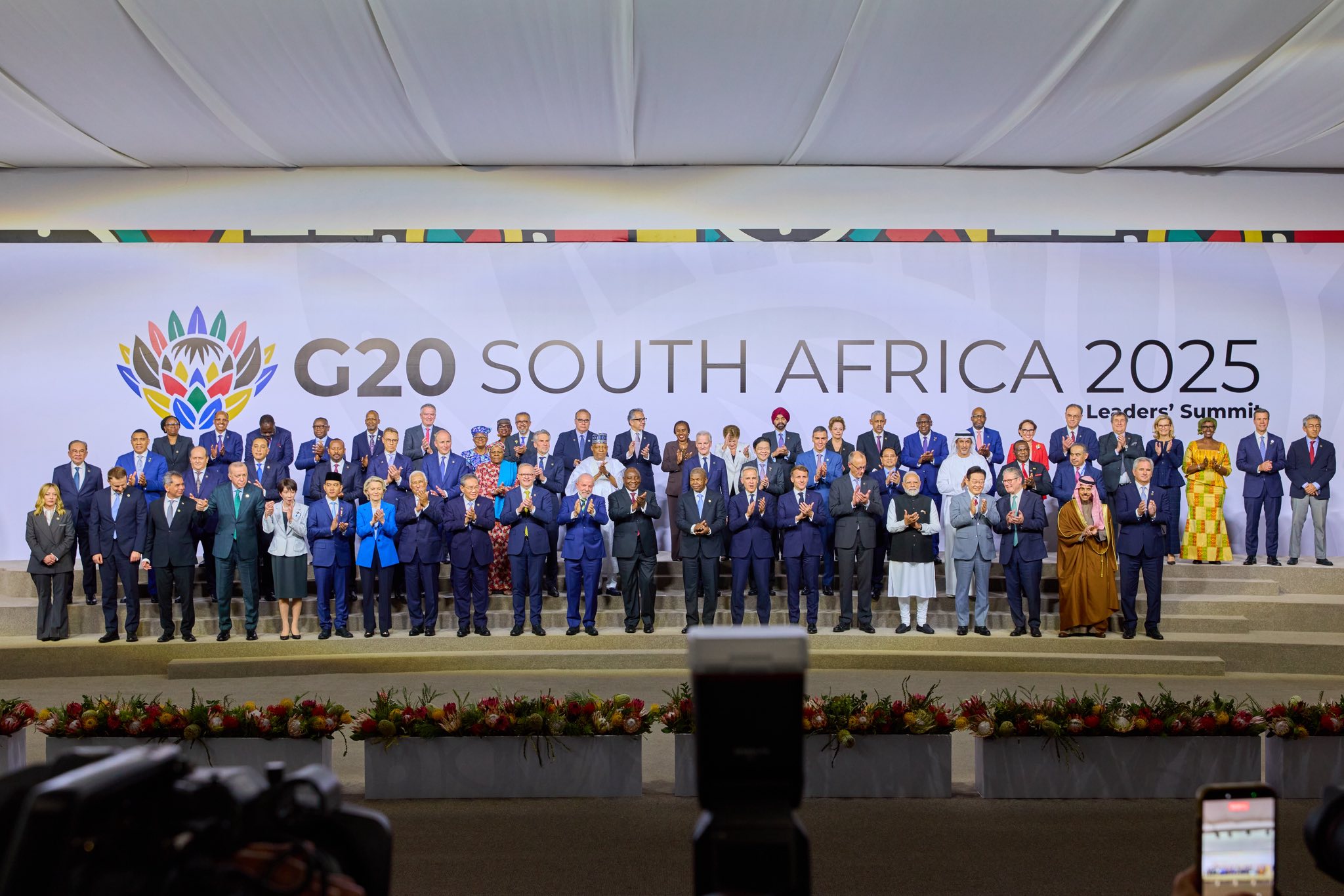
Boycotts, Power Politics, and the Future of the G20
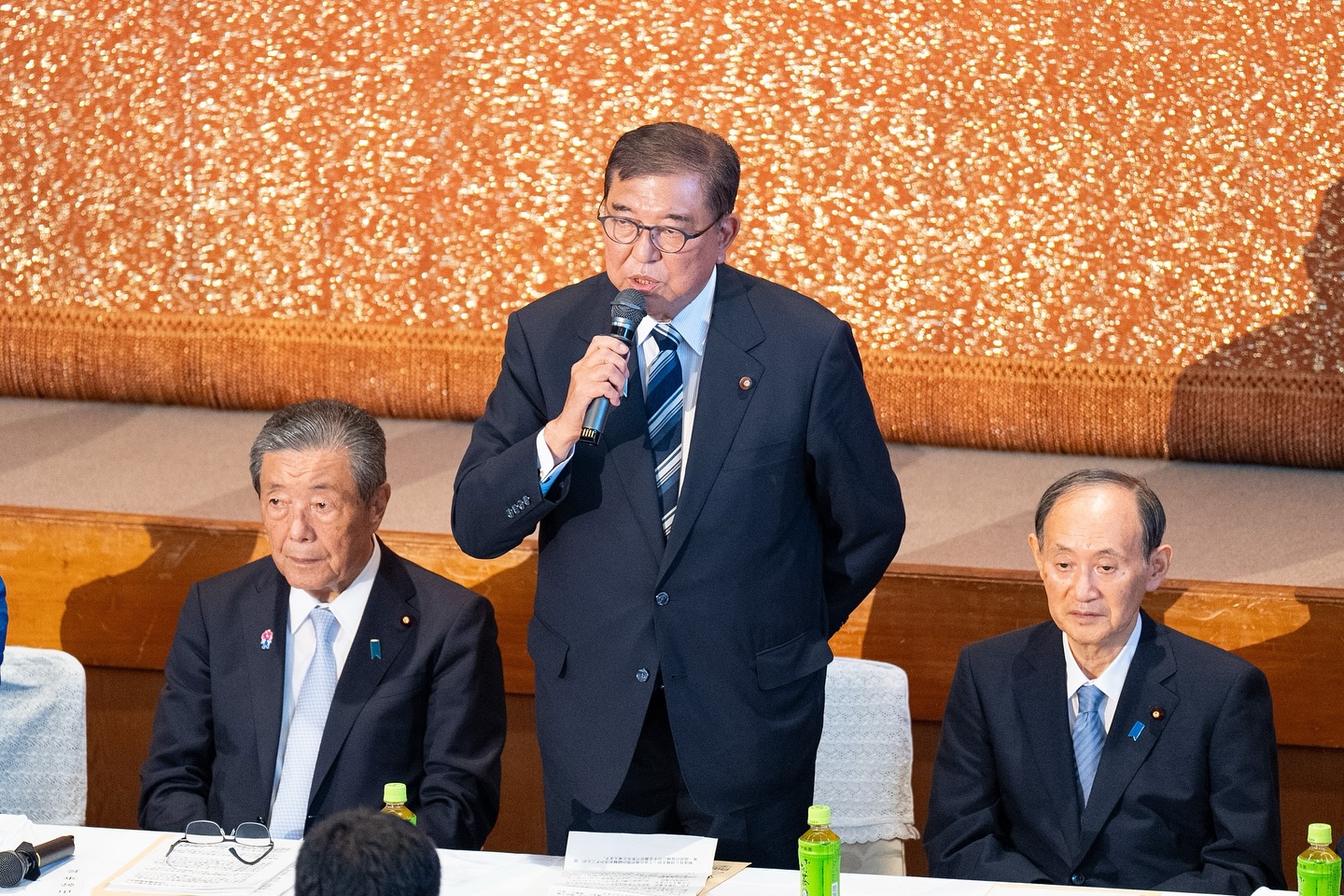
Strategic Shift from PM Abe to PM Ishiba: Will Japan’s Strategy Change?
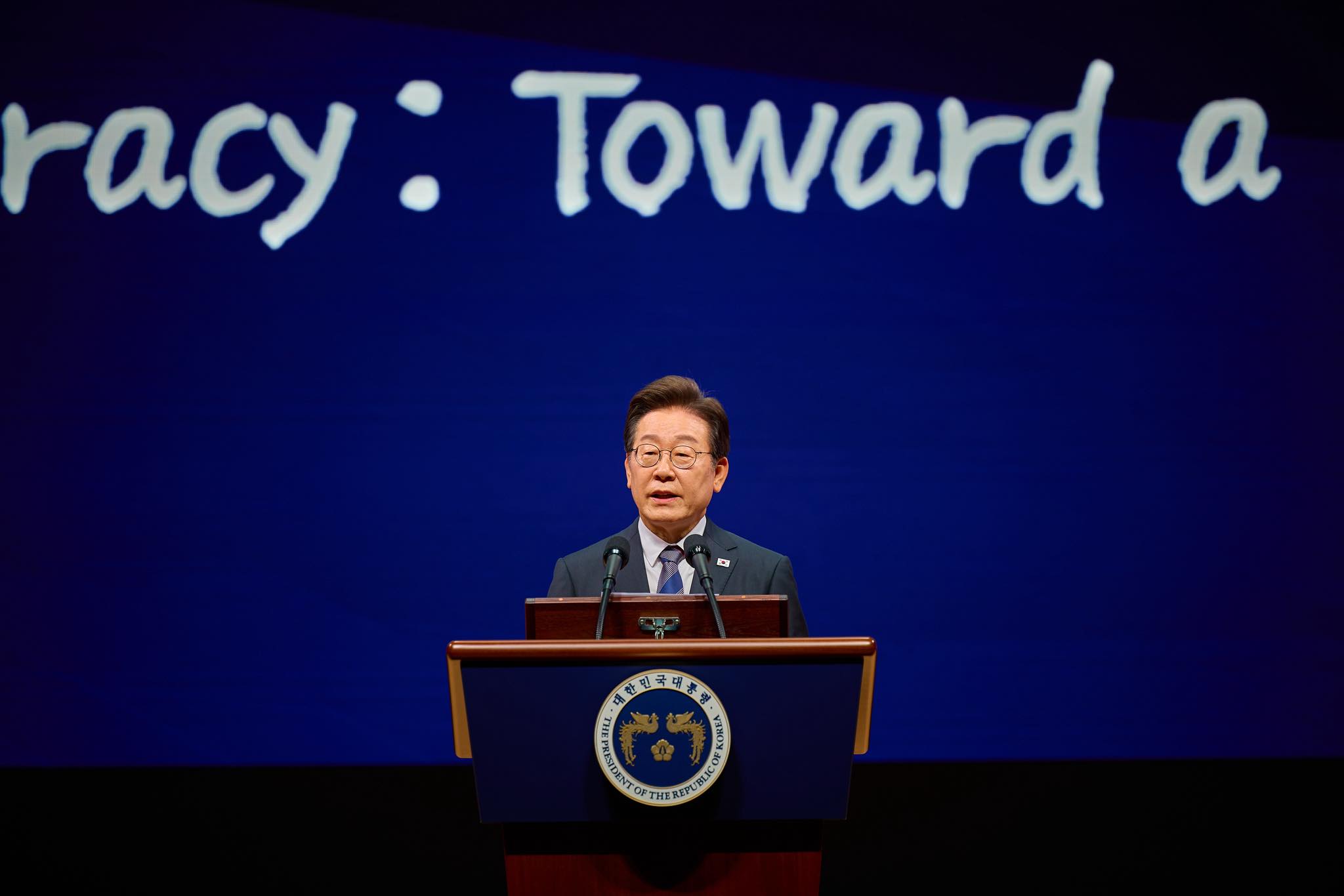
The Impact of South Korean President Lee Jae-myung on the Regional Situation
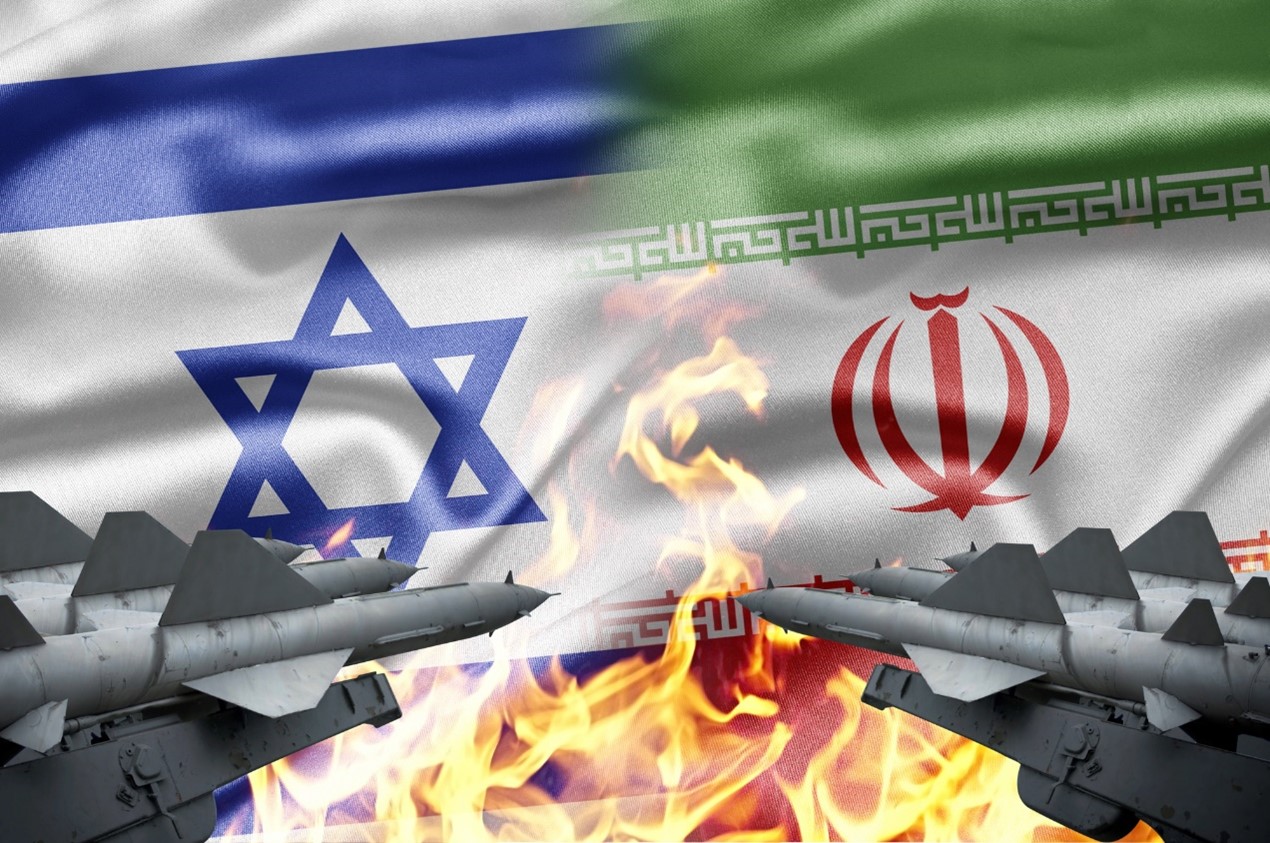
The Israel-Iran War and its Potential Impact on China-Taiwan and the Indo-Pacific
From America First to the Global Landscape: The Impact of Trump’s Comeback on International Dynamics
Taiwan’s Role in the US-Japan-Philippines Alliance
 Facebook
  Youtube
  Twitter
  Podcast