
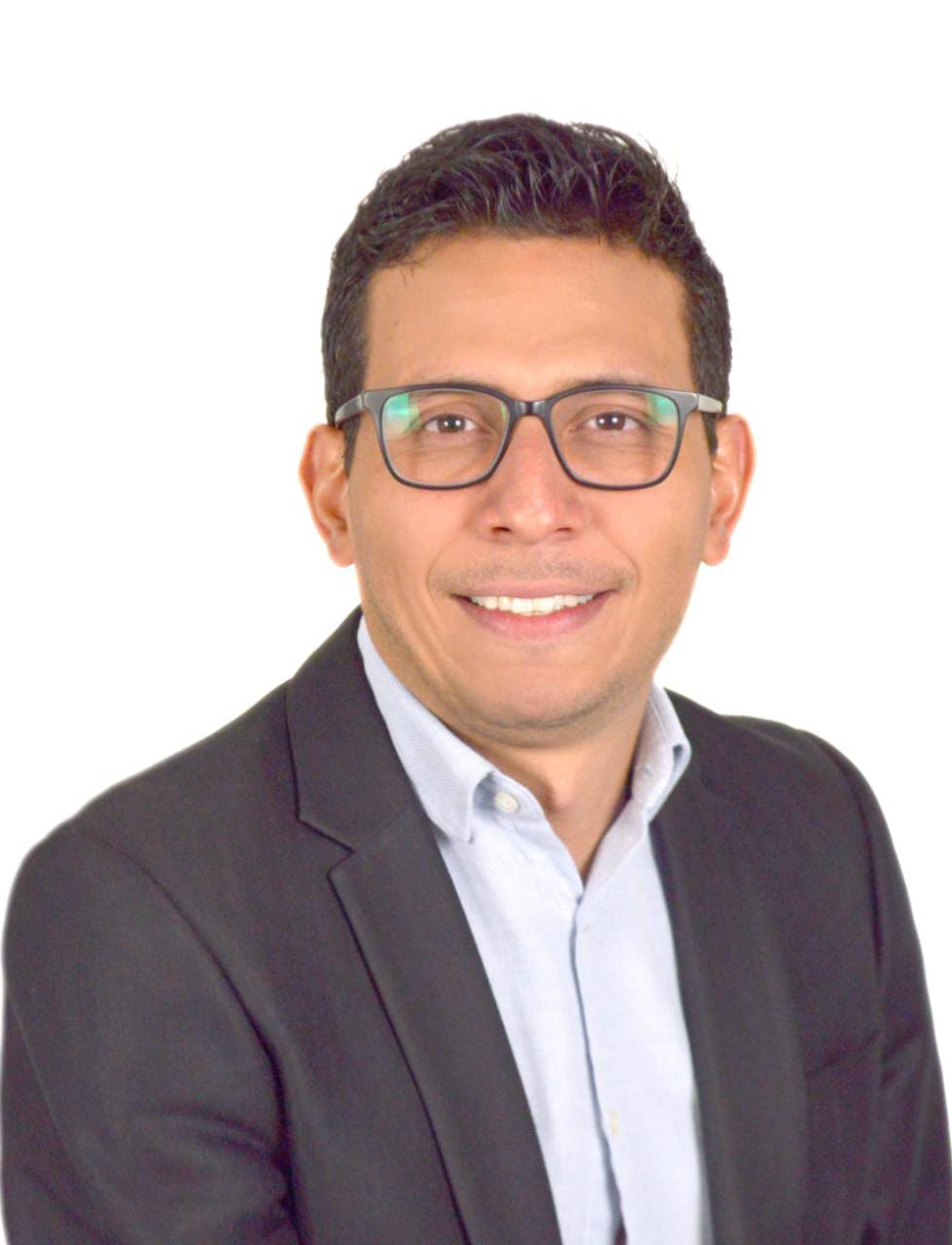


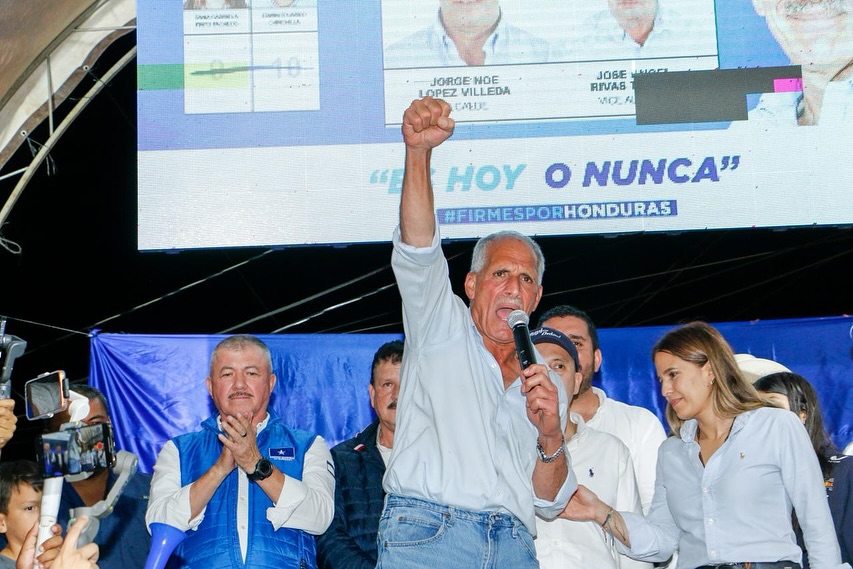
Nasry Asfura is likely to be declared the new president of Honduras, leading the country from 2025 to 2029. If so, the conservative Honduran candidate will likely alter the policy toward Taiwan. Picture source: Nasry Tito Asfura, November 15, 2025, Facebook, https://www.facebook.com/photo.php?fbid=1380003577244995&set=pb.100057060987023.-2207520000&type=3&locale=zh_TW.
Prospects & Perspectives No. 72
The Honduran Presidential Election: Impact on Ties with Taiwan
By Carlos Eduardo Piña
On June 12, 2023, Honduran President Xiomara Castro de Zelaya formally recognized the People's Republic of China (PRC) as the legitimate representative of the Chinese state. This decision marked a turning point for the Central American country, which had maintained uninterrupted diplomatic relations with Taipei for 80 years. Since then, there has been a surge in debate among Honduran political elites and business groups about whether the partnership with the PRC has brought the promised benefits or if the country was better off when it kept close ties with Taiwan.
As expected, this discussion was also part of the political debate surrounding the November 30 presidential election. Two of the main candidates, the liberal Salvador Nasralla and the conservative Nasry Asfura, favor close ties with Taipei. Nasralla even supports switching diplomatic recognition from Beijing to Taipei. In contrast, the ruling party candidate, Rixi Moncada, supports maintaining and deepening bilateral relations with the PRC, as her mentor, President Castro, did.
Now, almost a month after the presidential election, many questions remain about the Taiwan Question in Honduras. The reason? At the time of writing this piece, there is still no clear winner. Asfura is currently in the lead with a very small margin over Nasralla. The ruling party’s candidate is far behind, but her party is considering maneuvers to stay in power despite having more than 80% disapproval among the Honduran people.
This uncertainty is occurring at a time when U.S. President Donald Trump and Secretary of State Marco Rubio are awaiting the publication of the recount that will confirm their preferred candidate, Nasry Asfura, as the winner. Washington is deploying a strategy to reestablish its influence over the region after decades of allowing countries like Honduras to form closer ties with extra-regional powers, such as the PRC. Meanwhile, Beijing has remained silent on this issue, evaluating its strategy if, finally, Asfura’s victory is confirmed.
PRC-Honduras relations: a story of unfulfilled promises
These debates on Taiwan would not have taken place in Honduras if Xiomara Castro de Zelaya had not recognized the PRC as the legitimate representative of the Chinese state in 2023. Although the recognition occurred in the 2020s, the process began between 2006 and 2009 when the leftist leader Manuel Zelaya was in power and promoted strengthening political, diplomatic, and economic ties with Beijing.
Given Zelaya’s strong alliance with former Venezuelan president Hugo Chávez and his enthusiastic support for China in the early 2000s, it is reasonable to believe that he was motivated by ideology to promote an approach to the PRC. This process could have been completed if Zelaya had not been impeached by the National Congress with the support of the military in 2009. It would be 2021 before this strategy was resumed, when Xiomara Castro, Zelaya’s wife, took office as president of Honduras and began negotiations to secure a new ally for Beijing in Central America. Once the diplomatic switch against Taiwan took effect, Xi Jinping recognized Manuel Zelaya’s effort to establish relations between the two countries. According to the Chinese leader, these efforts “will never be forgotten.”
Since then, the relationship between the two countries has had its ups and downs. Following the first bilateral agreements, Castro de Zelaya received donations from Beijing to show appreciation for recognizing the PRC. These donations included US$280 million for building infrastructure, as well as tons of wheat and interest-free loans to modernize neighborhoods affected by hurricanes. According to the Mexican-based Chinese Academic Network on Latin America and the Caribbean, a PRC company, China SFECO Group, is investing approximately US$61 million to build a hospital in Choluteca. A decade ago, Sinohydro built the Patuca III hydroelectric plant after investing around US$530 million.
The story has been different in the commercial sector. Beyond the worrying fact that the US$2.5 billion trade deficit between the PRC and Honduras has increased dramatically, it is important to note that when this Central American country ended its diplomatic relations with Taipei, its free-trade agreement also ended. This affected bilateral trade and caused many job losses, especially in the shrimp industry, one of the country’s most important sectors. According to Taiwanese media and other sources, around 67% of Honduras’ shrimp exports were purchased by Taiwanese companies before 2023.
To mitigate the negative effects on the national economy and address the challenges facing the shrimp industry, Castro de Zelaya promptly directed her officials to initiate negotiations for a new free-trade agreement with the PRC. Negotiations began in 2024 but have since failed, resulting only in an early harvest agreement in September 2024 and a sale-and-purchase agreement to sell 3,000 tons of shrimp in August 2025. This occurred after two years of significant job losses and economic setbacks for the Honduran economy.
Opposition candidates Salvador Nasralla and Nasry Asfura strongly defend the necessity to resume economic ties with Taiwan instead of the PRC, based on failed planning that provoked the loss of thousands of jobs and reduced revenues from exports. Their demand, which goes against the ruling party’s arguments, has significantly influenced the debate surrounding the merits of maintaining relations with the PRC. Asfura has proposed closer ties, while Nasralla has defended a reversal of diplomatic recognition. Both candidates received approximately 80% of the total presidential election votes.
Honduras in the middle of PRC-U.S. competition
It is important to note that amid the debates surrounding the Taiwan issue in Honduras, Latin America and the Caribbean have become a top priority in U.S. foreign policy, as stated in the recently published National Security Strategy 2025. In general, the U.S. is open about its intention to reestablish its influence in its traditional sphere of influence. This means strengthening its position as a key partner to regional countries and, especially, expelling or mitigating the influence of other non-hemisphere great powers, such as the PRC.
To pursue this goal, President Donald Trump openly endorsed Nasry Asfura, the conservative party candidate and Trump’s closest ally in Honduras. At the time, the American leader refused to support Salvador Nasralla, who was accused of being an ally of the leftist regime headed by Xiomara Castro de Zelaya and Rixi Moncada, the ruling party candidate. Additionally, Trump pardoned the historic conservative leader and former president of Honduras, Juan Orlando Hernández, which was seen as an attempt to influence conservative voters to support Asfura.
For its part, the PRC has been following the evolution of the presidential campaign and the nearly one-month process of tallying votes to determine how to approach the new administration in Honduras. Meanwhile, Beijing published its third White Paper on Latin America and the Caribbean, a document in which it reasserts its position as leader of the Global South. In this case, Beijing’s desire is to present itself as a trustworthy partner to the region, including Honduras, regardless of the political ideologies of any government in the region. However, this political and diplomatic stance does not mean that the Xi government is not paying close attention to the possible scenarios that could arise if Honduras elects a president favorable to reengaging with Taiwan. Undoubtedly, a diplomatic reversion from the PRC to Taiwan in Honduras would be disastrous for Beijing’s image, especially given its staunch defense of the so-called “one China” principle.
The future of Honduras-Taiwan relations: is a reversal of diplomatic recognition possible?
Asfura is likely to be declared the new president of Honduras, leading the country from 2025 to 2029. If so, the conservative Honduran candidate will likely alter the policy toward Taiwan. One step Asfura could take is reinstating or attempting to reinstate Honduran exports to Taipei, particularly shrimp exports. The PRC will likely block these intentions by taking a pragmatic approach, as it has with other regional countries that have had pro- and anti-Beijing leaders. The PRC will offer economic incentives to prevent a shift in favor of Taiwan.
In the diplomatic sphere, it is difficult to believe that Asfura could sever his country’s diplomatic relations with the PRC overnight. There are many factors that allow one to consider this scenario, but the strongest is likely related to the difficulties his government could face in the country’s economy and in the international arena if it moves forward without planning or a long-term approach. This is similar to what happened with Castro de Zelaya, who could not prevent the impact on the national shrimp industry before switching Honduras's diplomatic recognition in favor of the PRC.
It is important to note, however, that Asfura will owe part of his victory to the Trump administration. Trump will likely ask Asfura to govern in line with his hemispheric approach. Depending on the circumstances and state of Sino-American relations, the likely new Honduran president could be influenced by his American counterpart to either reduce or deepen his engagement with Beijing.
The Honduran presidential election shows that in some countries politicians are debating the pros and cons of switching diplomatic recognition from Taiwan to the PRC. Two years ago, when China and Honduras established official diplomatic relations, this matter would have seemed impossible due to Beijing’s strong economic and political relevance at the international level. Taipei should take note of this and leverage its positive presence in some countries, although admittedly many factors must align for those countries to reverse their recognition from the PRC to Taiwan.
(Carlos Eduardo Piña is contributor to the Análisis Sínico project of the Argentine American think tank CADAL.)
相關文章
Washington Reassures (and Worries) Taiwan
President Trump’s National Security Strategy and Tensions Across the Taiwan Strait
Boycotts, Power Politics, and the Future of the G20
Trump and the Axis of Disorder
Second Thomas Shoal Redux and Beijing’s Strategic Limitations
Reading Korea’s Early Autumn Winds: Trump Abruptly Scales Down a Major Joint Exercise
The G7 Leaders’ Summit in France: An Unexpected Success
What Does the U.S. War Against Iran Mean for the Indo-Pacific?
Implications of the U.S. Tariff Policy on Global Economics and Taiwan’s Response
Trump’s National Security Strategy and the Future of the World Order
The ASEAN Malaysia Summit: The Calm Before the Storm?

The Rare Earth Pause: A Strategic Assessment

 Facebook
  Youtube
  Twitter
  Podcast