

The New U.S.-China Paradigm Will Constrain but Not Collapse the U.S.-Taiwan Relationship


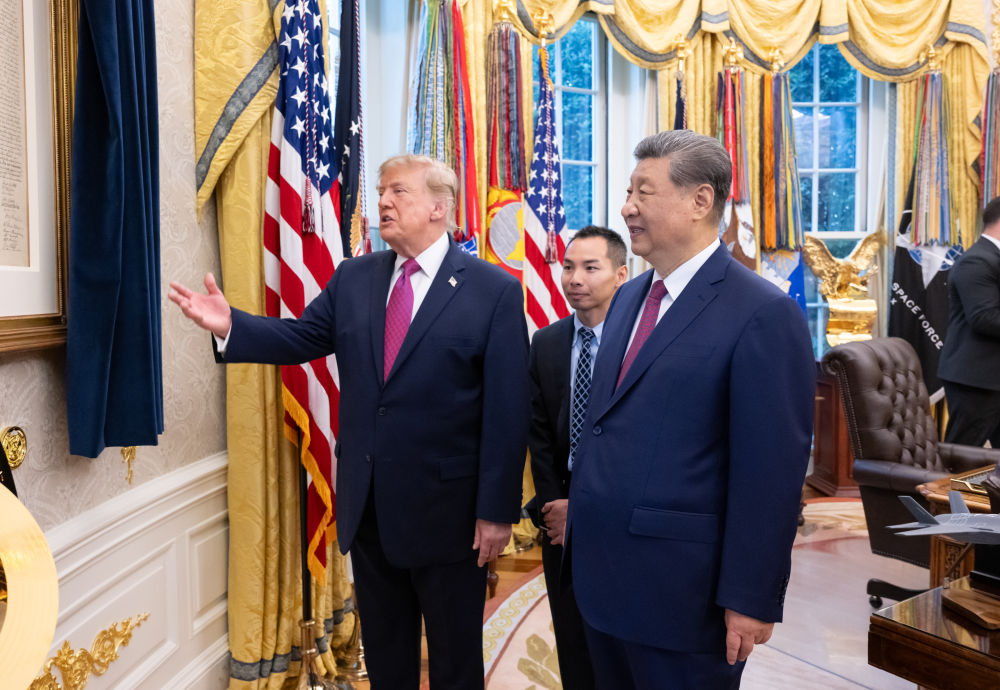
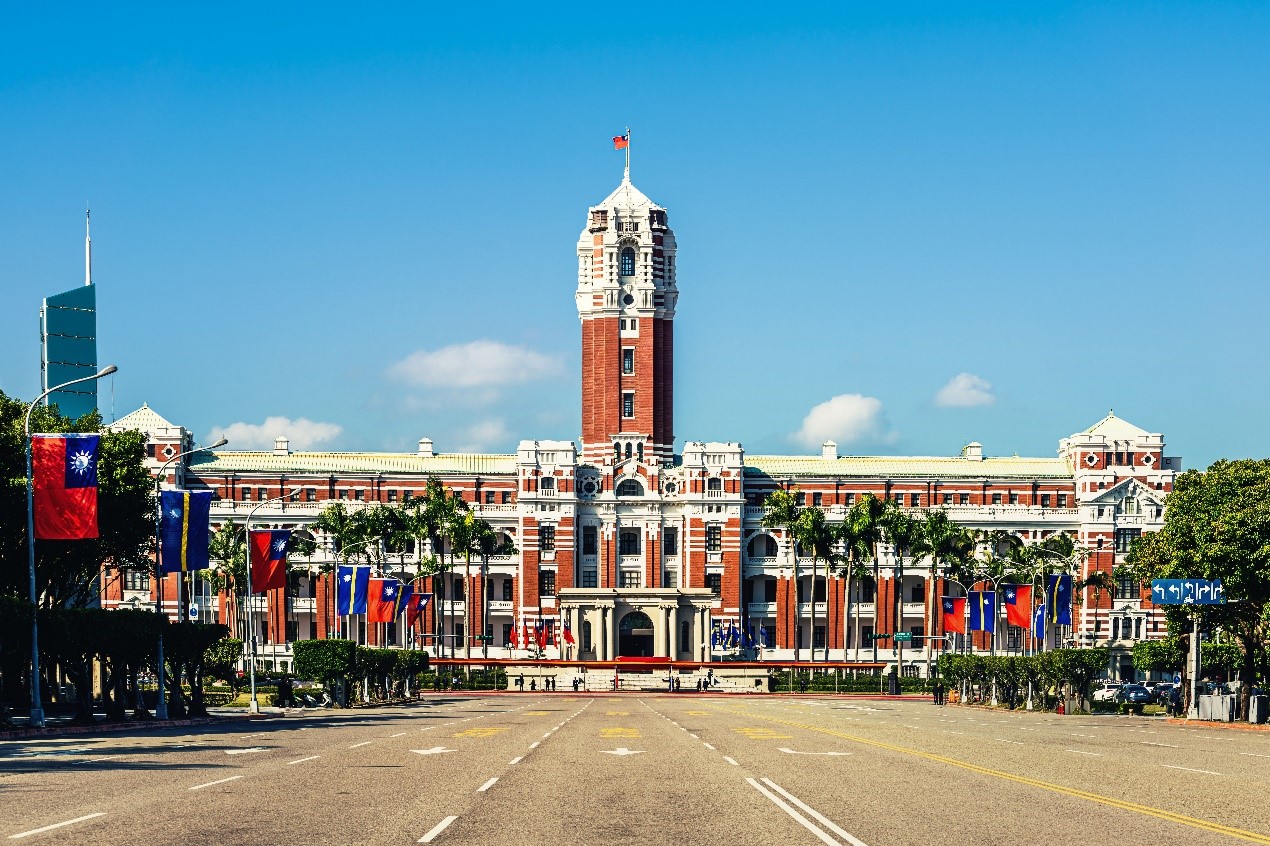
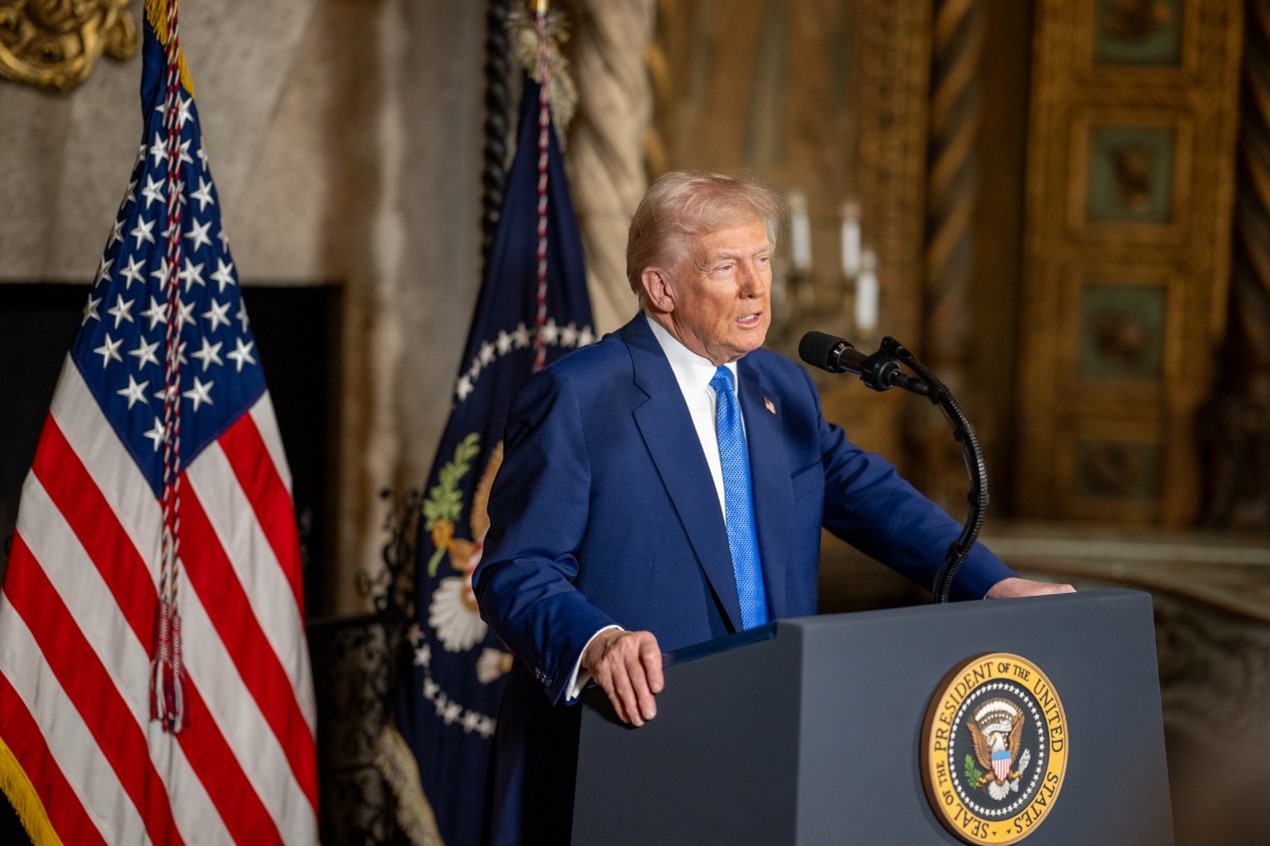
Despite these ostensible policy shifts, the Trump administration has continued and even expanded certain U.S.-Taiwan cooperation in ways that meaningfully strengthen the relationship. Washington has sought to enlarge or accelerate bilateral resiliency initiatives; U.S. military instruction for Taiwan’s military; trade and investment cooperation; commercial and defense supply chain integration; and deliveries from previous arms sales packages. Picture source: CPC News, September 25, 2026, CPC News, https://cpc.people.com.cn/BIG5/n1/2026/0925/c435113-40805465.html.
Prospects & Perspectives No. 58
The New U.S.-China Paradigm Will Constrain but Not Collapse the U.S.-Taiwan Relationship
By M. Reece Breaux
Instead, the Washington summit’s modest deliverables resembled those from the May 2026 Beijing summit: an extension of the trade war ceasefire and rare earth shipments; continued deferral of arms sale packages to Taiwan; small, symbolic commodity purchase commitments; and an expansion of bilateral working groups.
The summit’s most significant outcome was the Trump administration’s reinforced commitment to a “constructive relationship of strategic stability” with China, based on “respect, fairness, and reciprocity.” While this paradigm may help Washington buy time to defuse China’s supply chain leverage and stabilize the U.S. economy, it might also constrain — but not collapse — the U.S.-Taiwan relationship.
A lower profile for the U.S.-Taiwan relationship
This paradigm has two implications for Taiwan. First, Taiwan should not expect significant or public U.S. support for its security, international presence, or economy until at least 2027 as Washington works to arrange two more summits before year end and extend the trade war detente. Trump’s political and economic context makes him unlikely to risk provoking China with strong support for Taiwan. With the Iran war spiking energy prices ahead of next month’s midterm elections, Trump likely aims to avoid the reimposition of Chinese rare earth restrictions that last year disrupted U.S. industrial production and raised costs for myriad goods. Trump likely also judges that strong support for Taiwan may lead Xi to cancel their upcoming engagements.
Beyond these immediate constraints, Trump appears apathetic about Taiwan and occasionally sympathetic to certain Chinese narratives about it. He has repeatedly invoked the vast distance between the United States and Taiwan when asked about his willingness to defend the country; blamed and tariffed Taiwan for supposedly stealing the United States’ semiconductor industry; stated that Taiwan should pay for U.S. protection; cast doubt over Taiwan’s resilience to a Chinese attack; and suggested that Taiwanese President Lai Ching-te is pursuing independence. These positions suggest Trump’s commitment to Taiwan, in peace or war, is not certain. They also undermine U.S. credibility.
Still, Taipei should not expect U.S. abandonment. Trump’s statements that he uses policy toward the country as a “negotiating chip” with China suggest he intends to maintain a relationship with Taipei — yet one more muted than previous U.S. administrations, including Trump’s own. Moreover, his administration’s strategy documents recognize the utility of the First Island Chain, Taiwan’s role in technology supply chains, and the threats to U.S. interests should China dominate the Western Pacific region.
Chinese preferences increasingly influence U.S.-Taiwan policy
The paradigm’s second implication is that Chinese preferences will continue to shape the Trump administration’s Taiwan policy, breaking from decades of U.S. practice and potentially making the U.S.-Taiwan relationship less stable. This dynamic appears most notably in Trump’s discussions with Xi about potential Taiwan arms sales, U.S. approval of which remains indefinitely deferred. The Washington summit is at least the third time Trump discussed such sales with Xi, suggesting the issue is becoming institutionalized in official dialogues.
This development is unprecedented in U.S. policy and warrants a contextual review. Under its “one China” policy inaugurated in 1979, the United States built legal and diplomatic guardrails to maintain support for Taiwan’s security. These include the 1979 Taiwan Relations Act (TRA) and the 1982 Six Assurances to Taiwan, which, along with the Three Communiqués (1972, 1979, 1982), formed the backbone of Washington’s Taiwan policy. The TRA contains language committing the United States to make available weapons for Taiwan’s defense, and the second of the Six Assurances suggests Washington will not negotiate such decisions with China. For decades, these policies insulated Taiwan arms sales from U.S.-China discussions; this appears to have changed under Trump.
The U.S.-China relationship has increasingly influenced the Trump administration’s Taiwan policy beyond arms sales. After Xi reportedly urged Trump in June 2025 to limit U.S.-Taiwan interaction, Washington reportedly blocked Lai from doing a stopover in New York City and cancelled a meeting between Under Secretary of Defense for Policy Elbridge Colby and Taiwan’s Defense Minister Wellington Koo. Most notably, at Xi’s request, Trump reportedly asked Japan’s Prime Minister Takaichi Sanae in November 2025 to soften her rhetoric on Taiwan. Beyond diplomacy, the 2026 National Defense Strategy treats China gingerly and does not mention Taiwan once. The Trump administration’s repeated accommodation of Chinese requests calls into question longstanding U.S. approaches to Taiwan.
China is attempting to exploit Trump’s idiosyncratic Taiwan policy to commit the United States to China’s position on Taiwan. Following the Washington summit, CCP Central Foreign Affairs Commission Director Wang Yi asserted that maintaining the summit consensus of “respect” entails respecting, among other items, each side’s sovereignty and territorial claims. Should the United States accept this interpretation — it has not — China could condition implementing agreements on Washington affirming Beijing’s Taiwan claim.
Positive developments buoy relationship
Despite these ostensible policy shifts, the Trump administration has continued and even expanded certain U.S.-Taiwan cooperation in ways that meaningfully strengthen the relationship. In particular, Washington has sought to enlarge or accelerate bilateral resiliency initiatives; U.S. military instruction for Taiwan’s military; trade and investment cooperation; commercial and defense supply chain integration; and deliveries from previous arms sales packages.
Significantly, the Trump administration approved a higher value of arms sales in its first 18 months than did the administration of former President Joe Biden in four years. Washington may have sought to front-load weapons sales to open space for multiple U.S.-China leader-level summits without abandoning Taipei. Indeed, Washington has deferred a planned US$14 billion arms sale package. China reportedly pressed the United States not to approve it ahead of the Washington summit, suggesting movement may have been imminent and may occur after the next two Trump-Xi meetings.
Positive changes are also evident in Taipei. Washington’s emphasis on defense spending and attritable systems likely helped inform Lai’s proposal to raise Taiwan’s defense budget, and it certainly motivated the Legislative Yuan to double the budget the KMT was initially willing to pass and to advance crucial drone legislation.
The FY2026 NDAA, built by Congress, tripled the authorized funding for the Taiwan Security Cooperation Initiative to US$1 billion and mandated the Defense Department to organize co-production of unmanned systems with Taiwan. Trump ultimately signed the NDAA despite opposing the co-production provision. The Trump administration also helped organize around US$250 billion in Taiwanese investments in the United States, backed by another US$250 billion in credit guarantees. Deeper defense and economic integration increases Washington’s stake in Taiwan’s fate and incentivizes long-term support.
Geopolitical forces favor a strong U.S.-Taiwan relationship
Despite concern in Taipei and elsewhere, this “constructive relationship of strategic stability” reinforced at the Washington summit does not entail U.S. abandonment of Taiwan and will likely not last beyond the Trump administration.
After all, the U.S.-China relationship is fundamentally adversarial, with structural forces driving competition over zero-sum goals. Taiwan’s status is central to this competition: its geography restricts China’s access to the Pacific Ocean; its world-beating semiconductors power the global and U.S. economies; its de-facto independence supports U.S. credibility; and its thriving democracy challenges CCP ideological narratives. Washington consequently has a critical interest in preventing China from annexing Taiwan.
This interest drives Congress and the Executive Branch bureaucracy to strongly support Taiwan and competition with China, even while Trump may prefer unconventional approaches to both. As such, Washington will maintain the U.S.-Taiwan relationship, and this U.S.-China paradigm will ultimately give way to intensified competition.
(M. Reece Breaux is an Intelligence Officer in the U.S. Navy Reserve and a Pacific Forum Young Leader. He last served as a Defense Fellow on the U.S. House Select Committee on the CCP.)
Related Content
Trump-Xi Summit and the Security Situation in the Taiwan Strait
After Two Trump-Xi Summits: Competing Within Limits
The Trump-Xi Summit: What It Was Not is More Important than What It Was
The Future of U.S.-Taiwan Relations After the January Elections
Washington Reassures (and Worries) Taiwan
Implications of the U.S. Tariff Policy on Global Economics and Taiwan’s Response
The U.S. Supreme Court Rules on Trump’s Tariffs: What Does This Mean for Taiwan?
The Indo-Pacific and the U.S. National Defense Strategy: From Rebalancing to Retrenchment
A Geopolitical Inflection Point: The Deeper Implications of the U.S.-Taiwan Reciprocal Tariff Agreement for Bilateral Relations
President Lai Ching-te’s One Year Mark: Navigating Uncertainty
Washington’s Sharp Shift in Ukraine Policy: Implications for Taiwan
Navigating Turbulence: China and Taiwan During Trump 2.0
 Facebook
 Youtube
 Twitter