

The Philippines-Japan Strategic Partnership: Supporting a Rules-Based International Order


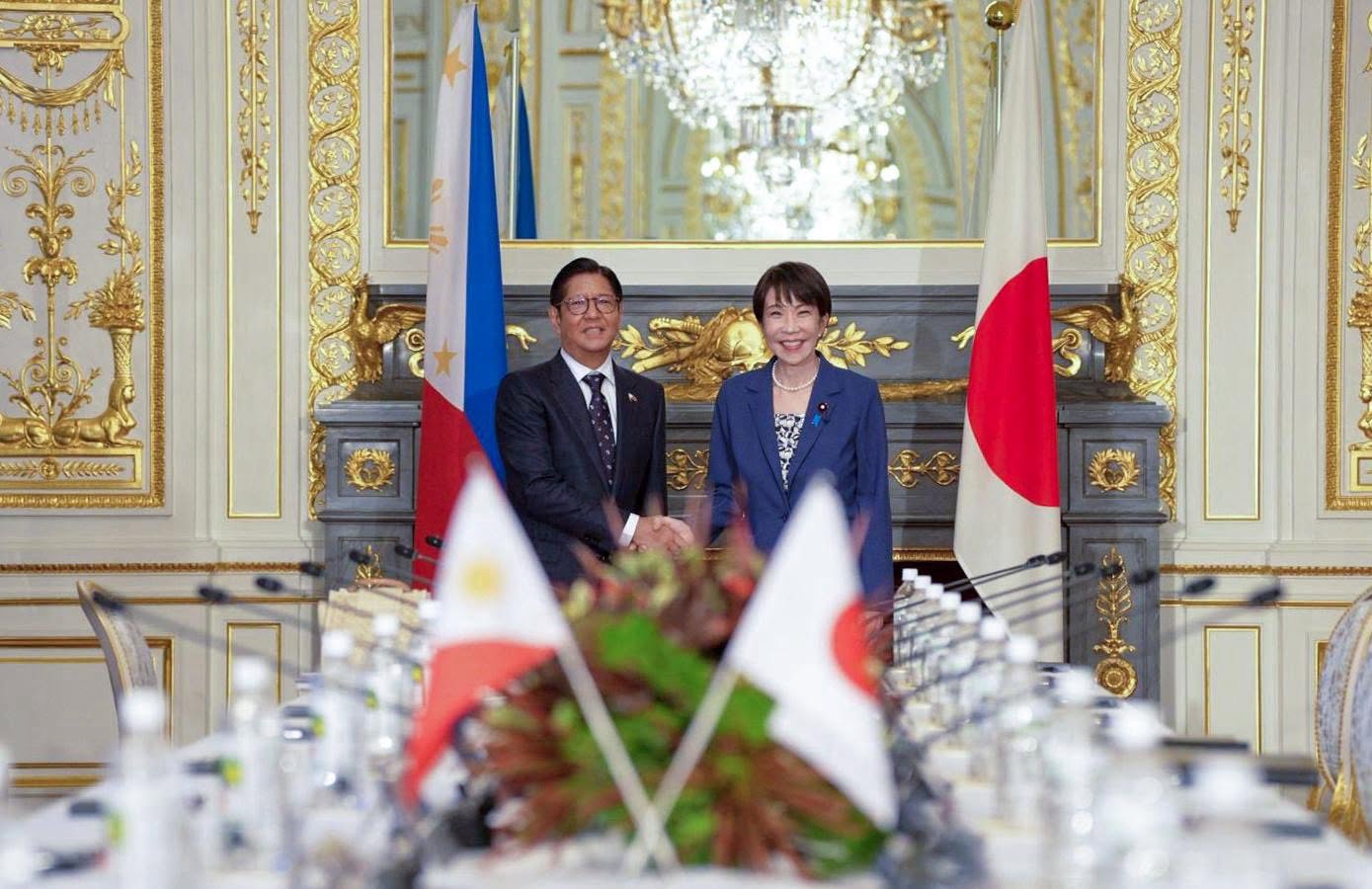
On May 28, 2026, during Philippine President Ferdinand R. Marcos Jr.’s state visit to Japan, Manila and Tokyo elevated their relationship to a “Comprehensive Strategic Partnership.” President Marcos Jr. described the Philippines’ strategic partnership with Japan as the “highest tier” in the country’s diplomatic framework of partnerships, second only to Manila’s formal alliance with Washington. Picture source: Bongbong Marcos, May 29, 2026, Facebook, https://www.facebook.com/photo.php?fbid=1548195456675029&set=pb.100044537672013.-2207520000&type=3.
Prospects & Perspectives No. 43
The Philippines-Japan Strategic Partnership:
Supporting a Rules-Based International Order
By Mico A. Galang & Aries A. Arugay
On May 28, 2026, during Philippine President Ferdinand R. Marcos Jr.’s state visit to Japan, Manila and Tokyo elevated their relationship to a “Comprehensive Strategic Partnership.” President Marcos Jr. described the Philippines’ strategic partnership with Japan as the “highest tier” in the country’s diplomatic framework of partnerships, second only to Manila’s formal alliance with Washington.
Months earlier, President Marcos Jr. unveiled Manila’s foreign policy on strategic partnerships. Underscoring that strategic partnerships are not a “common currency” for the Philippines, he emphasized that Manila exercises “great deliberation” in forging such relationships. Indeed, the Philippines adheres to four key parameters in identifying potential strategic partners: “mutual strategic trust, common cause, clear alignment of interests, and a demonstrated track record of being responsible players in the international arena and the global commons.” To date, the Philippines maintains strategic partnerships with five countries: Japan, Vietnam, Australia, the Republic of Korea, and India.
Marcos Jr.’s policy of strategic diversification is a continuation of a perspective shared by previous Philippine presidents since the administration of President Benigno Simeon Aquino III (2010-2016). Under Marcos Jr., however, the Philippines has seen a further expansion and/or deepening of these security relationships. Unlike most Southeast Asian states, which have concentrated their strategic energy on managing the United States and China, the Philippines has chosen to double down on diversification — extending its hedging well beyond the two superpowers. Making sense of this anomalous move requires attention to the ebb and flow of Manila’s ties with Washington and Beijing. From the perceived erosion of U.S. commitment to its oldest Asian ally since the 1990s, to China’s failure to reciprocate the accommodationist overtures of the Duterte administration, the security calculus under Marcos Jr. has settled on a simple premise: do not place all of the country’s strategic eggs in either great power’s basket.
Philippines-Japan security cooperation: mutual interests, shared values
In the case of Japan, Manila and Tokyo share a clear convergence of strategic interests. The 2026 Japan-Philippines Joint Statement on the Comprehensive Strategic Partnership (JSCPS) emphasized the importance of upholding a Free and Open Indo-Pacific (FOIP) to promote a “rules-based regional architecture that upholds international law, underpinned by freedom of navigation and overflight, peaceful settlement of disputes, and respect for sovereignty, sovereign rights, and territorial integrity.” Indeed, both countries are maritime and archipelagic states in the Indo-Pacific, each facing territorial and maritime disputes with China in the East China Sea and the South China Sea, respectively.
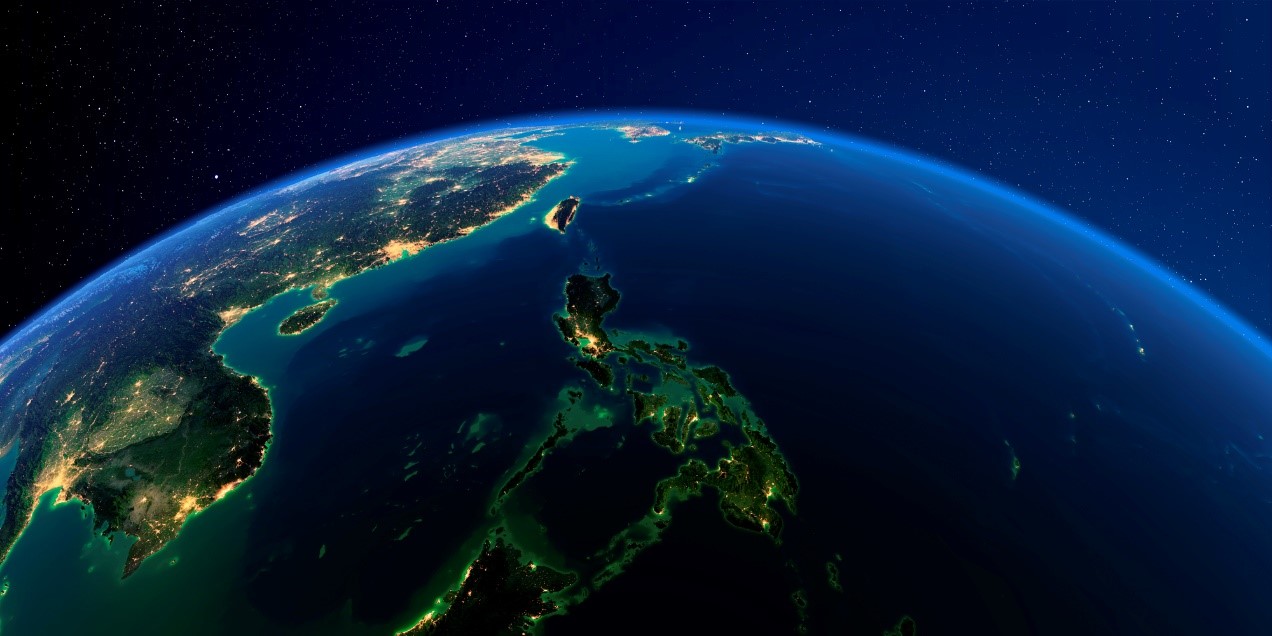
More importantly, Japan and the Philippines – alongside Taiwan, Borneo, and other parts of maritime Southeast Asia – form part of the First Island Chain. China’s potential success in maritime expansionism across the region could enable Beijing to recalibrate the balance of power within the First Island Chain in its favor. This strategic imperative helps explain why security cooperation has become increasingly prominent in the Japan-Philippines strategic partnership, which initially focused primarily on economic cooperation.
Focus on maritime security
Japan has made substantial contributions to the modernization of the Philippines’ maritime and air capabilities through sustained defense assistance. Its support has included the provision of Multi-Role Response Vessels for the Philippine Coast Guard, air surveillance radar systems for the Philippine Air Force, and Beechcraft TC-90 King Air aircraft for the Philippine Navy to strengthen maritime domain awareness. Moreover, as the first recipient of Japan’s Official Security Assistance (OSA), the Philippines has benefited from additional defense equipment and infrastructure intended to reinforce its deterrence posture and operational effectiveness. The signing of the Acquisition and Cross-Servicing Agreement (ACSA) in January 2026 marked another milestone by institutionalizing logistical cooperation and enhancing military interoperability.
To further institutionalize security cooperation and promote interoperability between their armed forces, the two countries signed the Reciprocal Access Agreement (RAA) in 2024. Entering into force in 2025, the RAA serves as the legal framework governing military training and exercises between the Japan Self-Defense Forces (JSDF) and the Armed Forces of the Philippines (AFP). The agreement has enabled Japan to participate directly in Philippines-United States military exercises rather than merely observing them. It was the third such agreement concluded by the Philippines, following the Visiting Forces Agreement (VFA) with the U.S. in 1998 and the Status of Visiting Forces Agreement (SOVFA) with Australia in 2007. Since then, the Philippines has signed similar agreements with New Zealand, Canada, and France.
Challenges and prospects
The elevation of Japan-Philippines relations reflects the increasing pace and depth of security cooperation between two like-minded countries. As longstanding treaty allies of the U.S., the Philippines and Japan have consistently emphasized the value of trilateral cooperation with Washington in maintaining peace and stability across the Indo-Pacific. Nevertheless, Manila and Tokyo’s decision to elevate their strategic partnership has coincided with growing uncertainty regarding the trajectory of U.S. foreign policy under the second Donald Trump administration, particularly with respect to transatlantic security and developments in the Middle East. Although the U.S. has largely maintained continuity in its Indo-Pacific strategy, its expanding global commitments have raised concerns about the sustainability of its long-term strategic focus and resource allocation in the region.
In this evolving strategic environment, closer collaboration among regional allies and like-minded partners has become increasingly important. Rather than serving as an alternative to the U.S.-led alliance network, the Philippines’ strengthened strategic partnerships reinforce that system by adding complementary layers of security cooperation. They likewise demonstrate that middle powers are not merely passive participants in regional affairs but are capable of shaping the strategic environment through diplomacy, institutional cooperation, and practical security initiatives. Viewed in this context, the elevation of the Japan-Philippines Comprehensive Strategic Partnership is more than a diplomatic milestone. Indeed, it signals a shared commitment by states with converging interests to deepen cooperation in support of a stable, secure, and rules-based regional order.
(Mico A. Galang is a member of the Young Leaders Program, Pacific Forum (Hawaii, United States). Dr. Aries A. Arugay is a Visiting Senior Fellow and Coordinator of the Philippine Studies Programme at ISEAS – Yusof Ishak Institute. He is also Professor at the Department of Political Science, University of the Philippines-Diliman.)
相關文章
Narrative-Building Trumps Island-Building for Beijing in Sandy Cay
The Strategic Orientation of the Ishiba Cabinet and its Implications for Taiwan-Japan Relations
The 2024 Shangri-La Dialogue and its Aftermath
Philippine-American Defense Revival and Crisis in the Taiwan Strait
The Strategic Rise of the Philippines: Unpacking Manila’s Growing Strategic Importance in Indo-Pacific Geopolitics
The US-Japan Leaders’ Summit Statement and the Security Situation in the Taiwan Strait
South Korea’s Indo-Pacific Strategy Report and Its Regional Implications
Japan’s New National Security Strategy – An Awakened Japan and Its Implications for Taiwan
Implications of Japan’s New National Security Strategy for Regional Security in Northeast Asia
Crisis in the Taiwan Strait: Imperatives for the Philippines
Former Prime Minister Shinzo Abe Understood the Importance of Defending Taiwan
The Implications of Russo-Chinese Intensified Naval Operations Against Japan
 Facebook
  Youtube
  Twitter
  Podcast