

President Lai’s Second-Year Address and Prospective Developments in Cross-Strait Relations


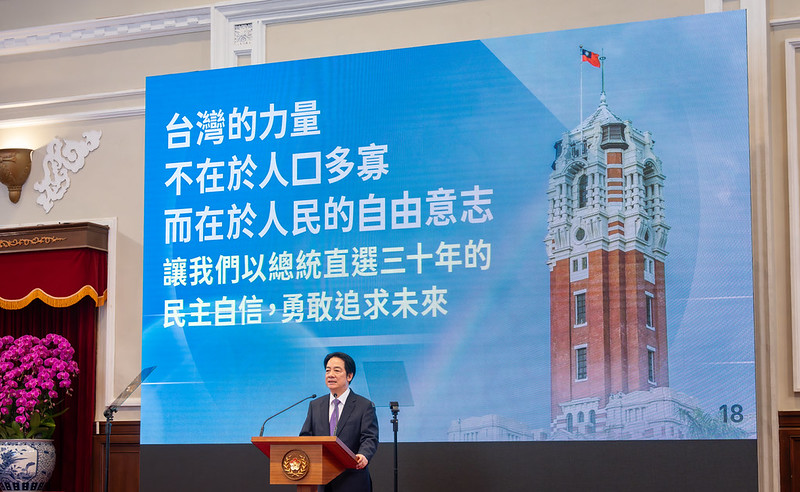
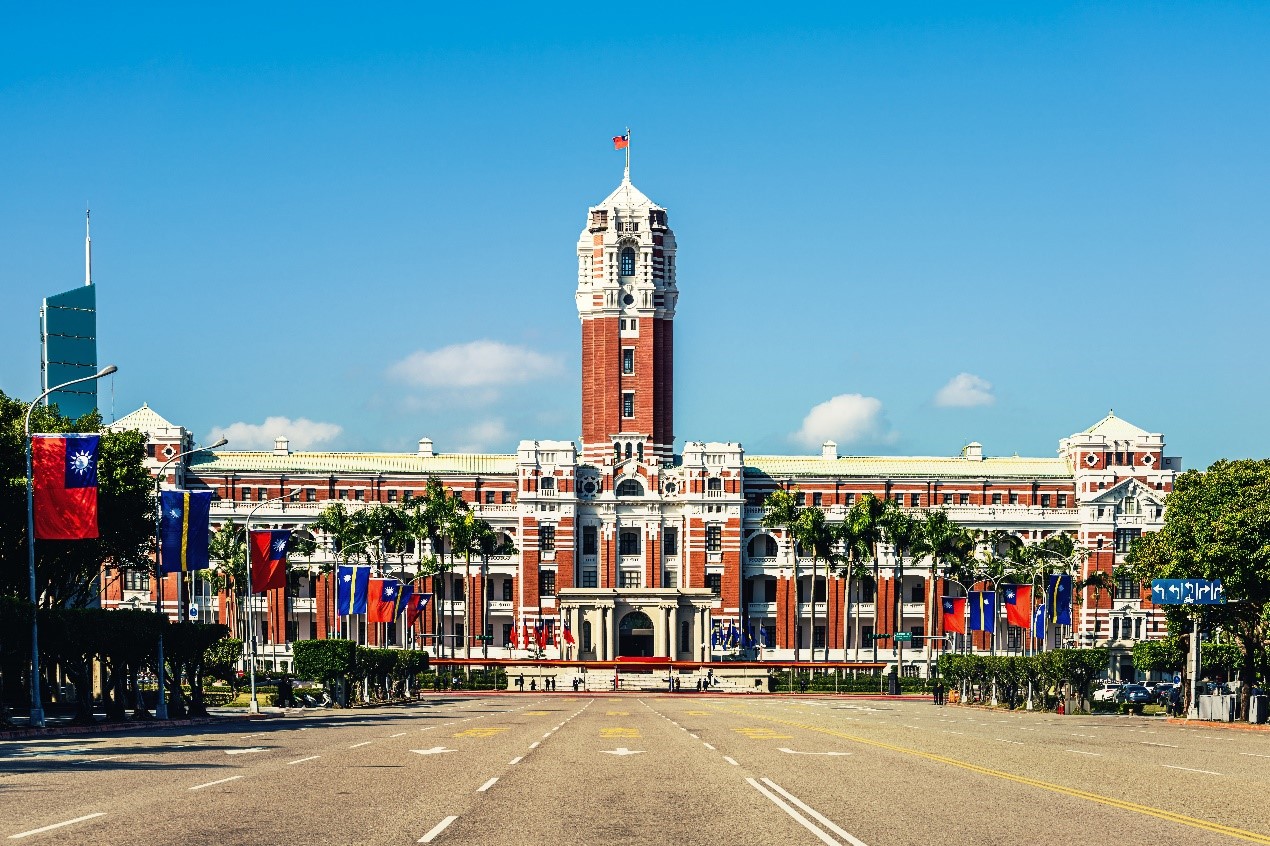
President Lai Ching-te delivered his second-anniversary address at the Presidential Office on May 20, 2026. In this speech, he highlighted three primary focus areas: safeguarding Taiwan’s democratic and free way of life, maintaining the status quo of peace and stability across the Taiwan Strait, and developing the economy to build a Taiwan that is more resilient, competitive, and supportive of its people. Picture source: Office of the President, May 20, 2026, flickr, https://www.flickr.com/photos/presidentialoffice/55281762246/in/album-72177720333724038.
Prospects & Perspectives No. 32
President Lai’s Second-Year Address and Prospective Developments in Cross-Strait Relations
By Fang-Yu Chen
President Lai Ching-te delivered his second-anniversary address at the Presidential Office on May 20, 2026. In this speech, he highlighted three primary focus areas: safeguarding Taiwan’s democratic and free way of life, maintaining the status quo of peace and stability across the Taiwan Strait, and developing the economy to build a Taiwan that is more resilient, competitive, and supportive of its people. While the address was structurally balanced and pragmatic, offering no significant policy departures, it nevertheless unveiled critical points of interest that constitute the principal challenges for the Taiwanese government in the near future. This article first examines the overall cross-Strait relations and international geopolitical context and then discusses the most pressing issues in Taiwan’s current domestic politics.
Lai’s priority list
The largest part of President Lai’s speech focused on protecting Taiwan’s democracy and boosting defense to secure peace. He emphasized that Taiwan’s democratic way of life will not tolerate external threats or interference, and he addressed recent domestic controversies. With current legislative battles severely slowing down government operations, President Lai stressed that political parties must not let their differences weaken Taiwan’s ability to defend itself. He also reiterated that peace depends on strong defense, which Taiwan will continue to build alongside global democratic partners while showing a firm commitment to defense autonomy and self-protection. From this viewpoint, the core direction of Taiwan’s cross-Strait, foreign, and defense policies will remain largely unchanged
Looking at the defense, foreign affairs, and cross-Strait policies, the Taiwanese government’s stance is clear: it wants to step onto the global stage and work with democratic allies to deter authoritarian threats. Critics keep asking why the ruling party refuses to “talk to China,” and some people in international think tanks even parrot Beijing’s view that Taiwan should initiate “negotiations.” But the truth is, Taiwan has never rejected dialogue. It was China that cut off all communication channels after the Democratic Progressive Party took power in 2016, and it was China that unilaterally restricted tourists, students, and business exchanges over the years. The core issue is that no matter what Taiwan says or does, Beijing labels every move as “Taiwan independence” and runs global propaganda campaigns to paint Taiwan as a troublemaker.
President Lai’s speech shows that Taiwan’s current policy remains consistent. His tone was actually softer when addressing China’s disruption of peace, avoiding direct criticism. This fits a recent trend in major speeches of not criticizing China outright.
On the flip side, President Lai did not use much so-called “assurance” language. China always pushes forward step-by-step and will not back down just because Taiwan offers reassuring words. Therefore, cross-Strait relations will likely stay the course, but China’s expansion will continue. This includes its fast-growing military spending, grey-zone warfare against neighbors, and the weaponization of trade. Since March 2026, we have also seen a rising threat at sea. Reports from Reuters and posts by Taiwan’s National Security Council Secretary-General Joseph Wu show that China is heavily expanding its naval and coast guard ships, holding regular, massive drills across the East China, South China, and Taiwan Strait. It is clear that China is not just focusing on Taiwan, but is training against the entire First Island Chain. Cross-Strait tensions will continue and have already spilled over into the region, testing how wisely Taiwan and its allies respond.
Domestic matters
In the second part of his speech, President Lai focused on economic growth and social care. Thanks to the AI boom, Taiwan’s economy is growing at a stunning, almost surreal pace. The first-quarter growth rate of over 13% shows that Taiwan’s tech strength is incredible. This suggests that the economic decoupling between Taiwan and China will continue step-by-step, just like the slow decoupling between the U.S. and China. Annual trade between Taiwan and the U.S. jumped from US$67 billion in 2017 to US$256 billion in 2025. Looking at export shares, Taiwan’s trade with China dropped from a peak of 46% in 2020 to 23% in 2025, while its trade with the U.S. rose from 15% to 32%. While Taiwan’s outbound foreign direct investment to China reached its peak in 2012 with 83% of its total external investment was directed toward the Chinese market, that number fell to less than 4% last year. As the U.S.-China trade war drags on, Taiwan’s trend of moving away from China and toward Western economies will definitely continue. With China’s economy slowing down and domestic demand remaining weak, this economic shift is here to stay
The biggest challenge for the ruling party right now is arguably domestic politics rather than cross-Strait relations, particularly the issue of wealth distribution during a period of high economic growth. In his speech, President Lai mentioned that while Taiwan’s economic growth has reached a 39-year high, these benefits must be shared with everyone. He then laid out specific goals for a new industrial policy, higher wages, housing, childcare, and long-term care. The government’s recent “National Population Strategy” introduces a series of workplace reforms and cash-benefit social welfare programs. Moving forward, the government must keep pushing these policies to take care of industries that haven’t benefited from the AI boom. The tariff agreements Taiwan is currently negotiating or already signed with the U.S. could help some traditional industries, but the government needs to work harder to let more people enjoy the fruits of economic growth. Using fiscal and welfare policies for redistribution is an excellent way to go.
Preserving the status quo
Overall, cross-Strait relations will not see any real change because the ball is mostly in the CCP’s court. The broader U.S. policy toward Taiwan and China remains stable; even President Trump’s transactional approach did not change much of the substance, creating mostly rhetorical uncertainty. Yet, uncertainty and ambiguity have always been part of U.S. policy. One of the Chinese Communist Party’s main strategies is to influence how the U.S. sees the status quo, trying to blame Taiwan for breaking it. China is not only stepping up its pressure on Taiwan through legal and propaganda warfare but is also strengthening its “anti-intervention” policies and laws against the U.S.
Cross-Strait relations will continue to be shaped by the competition between the two superpowers, the U.S. and China, while Taiwan’s main focus remains on preserving the status quo, namely that neither side of the Taiwan Strait is subordinate to the other.
(Fang-Yu Chen is Associate Professor of Political Science, Soochow University, Taiwan.)
相關文章
Trump-Xi Summit and the Security Situation in the Taiwan Strait
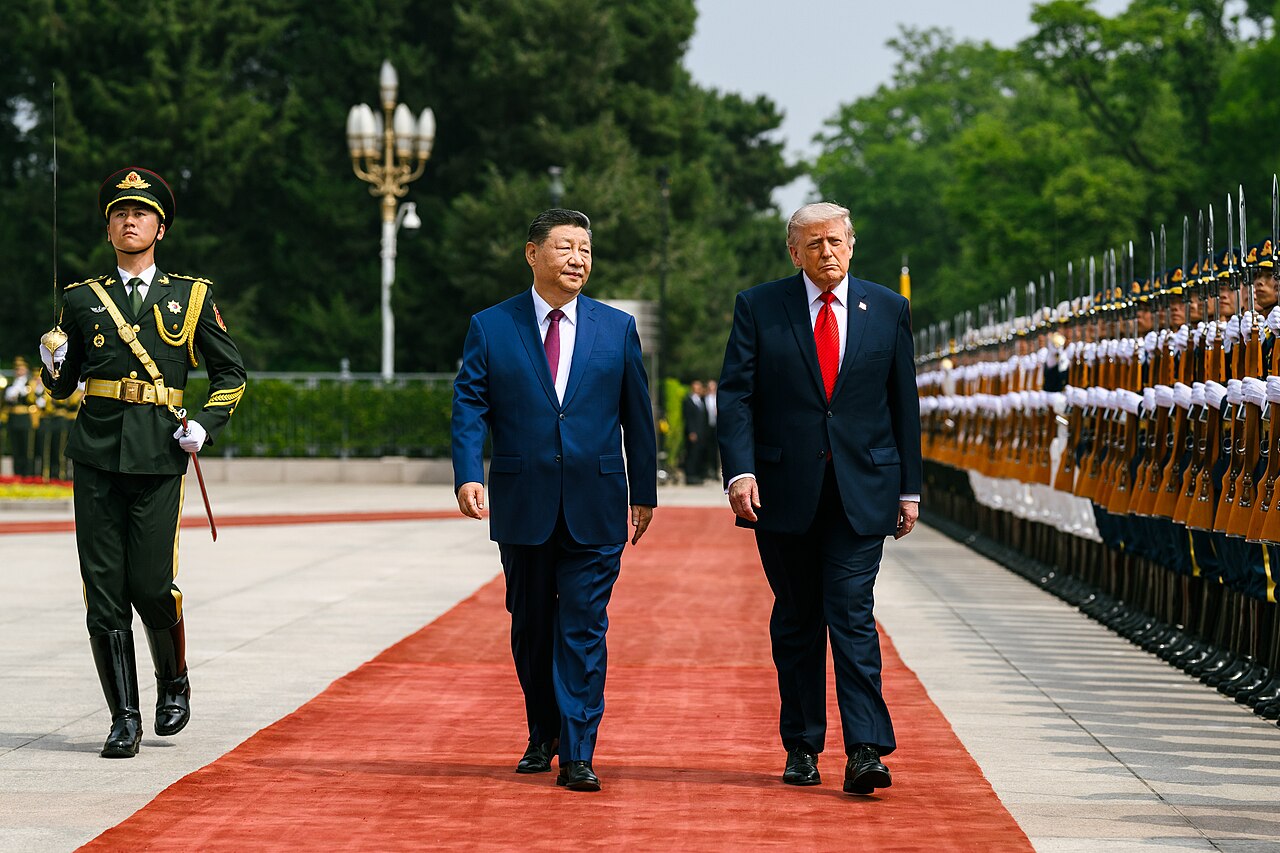
The Trump-Xi Summit: What It Was Not is More Important than What It Was
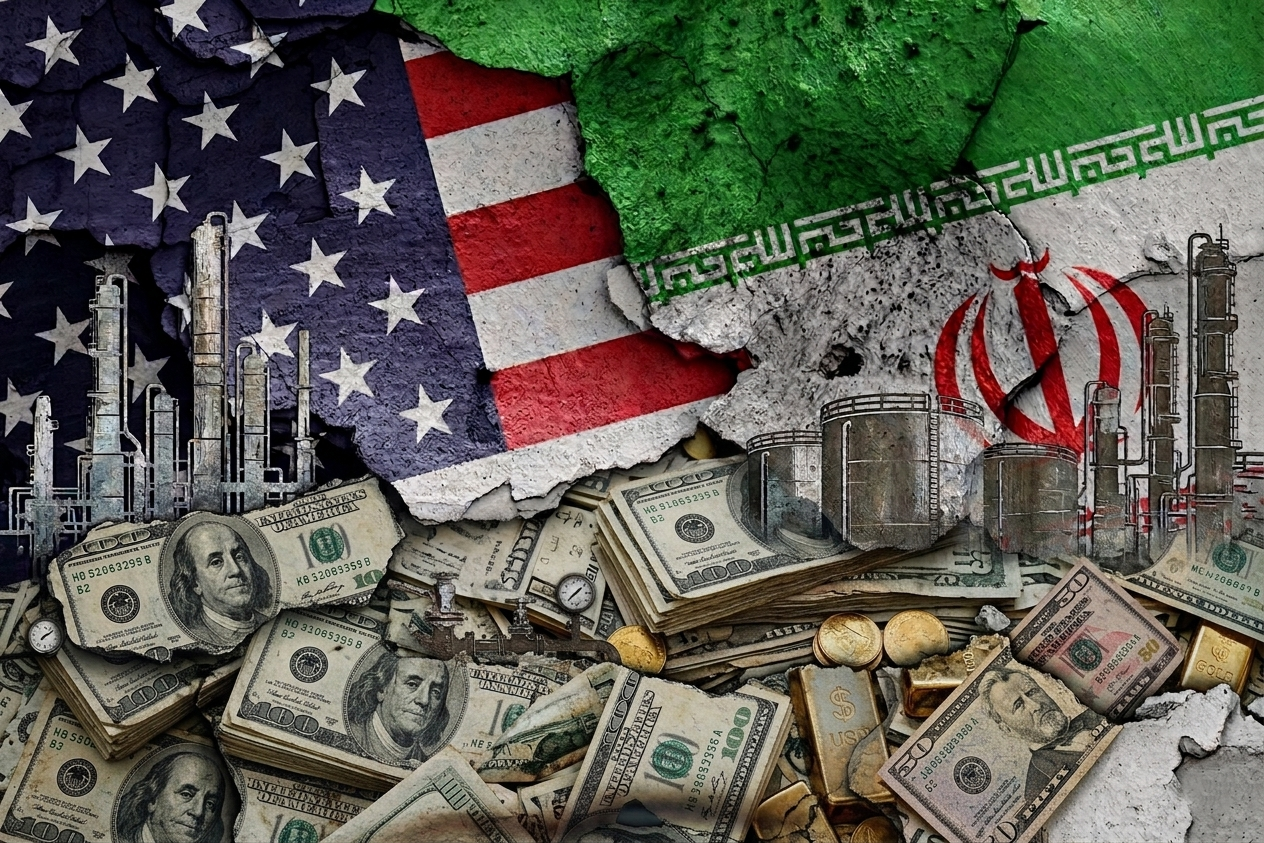
The U.S.–Iran War, Rising Energy Prices and the International Political and Economic Landscape
Chairwoman Cheng Li-wun and a Party at a Crossroads
Trump’s Destruction of Iran’s Underground Nuclear Facilities and Implications for the U.S.-China Strategic Competition
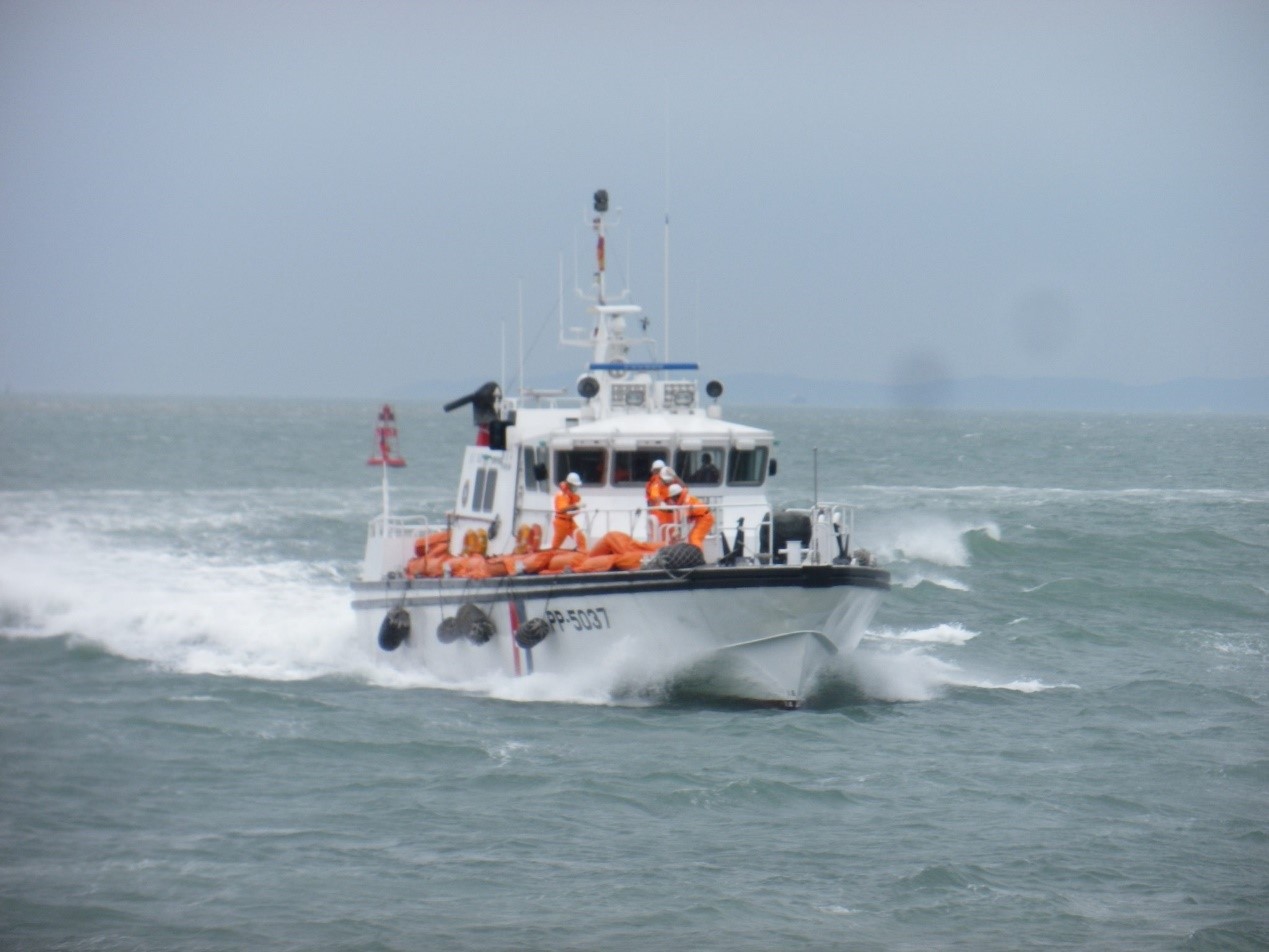
China’s Claim of the Taiwan Strait as ‘Inland Waters’ and the Kinmen Incident
The Future of U.S.-Taiwan Relations After the January Elections
Continuity and Change in Taiwan’s Historic 2024 National Elections

The Impact of China’s Suspension of the ECFA on Cross-Strait Relations
Why Taiwan’s Envoys in Hong Kong Refused to Sign the ‘One China Pledge’ and Possible Consequences
Pineapples, 22 Agricultural and Forestry Measures, and Integration through Human Interactions, Special Privileges, and Emotional Ties
A Discourse on China’s Temporary Halt to Taiwan Pineapple Imports
 Facebook
  Youtube
  Twitter
  Podcast