

The U.S.–Iran War, Rising Energy Prices and the International Political and Economic Landscape


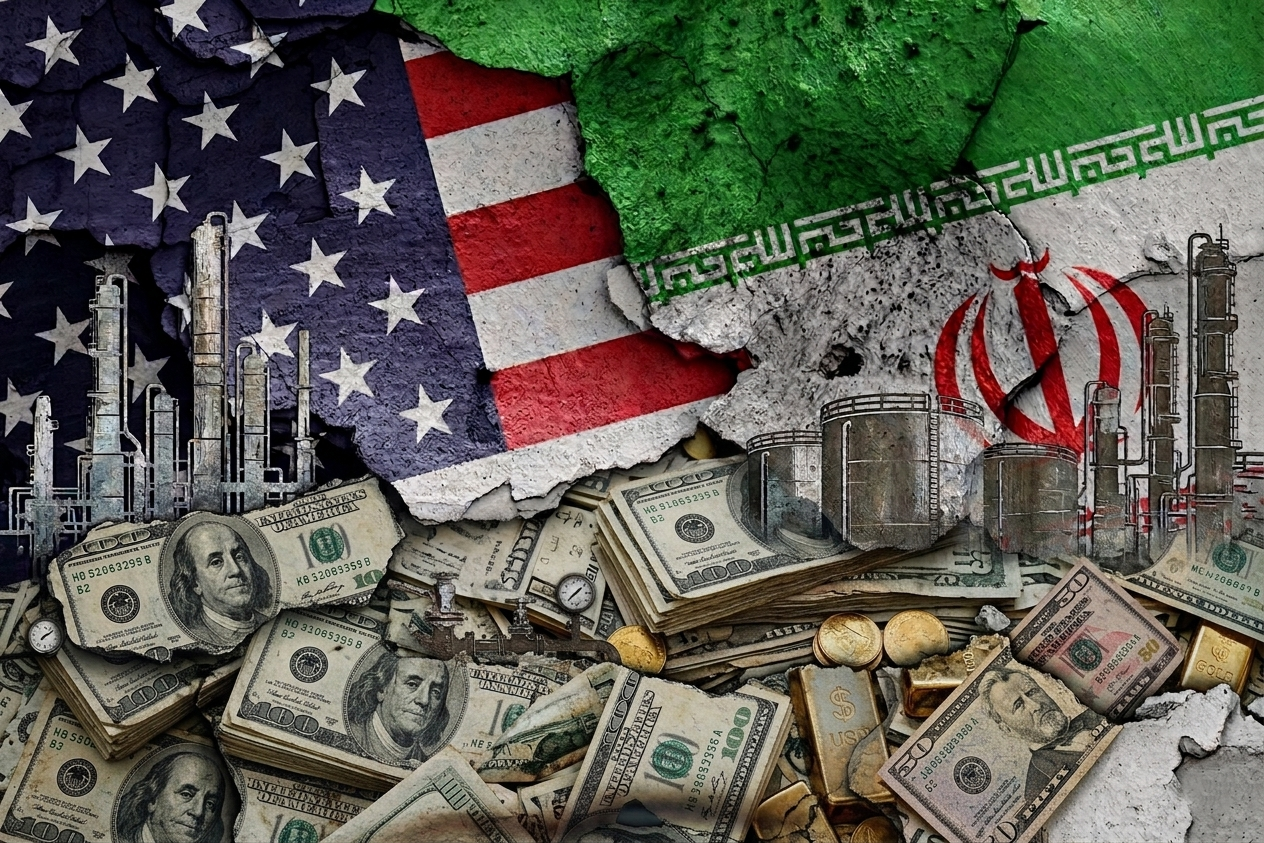
The U.S.–Iran war marks the weaponization of energy resources, maritime chokepoints, and global supply chains. As a result, international oil prices have surged by approximately 70%, raising downside risks for the global economy. These developments warrant close and continuous monitoring. Picture source: Depositphotos.
Prospects & Perspectives No. 20
The U.S.–Iran War, Rising Energy Prices and the International Political and Economic Landscape
By Guo-Chen Wang
Developments in the U.S.–Iran conflict
The United States and Israel launched military operations against Iran in late February. In response, Iran conducted missile strikes against the United Arab Emirates, Saudi Arabia, Qatar, Bahrain, Kuwait, Jordan, Oman, Turkey, and Cyprus. Lebanon, Iraq, Syria, and Yemen were also drawn into the war, resulting in a rapid and extensive escalation of tensions across the Middle East.
Iran subsequently imposed a blockade on the Strait of Hormuz, a critical maritime chokepoint through which approximately one-fifth of global seaborne oil and liquefied natural gas (LNG) supplies transit. According to estimates by the International Energy Agency (IEA), global oil supply has been reduced by approximately 12 million barrels per day, exceeding the combined supply disruptions experienced during the oil crises of 1973 and 1979.
Meanwhile, the position of U.S. President Donald Trump has appeared inconsistent. While the White House has expressed support for a ceasefire, it has simultaneously increased troop deployments in the Middle East and reportedly plans to seize Kharg Island, a key hub for Iran’s oil exports. President Trump has further stated that U.S. forces will withdraw from the region within one month regardless of the outcome of negotiations. Vice President J.D. Vance, however, warned that Tehran must accept the proposed agreement as a precondition for a ceasefire, suggesting that a resolution to the conflict is unlikely in the short term.
Trends in international oil prices
In March, the average number of vessels transiting the Strait of Hormuz declined sharply to only four per day, representing a reduction of approximately 90% compared with peacetime levels. Correspondingly, the Baltic Dirty Tanker Index (BDTI) surged from 1,991 points on February 27 to 3,705 points on March 31, marking an increase of 86.1%. The Baltic Clean Tanker Index (BCTI) recorded an even more pronounced rise of 117.0% (see Figure 1).

Figure 1. International Crude Oil and Refined Product Shipping Rates (January 1, 2025 – March 31, 2026)
Source: Baltic Exchange, “Trusted Data for Tankers,” March 31, 2026 accessed, Baltic Exchange, https://www.balticexchange.com/en/data-services/market-information0/tankers-services.html.
The upward trend in international oil prices has also been a key factor in driving the increase in shipping costs. Brent crude oil prices surged from US$72.0 per barrel on February 27 to US$126.7 per barrel on March 31, representing a sharp increase of 72.9%. Similarly, West Texas Intermediate (WTI) crude oil prices rose from US$67.0 per barrel to US$102.9 per barrel, marking an increase of 53.6% (see Figure 2).

Figure 2. International Spot Prices of Crude Oil (January 1, 2025 – March 31, 2026)
Source: Petroleum Price Information Management and Analysis System, “Inter-national Crude Oil Prices,” March 31, 2026 accessed, Petroleum Price Information Management and Analysis System,
However, at the end of March, Brent crude oil and West Texas Intermediate (WTI) futures prices settled at US$81.0 and US$73.6 per barrel, respectively, with expectations of declines of 36.1% and 28.4% over the following six months. The U.S. Energy Information Administration (EIA) further projected that the annual average price of Brent crude oil would fall to US$51 per barrel, representing a downward revision of 35.4% from the previous month’s forecast, suggesting that the U.S.–Iran conflict is likely to be a short-term shock (see Figure 3).

Figure 3. International Crude Oil Futures Prices (January 1, 2025 – March 31, 2026)
Source: Intercontinental Exchange, “Futures & Options,” March 31, 2026 accessed, Intercontinental Exchange,
International political and economic impact
The U.S.–Iran conflict is expected to reshape the balance of international political and economic power between the United States and China. First, in terms of the energy transition, the conflict underscores the weaponization of energy resources, maritime chokepoints, and critical infrastructure. The Atlas Institute for International Affairs suggests that the United States, leveraging its shale oil resources, is redefining the role of fossil fuels, while the International Crisis Group highlights China’s potential leadership in the global clean energy transition.
Second, with regard to geopolitics, both the Council on Foreign Relations and the Carnegie Endowment for International Peace note that Gulf states are becoming more dependent on the United States to ensure a stable business environment. Meanwhile, the Lowy Institute for International Policy warns that China may adopt a pragmatic peace-oriented approach to gradually enhance its international influence.
Finally, in terms of economic power, institutions such as the American Enterprise Institute, the Center for American Progress, and the Center for Strategic and International Studies have warned that the war has the potential to trigger a U.S. recession. For its part, Chatham House has highlighted China’s nationwide efforts to enhance its technological innovation capabilities.
The China factor
The declining share of crude oil in China’s overall energy consumption has helped mitigate the perception of its vast oil demand. As shown in Table 1, China’s crude oil consumption increased from 590 million tons in 2017 to 780 million tons in 2025, with the additional demand largely met through imports. Over the eight-year period, import volumes rose by 150 million tons, maintaining China’s position as the world’s largest crude oil importer. Moreover, its dependence on foreign crude oil has consistently remained above 70%. These structural and inelastic demand characteristics are often overlooked in the aforementioned expert assessments.
Table 1. China’s Crude Oil Consumption and Imports
| Time |
Consumption |
Imports |
|||
| Total |
Share of Consumption |
Total |
Share of Global Imports |
External Dependence |
|
| 2017 |
5.9 |
20.4 |
4.2 |
23.5 |
70.6 |
| 2018 |
6.3 |
19.6 |
4.6 |
22.9 |
73.3 |
| 2019 |
6.7 |
19.3 |
5.1 |
24.5 |
75.2 |
| 2020 |
6.9 |
18.8 |
5.4 |
22.6 |
78.1 |
| 2021 |
7.2 |
19.7 |
5.1 |
21.9 |
71.0 |
| 2022 |
7.0 |
19.5 |
5.1 |
23.6 |
72.6 |
| 2023 |
7.6 |
19.4 |
5.6 |
21.1 |
74.4 |
| 2024 |
7.5 |
18.9 |
5.5 |
21.5 |
73.9 |
| 2025 |
7.8 |
- |
5.8 |
- |
74.5 |
Note: The unit for “Total” is 100 million tons, while all other indicators are expressed as percentages (%).
Source: Compiled by the author.
With the outbreak of conflicts in Venezuela and Iran, China has lost access to discounted crude oil priced US$10-15 below market levels. In this context, Société Générale estimates that firms will absorb the rising costs internally, thereby maintaining a deflationary environment. However, Standard Chartered warns that firms may pass these cost pressures on to consumers, potentially triggering stagflation.
In response, the National Development and Reform Commission ordered an immediate halt to exports of gasoline, diesel, and aviation fuel. Subsequently, the authorities in Beijing introduced temporary regulatory measures on refined oil prices to curb the extent of price increases—marking the first implementation of such measures since their establishment in 2013. These actions underscore that China’s economy is not immune to the effects of global crude oil shortages.
A global economic slowdown is also expected to weigh on China’s export performance. Barclays has accordingly revised its annual GDP growth forecast downward to 4.0%, a reduction of 0.5 percentage points. Similarly, IHS Markit, Goldman Sachs, and Wells Fargo each lowered their forecasts by 0.1 percentage point. Meanwhile, 18 other institutions have maintained their previous projections; however, if the U.S.–Iran war persists, further downward revisions may become necessary (see Figure 4).

Figure 4. China’s Projected Economic Growth Rate for 2026 (March 2025 Conclusion)
Source: Compiled by the author.
Conclusion
The U.S.–Iran war marks the weaponization of energy resources, maritime chokepoints, and global supply chains. As a result, international oil prices have surged by approximately 70%, raising downside risks for the global economy. However, a full-scale recession would require two conditions: sustained oil price increases of at least 50% over three months and a subsequent sharp tightening of monetary policy by major central banks. These developments warrant close and continuous monitoring.
The U.S.–Iran war is also reshaping the international political and economic order. Leading think tanks hold divergent views, with some supporting U.S. hegemony and others emphasizing China’s rise. However, it is evident that strategic competition between the two countries will intensify, particularly as Beijing openly provides channels to circumvent international sanctions. In this context, the internationalization of the renminbi is likely to become a key arena of competition.
The U.S.–Iran conflict also poses significant challenges to China’s economy. Increased oil prices have intensified the phenomenon of “involution” among Chinese firms, particularly as China’s previous access to discounted crude oil below market prices has now turned into a source of increased pressure. Moreover, a global economic downturn would further erode China’s last remaining growth driver—export momentum. In this regard, some analysts may have overestimated the resilience of China’s political and economic system.
Finally, from China’s export restrictions on critical minerals to Iran’s blockade of the Strait of Hormuz, the urgency of building democratic supply chains has become increasingly evident. Numerous think tanks, including Bruegel, have reaffirmed the strategic importance of Taiwan’s information and communications technology (ICT) industry as well as the Taiwan Strait in light of the conflict. In sum, cross-Strait dynamics will have a profound impact on global political and economic stability.
(Guo-Chen Wang is Associate Research Fellow, Chung-Hua Institution for Economic Research.)
相關文章
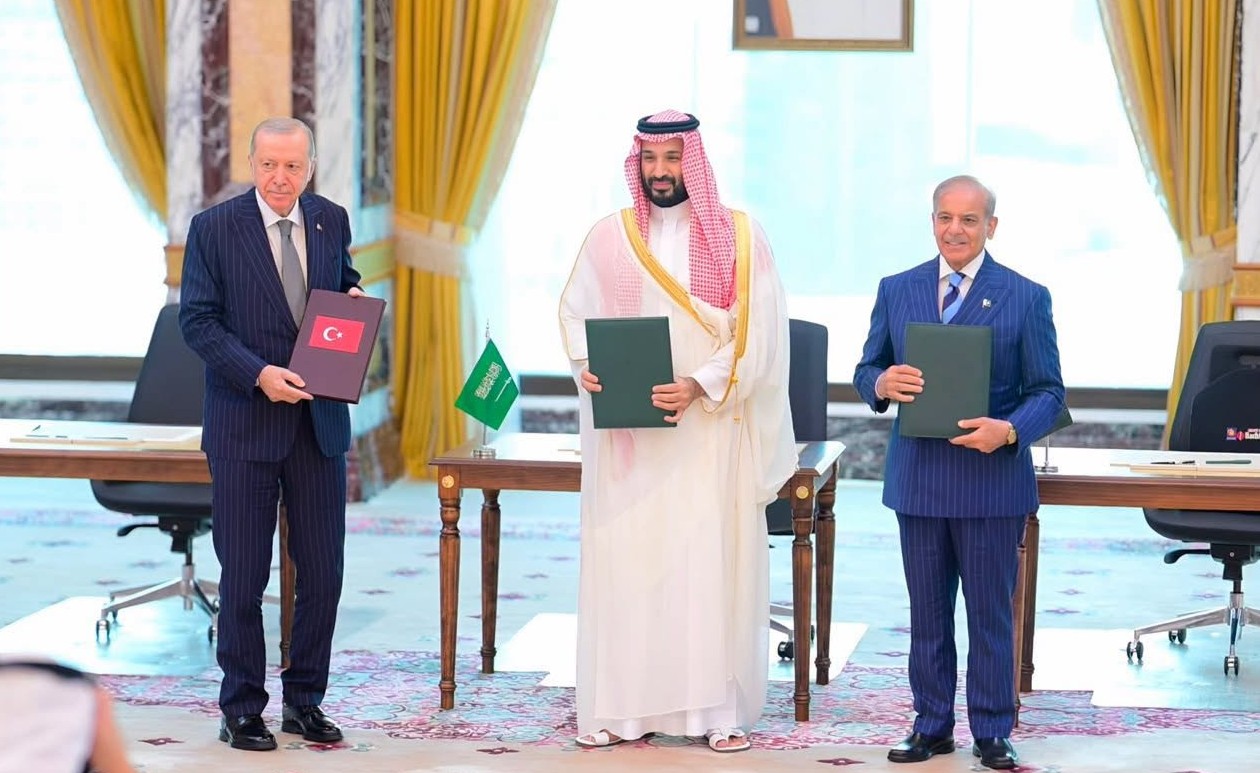
The Mecca Joint Defense Agreement and the Changing Security Landscape of the Middle East
The U.S.–Iran War and Its Impact on the Security Situation in the Middle East
President Lai’s Second-Year Address and Prospective Developments in Cross-Strait Relations

What Does the U.S. War Against Iran Mean for the Indo-Pacific?
Trump’s Destruction of Iran’s Underground Nuclear Facilities and Implications for the U.S.-China Strategic Competition

The Impact of 50 Basis Points Cut by the U.S. Federal Reserve on the Global Economy
 Facebook
  Youtube
  Twitter
  Podcast