



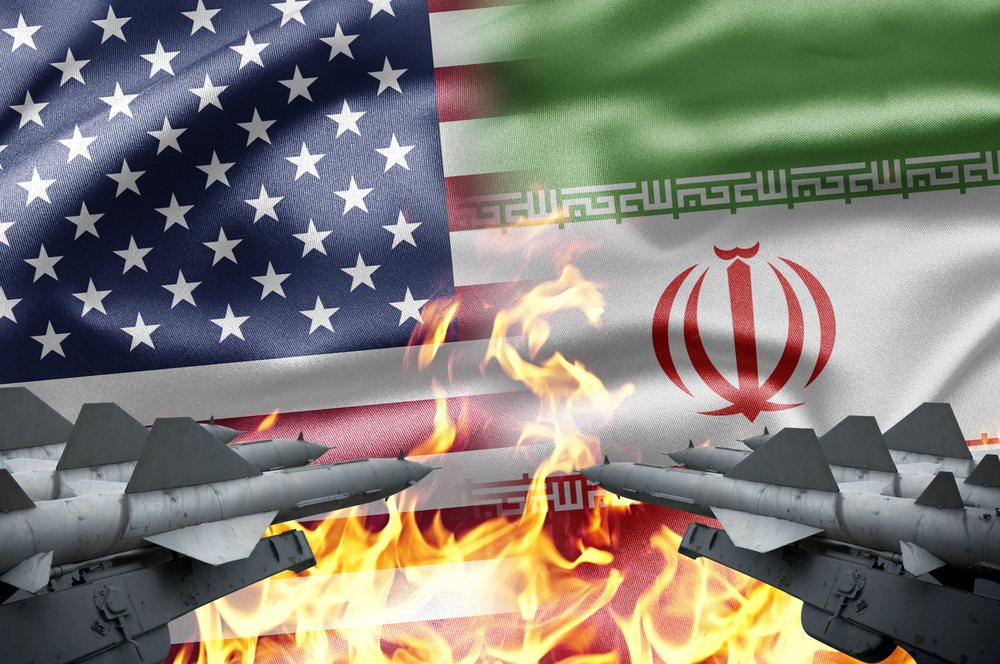
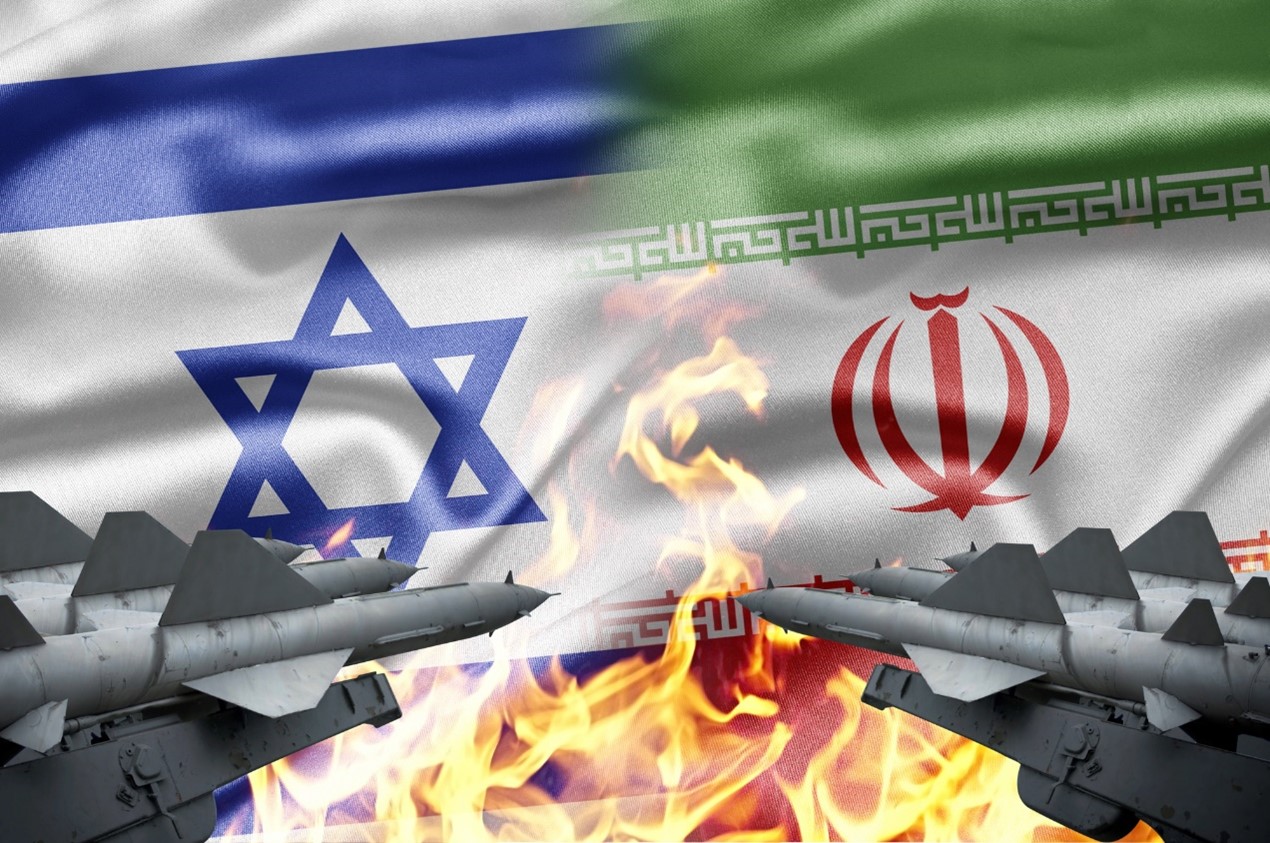
The U.S. war against Iran will likely have adverse short-term effects on the Indo-Pacific arising from the diversion of capabilities to the Middle East. The long-term effects, however, may be more positive. The United States has shown that it has superb military forces and that the president is willing to use them. Picture source: Depositphotos.
Prospects & Perspectives No. 16
What Does the U.S. War Against Iran Mean for the Indo-Pacific?
By Mark F. Cancian
The U.S. war against Iran will likely have adverse short-term effects on the Indo-Pacific arising from the diversion of capabilities to the Middle East. The long-term effects, however, may be more positive. The United States has shown that it has superb military forces and that the president is willing to use them. However, any conclusions must be tentative, as the war is still ongoing at this writing. How it ends will affect not just the Middle East but also the Indo-Pacific.
Near-term vulnerabilities
The near-term vulnerabilities are clear: the diversion of forces and munitions. The war in the Middle East has taken the Pacific carrier strike group (led by the USS Lincoln) and the amphibious readiness group (led by the USS Iwo Jima). There are now no U.S. carriers or amphibious groups at sea in the Western Pacific. There are Chinese carriers and amphibious squadrons at sea.
In addition, the United States is reportedly moving elements of the THAAD anti-missile battery in South Korea to the Middle East to replace what was lost in Iranian attacks. The large U.S. expenditure of scarce munitions that would be needed for a conflict in the Indo-Pacific — like Patriot, THAAD, JASSM, Tomahawk, and SM-2/3/6 — creates a vulnerability. Emphasizing this point, Patriot missiles are reportedly being sent from the Pacific to the Middle East.
How much of a vulnerability this constitutes depends on China and the conclusions that President Xi Jinping derives from the war. Those are difficult to ascertain now, but may be revealed by actions over time.
The good news for the United States and its allies is that, although these actions have created a near-term vulnerability, China is unlikely to be able to take advantage of the opportunity. While China’s military forces remain powerful and growing, Xi has decimated the military leadership. My CSIS colleague Bonny Lin and her team estimate that Xi has purged 101 of the PLA’s three- and four-star officers in the last two years, with many being disgraced by expulsion from the Chinese Communist Party. Although the replacements are likely talented, they lack the depth of high-level experience and have been chosen for loyalty. This Chinese weakness will ease over time if the purges cease, but by then the United States will have reestablished its position in the Western Pacific.
There is a clear historical example of what happens when a purged officer corps goes to war. In 1939, the Soviet Union attacked Finland. The war should have been a walkover given the size disparity between the two countries — the Soviet Union with a population of 171,000,000 vs Finland’s 3,700,000 — but it wasn’t. The Soviet Union’s lack of skilled leadership led to four months of brutal fighting and an estimated 300,000 casualties. Although the Soviet Union eventually prevailed, it imposed relatively mild peace terms, likely in recognition of its need to rebuild its shattered forces.
Mixed effects on long-term deterrence
There will be some positive long-term effects on deterrence arising from U.S. military performance. In the space of three months, the U.S. armed forces have conducted two extraordinary campaigns. In the Caribbean, they isolated Venezuela by rapidly deploying forces. They then launched a raid that shut down Venezuelan air defenses, killed all the Cuban bodyguards around President Maduro, and seized Maduro and his wife in their fortified bunker. The U.S. forces then withdrew without any fatalities.
Against Iran, the United States and Israel established air superiority in three or four days, something that Russia has failed to do in four years of fighting against Ukraine. The United States has also destroyed Iran’s navy and air force. Militarily, it is an extraordinary achievement regardless of the eventual political settlement. As is well known, China’s last major military operation was in 1979 against Vietnam, during which the PLA performed poorly against the experienced Vietnamese forces. Chinese political leaders cannot help thinking about the parallels and what that might mean in a future conflict with the United States.
Some have speculated that China could consider doing a Venezuela-like operation itself, figuring that if the United States could do it, they could do it. The Chinese military may have that degree of self-confidence. They have also had decades to think about the problem. On the other hand, they face a much more difficult task. Caracas is only 20 miles from the coast, whereas Taipei is over 100 miles from China’s coast. It is a much longer approach that, being over water, lacks the protective terrain that helped U.S. forces approach undetected. China would face the same challenge of landing in hostile terrain and seizing leadership that is in a fortified bunker.
A related risk is that China may look at Israel’s highly successful campaign to decapitate the Iranian government and believe it could do the same against Taiwan. It has similar advantages, like having many agents on the ground and excellent information on officials’ daily routines and emergency procedures. Nevertheless, Israel’s accomplishments have not prevented Iran from resisting, and U.S. efforts to decapitate the Iraqi leadership in 2003 failed utterly. Taiwan might recognize both the threat to its leadership and the potential to resist regardless of the leadership's fate.
Finally, there is the question of U.S. willingness to fight to save Taiwan. President Biden implied on multiple occasions that the United States would, despite an announced policy of strategic ambiguity. Commentators have questioned what President Trump’s decisions might be, given the administration’s often spoken preference for allies and partners to solve their own security problems. Regardless, President Trump has shown himself ready to use military force, and lots of it, if he believes U.S. interests are threatened. That is no absolute guarantee that President Trump would assist Taiwan in a crisis, but it does provide two strong data points supporting U.S. action.
The ending in Iran
How the war in Iran ends matters to the Indo-Pacific. If the United States emerges with a relatively favorable resolution, then the military success will stand as a warning to prospective adversaries.
On the other hand, if the war lasts for months, U.S. weakness in the Indo-Pacific would deepen. Similarly, if the United States is humiliated, then the weakened U.S. leadership might be unable to conduct further conflicts.
(Mark Cancian is a retired Marine colonel and a senior adviser at the Center for Strategic and International Studies in Washington DC.)
相關文章
Re-Establishing Deterrence in Taiwan’s Maritime Periphery Following the China-Indonesia Naval Exercise
The Mecca Joint Defense Agreement and the Changing Security Landscape of the Middle East
The U.S.–Iran War and Its Impact on the Security Situation in the Middle East
The G7 Leaders’ Summit in France: An Unexpected Success
Trump’s National Security Strategy and the Future of the World Order
President Trump’s National Security Strategy and Tensions Across the Taiwan Strait
The Impact of South Korean President Lee Jae-myung on the Regional Situation
The Israel-Iran War and its Potential Impact on China-Taiwan and the Indo-Pacific
From America First to the Global Landscape: The Impact of Trump’s Comeback on International Dynamics
Trump and the Axis of Disorder
Second Thomas Shoal Redux and Beijing’s Strategic Limitations
Reading Korea’s Early Autumn Winds: Trump Abruptly Scales Down a Major Joint Exercise
 Facebook
  Youtube
  Twitter
  Podcast