

A Strategic Culture Perspective on the U.S.-Iran Conflict and Its Implications for Taiwan


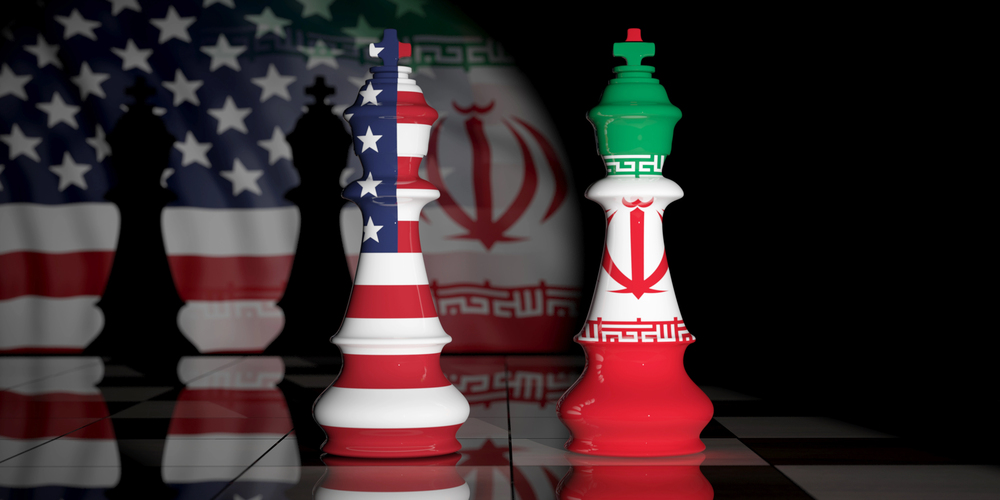
The initial objectives of the United States and Israel in their military operations against Iran included constraining Iran’s nuclear capabilities, curbing its missile development, and even attempting to destabilize the regime. Yet airstrikes alone are insufficient to undermine a consolidated governing structure; meaningful change would require a shift among domestic elites. Picture source: Depositphotos.
Prospects & Perspectives No. 25
A Strategic Culture Perspective on the U.S.-Iran Conflict and
Its Implications for Taiwan
By Shun-Wen Wang
The initial objectives of the United States and Israel in their military operations against Iran included constraining Iran’s nuclear capabilities, curbing its missile development, and even attempting to destabilize the regime. Yet airstrikes alone are insufficient to undermine a consolidated governing structure; meaningful change would require a shift among domestic elites. For instance, as seen in the case of Ahmed al-Sharaa in Syria, the emergence of a coherent opposition force would be necessary. Consequently, U.S. strategy has gradually converged on the more limited core objective of preventing Iran from acquiring nuclear weapons. This shift is reflected in statements made by U.S. President Donald Trump on his social media, as well as in subsequent positions articulated by U.S. officials. Nevertheless, two major challenges remain.
Iran’s lack of trust in the United States
During negotiations last June and again this year, both the United States and Israel engaged in military operations while talks with Tehran were ongoing, significantly eroding Iranian trust. Additional disputes, such as differing interpretations of the boundary between civilian nuclear technology and weaponization, have further hindered progress. While both sides appear to be pursuing a strategy of “coercion through conflict” to compel negotiations, their objectives diverge: Iran seeks a durable ceasefire and relief from economic sanctions, whereas the United States maintains a narrower focus on the nuclear issue and the Strait of Hormuz. This gap introduces substantial uncertainty into future development.
Research on Iran’s strategic culture might be helpful to demonstrate that Iran is not inherently “irrational” and completely closed to negotiations. On the contrary, it is a highly pragmatic actor. Its dominant strategic culture encompasses five key dimensions: (1) Islamic revivalism and solidarity; (2) institutional expediency (maslahat); (3) strategic patience; (4) regime preservation; and (5) nationalism. Among these, nationalism is the central idea in Iranian leaders’ narratives. As threat intensity increases, the dominant emphasis appears to shift from Islamic revivalism and unity (during the Israel-Gaza conflict) toward a combination of regime preservation and nationalism.
Though there seems to be a stalemate over Iran’s 14-point proposal, a possible pathway forward might involve reaffirming that Iran will not pursue nuclear weapons (which Iran has reiterated several times), securing a longer-term ceasefire in exchange for U.S. sanctions relief and a halt to military operations, while detailed negotiations over uranium enrichment are deferred. However, this approach faces a fundamental obstacle: the U.S. seeks rapid, tangible outcomes and remains skeptical of Iran’s assurances regarding its nuclear intentions.
Recently Iran has used the term “bullying”, echoing earlier remarks by former Supreme Leader Ali Khamenei. He emphasized that Iran neither needs nor intends to develop nuclear weapons but does require nuclear technology. He further argued that negotiations conducted under coercion are not genuine negotiations, but instead only useful for the current U.S. president. He said:
We’re the only one that doesn’t have a nuclear bomb and won’t have one... negotiating with the US government does nothing to serve our national interests…accepting the US’s coercion and imposition …isn’t negotiations…Ten years ago, we signed an agreement with the US, which is known as the JCPOA in our country…We did everything we were supposed to do, but they didn’t lift the sanctions…such negotiations are useful for the current US president. He would hold his head up high and say, “I threatened Iran and brought them to the negotiating table.” He would boast about it on the world stage.
Divergent interests between Israel and United States
Israel has long faced security pressure from Iran and its so-called “axis of resistance.” In the past, Israeli strategy has focused on weakening peripheral actors before concentrating pressure directly on Iran, indicating that the current conflict is part of a broader, long-term regional security strategy rather than an isolated episode. Traditionally, Israeli strategic culture has emphasized “preemptive strikes” and “decisive victory” to avoid protracted conflict. However, recent campaigns suggest a possible recalibration in how “decisive victory” is understood.
If the U.S. narrows its objectives to addressing energy disruptions in the Strait of Hormuz and Iran’s nuclear program, this may not fully align with Israel’s broader strategic priorities. Moreover, the root cause of the current conflict in the Middle East, the Palestinian issue, remains unresolved. In practice, the presence of a larger adversary often sidelines this issue. Israel continues its securitization policies in the West Bank and Gaza, and this issue could resurface once hostilities subside.
The war has also generated competing narratives within Israel. One, representing more hardline or religious constituencies (approximately 30%), advocates annexation of the West Bank and renewed settlement in Gaza. Another (approximately 44%) supports a comprehensive agreement with the Palestinians, potentially including normalization with Saudi Arabia, a U.S. security umbrella, and the establishment of a demilitarized Palestinian state. Notably, 61% of Israelis support sanctions against violent Israeli settlers. These figures indicate that hardline strategic narratives do not fully reflect majority opinion and will likely be shaped by future domestic political developments since Israel is a democratic state.
Military strikes against Iran are therefore more likely to intensify nationalist sentiment, reinforcing regime narratives that combine external resistance with internal repression. Unless the U.S. and Israel intend to “Gaza-ize” Iran, thereby risking a far more severe regional conflict, strategic culture analysis suggests that Iran is not an irrational, ideologically driven actor. Rather, it is motivated by regime survival. Reducing the perception of “bullying” may open more space for dialogue. Iran is not inherently beyond negotiations.
Implications for Taiwan
First, the “offset strategy” from the U.S. perspective remains, including weakening adversaries’ allies, gradually reshaping bilateral relations, and ultimately focusing on strategic competition with China and Russia. However, the challenges encountered in the Iran conflict may influence future U.S. decision-making. In particular, the “united West” constructed during the Biden administration has been significantly strained by this conflict. Whether U.S. allies revert to a hedging strategy again under a multipolar system, rather than maintaining cohesion with the U.S., will be a key issue to monitor.
Conversely, China has not gained substantially from this conflict. Its dependence on the region exceeds the region’s dependence on China. Moreover, China’s role has remained limited, only becoming more visible in the later stages through indirect diplomatic facilitation during the Pakistan negotiation round. This limited engagement may undermine China’s credibility, particularly given its attempt to position itself as “everybody’s friend.” As a result, China may need to restructure its network of allied partners to strengthen its leverage in future negotiations with the United States, while also playing on perceptions of U.S. weakness to encourage renewed hedging behavior among U.S. allies.
Past experience, such as Saudi Arabia, shows that states may signal closer ties with China to pressure the United States during negotiations, for example by purchasing lower-cost Chinese weapons. However, recent U.S. military actions appear designed to counter this dynamic by demonstrating the superior capabilities of U.S. systems. Alignment with the West is unlikely to change fundamentally for states in the Middle East. Procurement of weapons from China may shift. However, economic cooperation with China as a hedging tool will continue. It could also be an important lesson for the Taiwanese government to rethink its position under great-power competition.
Second, the current conflict in the Middle East reinforces patterns observed in the Russia-Ukraine War, the dynamic interplay between offensive and defensive capabilities. Even Israel’s highly regarded Iron Dome system is not impenetrable, demonstrating that there is no absolute “spear” or “shield.” While drones amplify asymmetries of power, they do not function as a balancing tool.
Effective drone warfare requires integration with well-trained personnel and multi-layered operational systems, including strike and reconnaissance aircraft, radar, electronic warfare capabilities, artillery, and ground forces. The competence of military leadership is equally critical. Many analyses overlook a fundamental premise: advanced technologies require highly capable operators. Besides, the key issue is not which side possesses spears or shields, but which side can effectively degrade the adversary’s offensive capabilities.
The conflict also highlights the vulnerability of Taiwan, not only in terms of energy supply chains but also the need to enhance comprehensive resilience across energy, defense, and broader societal systems. Rather than focusing narrowly on the dichotomy of “spear versus shield,” Taiwan should prioritize the development of integrated and synergistic defense capabilities. Given its high sensitivity and vulnerability in the international system, Taiwan must prioritize proactive risk management, especially for high-impact, high-probability situations.
(Dr. Wang is Professor, Department of Government and Law, National University of Kaohsiung.)
Related Content
War in the Middle East and Taiwan’s Energy Diversification Needs
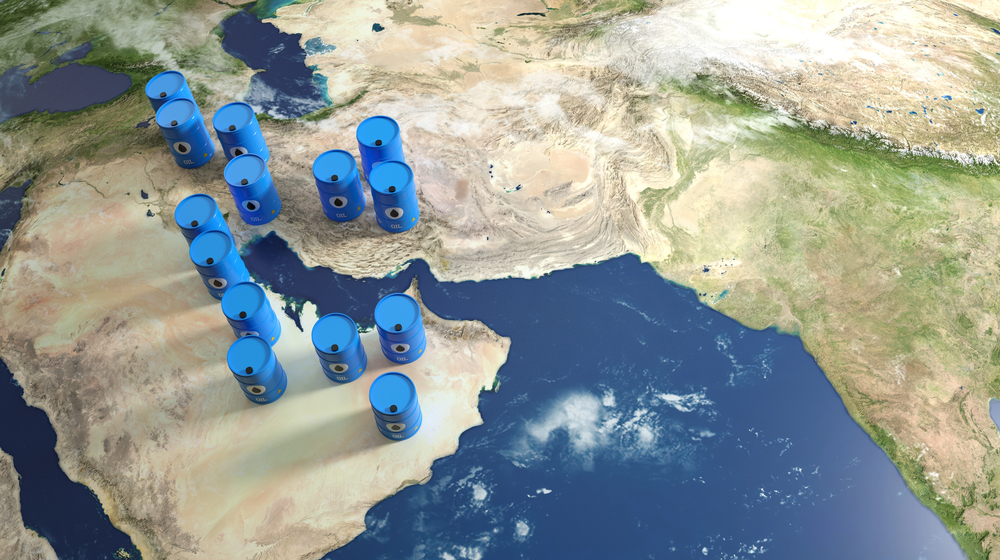
What Lessons Can Taiwan Take from the Situation in the Strait of Hormuz?
 Facebook
  Youtube
  Twitter