



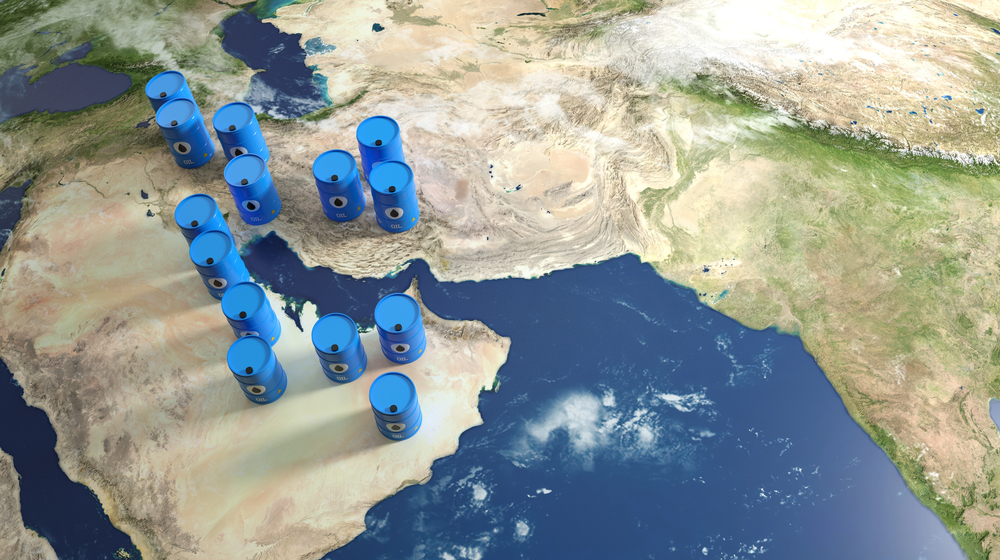
Escalating tensions in the Middle East are putting Taiwan’s vulnerability to external energy shocks under the spotlight. Given Taiwan’s near-total reliance on imported fuels, the crisis should serve as a warning signal for Taipei to reassess its energy policy, including its stance on nuclear power and strategic reserves. Picture source: Depositphotos.
Prospects & Perspectives No. 24
War in the Middle East and Taiwan’s Energy Diversification Needs
By Vladimira Lickova
Escalating tensions in the Middle East — especially energy disruptions linked to the U.S.–Iran conflict — are putting Taiwan’s vulnerability to external energy shocks under the spotlight. Given Taiwan’s near-total reliance on imported fuels, the crisis should serve as a warning signal for Taipei to reassess its energy policy, including its stance on nuclear power and strategic reserves. It is, however, important to note that the current crisis is not the root cause of Taiwan’s energy security challenges, but rather has exposed them.
Heavy dependence on energy imports – Taiwan’s Achilles heel
Taiwan imports around 96% of its energy, and dependence on oil and liquefied natural gas (LNG) is even higher, reaching nearly 99–100%, according to Taiwan’s Energy Administration Office. Roughly 70% of crude oil and around 30% of LNG come from the Middle East and transits through the Strait of Hormuz — a critical chokepoint through which 20-25% global energy exports pass and is now under heightened geopolitical risk.
Furthermore, as per the Statistical Review of Energy 2025, the annual growth rate of LNG imports in Taiwan was nearly 6% in 2024, confirming a continued transitioning toward gas-fired generation. Taiwan has also become the fifth-largest importer of liquefied natural gas globally, moving up two positions since 2022. While Taiwan maintains oil reserves covering around 140 days — above the 90-day international benchmark — natural gas reserves stand at just around 12 days. Although this meets domestic legal requirements, it remains far below levels in comparable economies such as Japan or South Korea.
This imbalance is particularly concerning given the overall extent of reliance on fossil fuels, especially natural gas, for energy use and electricity generation, driven by policies to phase out nuclear power and reduce coal usage. In effect, Taiwan has not eliminated energy dependency, but has rather shifted it.

Figure 1. Electricity generation by fuel (%), 2024
Source: MOEEA Taiwan and Energy Institute, Statistical Review of Energy, 2025.

Figure 2. Electricity installed capacity by type (%), 2024
Source: MOEEA Taiwan and Energy Institute, Statistical Review of Energy, 2025.
What is more, the current energy shocks are characterized by considerable regional disparities, especially in LNG markets. Prices in Asia and Europe have surged to as much as six times those in the United States, placing disproportionate pressure on import-dependent economies like Taiwan. At the same time, as electricity demand is highly seasonal — summer consumption can be up to 40% higher than winter levels — it raises the risk of shortages if supply disruptions persist into peak months.
In the past months, Taiwan has responded by securing both long- and short-term LNG shipments from the United States and Australia, assuring the public that supplies are stable in the near term. However, these measures may only temporarily mitigate risks. A prolonged disruption and similar crises would likely lead to price spikes — as LNG purchases shift to more expensive spot markets — and could impact energy-intensive industries, particularly semiconductor manufacturing, where companies like Taiwan Semiconductor Manufacturing Company (TSMC) account for a significant share of electricity consumption.
From energy dependence to geopolitical vulnerability
Taiwan’s energy dependence is not just an economic issue — it is a structural vulnerability with direct geopolitical implications. Heavy reliance on imported fossil fuels, combined with limited storage capacity and exposure to maritime chokepoints creates a critical weakness that could be exploited in both peacetime coercion and conflict scenarios.
In this context, energy security becomes inseparable from national security — a classical “realist” concern of resilience, sovereignty, and strategic autonomy. A potential blockade or disruption of shipping routes would not only affect energy supply but could quickly spill over into broader economic and societal instability. The current crisis in the Middle East thus illustrates how distant geopolitical events can have immediate consequences for Taiwan’s resilience.
This vulnerability also creates space for external pressure. Taiwan’s energy insecurity could become a pressure point in cross-Strait relations, particularly in scenarios involving a maritime disruption or blockade. China has already demonstrated its ability to combine military signaling, economic leverage, and information operations to shape narratives around Taiwan’s energy security. In a crisis scenario, energy dependence could become a powerful tool of coercion, reinforcing broader strategic pressures across the Taiwan Strait.
Time for Taipei to finally reassess its energy strategy?
The current situation underscores a fundamental policy challenge: Taiwan’s systematic phase-out of nuclear power, completed in May 2025, has contributed to a growing gap in stable baseload energy supply. While renewables are expanding, their intermittency limits their ability to fully replace consistent generation sources in the short term. Moreover, installed capacity figures for renewables can be misleading — high capacity does not necessarily translate into reliable or continuous electricity supply, as seen in Figure 1 and 2.
This has revived debate over restarting nuclear facilities or exploring alternatives such as small modular reactors (SMR). The phase-out of nuclear power was largely a product of politicization, shaped by public concerns over safety, waste disposal, and Taiwan’s seismic risks — concerns amplified by the legacy of the Fukushima nuclear disaster in 2011. However, the current energy crisis is shifting the debate, highlighting the need to reassess nuclear energy not only through environmental or safety lenses, but also from a national security perspective.
Restarting nuclear facilities such as the Second (Kuosheng) and Third (Maanshan) nuclear power plants could potentially cover more than 10% of Taiwan’s electricity demand, which is a significant contribution to the power mix. At the same time, however, nuclear energy is not without its own challenges. Questions remain regarding long-term waste management, plant safety in a seismically active region, and even the vulnerability of nuclear facilities in a potential conflict scenario. The current conflict in the Middle East, concerning Iran’s nuclear program, may further reinforce public sensitivities around nuclear risks, although advances in safety standards and reactor design have significantly improved in recent decades and people in Taiwan, even voters of the Democratic Progressive Party (DPP), appear increasingly open to redeploying nuclear power.
At the same time, LNG should not be dismissed. It remains a crucial transition fuel, offering flexibility and scalability that nuclear cannot provide in the short term. However, relying too heavily on LNG simply replaces one form of dependency with another, particularly as Taiwan relies almost entirely on seaborne imports, leaving it exposed to maritime disruption. The key is thus not choosing between LNG and nuclear, but ensuring they complement each other within a balanced, low-carbon, and resilient energy mix.
Policy implications: from short-term fixes to long-term resilience
The current crisis reinforces the urgency for Taiwan to review its energy strategy. While reducing coal remains important due to environmental and public health concerns, overreliance on imported LNG has not resolved Taiwan’s structural vulnerability. Without a stable domestic or semi-domestic energy base, Taiwan remains exposed to external shocks over and over.
To address these issues, the Taiwanese government should prioritize a set of clearly organized measures: (1) Immediate priorities: expand LNG procurement through both long-term contracts and spot markets; and increase strategic reserves, particularly for natural gas, to approach regional benchmarks, (2) Medium-term actions: diversify energy import sources, with greater reliance on partners in the Southeast Asia, Australia, and the United States; and strengthen infrastructure for energy storage and distribution, and (3) long-term strategy: reassess nuclear energy policy, including potential restarts and next-generation technologies such as small modular reactors; continue expanding renewable energy, while ensuring it is paired with stable baseload generation; and integrate energy security more explicitly into national defence planning, including contingency scenarios such as blockades.
The current crisis should therefore serve as a stress test for Taiwan’s energy system. Taiwan cannot change its geography, but it can make meaningful changes to minimize risks and manage its vulnerabilities. The lesson should be clear: energy policy cannot be driven by single-dimensional considerations, whether environmental or political.
(Vladimira Lickova is part of the team behind the CEIAS-led EU-Taiwan and EU-Southeast Asia (EUSEAR) trackers.)
Related Content
A Strategic Culture Perspective on the U.S.-Iran Conflict and Its Implications for Taiwan
What Lessons Can Taiwan Take from the Situation in the Strait of Hormuz?
 Facebook
  Youtube
  Twitter