
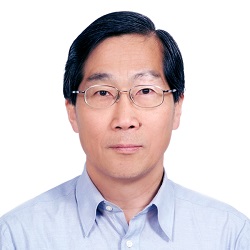


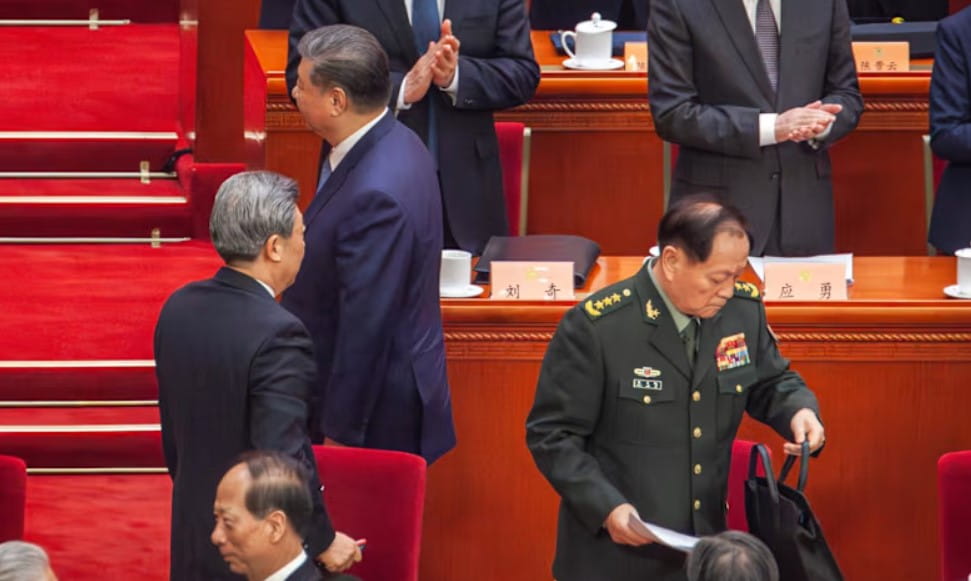
At the beginning of 2026 Xi Jinping sent shocking news to the world about China’s domestic politics with the purging of General Zhang Youxia (張又俠), one of two vice chairmen of the Central Military Commission(CMC), and General Liu Zhenli (劉振立), a CMC member and chief of the Joint Chief Department under the CMC. Picture source: China and Asia, January 28, 2026, China and Asia, https://orcasia.org/article/1534/zhang-youxias-purge-exposes-xi-jinpings-succession-problem.
Prospects & Perspectives No. 7
China After General Zhang Youxia’s Purge
By Arthur Ding
At the beginning of 2026 Xi Jinping sent shocking news to the world about China’s domestic politics with the purging of General Zhang Youxia (張又俠), one of two vice chairmen of the Central Military Commission (中央軍事委員會) (CMC), China’s highest military authority, and General Liu Zhenli (劉振立), a CMC member and chief of the Joint Chief Department under the CMC. Zhang also served as a Politburo member in the Chinese Communist Party (CCP). This development potentially has major implications for China’s external behavior.
This is arguably the most consequential event in China’s domestic politics in the Xi era. Zhang comes from a high-ranking military family. His father, General Zhang Zong-xuen (張宗遜), was appointed chief of the General Logistics Department before Deng Xiaoping launched his economic reforms in 1979. The old Zhang worked with Xi Jinping’s father, Xi Zhong-xun (習仲勛), fought in the civil war against the Kuomintang (KMT), and was a vice chairman of the National People’s Congress in the late 1970s. What is special is that both the young Xi and the young Zhang grew up together in the same living compound.
After 2012, when Xi Jinping became CCP general secretary, General Zhang Youxia, with his seniority in the military, a reputation built upon the Sino-Vietnamese war in 1979, and extensive networks in the military, reportedly worked hard to support Xi in the military, helping him consolidate his power. Zhang was promoted to CMC vice chairman in 2017. This suggests that Xi and Zhang used to have a political alliance with deep trust built upon strong family bonds and mutual political support. That explains the shocking nature of last month’s development.
Powerful signals
Xi’s purge of Zhang and the implied disregard for trust and long established family bonds conveys two strong related signals. The first involves possible fundamental differences over the timeline for launching a military operation against Taiwan; Xi may have preferred a 2027 deadline while Zhang opted for 2035, after the Chinese military has fully mastered the art of joint operations. Secondly, Zhang’s sacking sends a strong signal to the military as a whole that Xi’s will has to be executed at all costs, and that those who do not follow his order have to be removed. Under such circumstances, Zhang is no longer needed as an agent in the military, as Xi wants to directly control the armed forces.
Purging Zhang creates serious problems for Xi. The core problem involves party/civil-military relations. To what extent does Xi retain his confidence in the military officials he appoints? To what extent does he maintain confidence in appointing the right persons? To what extent are those appointed by Xi confident in him? Those are fundamental questions in the wake of Xi’s extensive purging of high-ranking military officials. The purges could undermine Xi’s prestige among political elites and ordinary citizens.
Paralysis and stagnation
In addition to the above core problems, the whole military system is facing paralysis. In the past two years, Xi has purged three CMC members, including another vice chairman, General He Wei-dong (何衛東), General Miao Hua (苗華), director of Political Work Department under the CMC, and General Li Shangfu (李尚福), a Defense Minister, bringing the number of CMC members down from seven to four. After Zhang and Liu were removed, CMC membership has been further downsized to only two, leading to questions over how the CMC can be operated.
It should be pointed out that the CMC is not the only agency under paralysis. The CMC’s Joint Operation Command Center, which is responsible for issuing operational orders to all combat units of all services, probably also suffers from the same problem, because two deputy directors, General Wang Xiubin (王秀斌) and General Xu Qiling (徐啟零), were also purged. Furthermore, the Army, Navy, Air Force, Rocket Force, Southern, Western, and Northern Theater Commands all have no commanders and political commissars at present because they have all been purged. This means that the Chinese military faces a systemic problem, and systemic paralysis will continue for some time.
Laydown (躺平) will become inevitable at all levels, and in the end passivity will prevail. It is not difficult to figure out the reason: passivity is safe. It has happened in the party and state sectors which have experienced Xi’s comprehensive political purges in the past decade, and the Chinese military will very likely be affected by this.
Xi’s anti-corruption crackdown runs the risk of undermining the research, development, and production (RDP) process of the weapons systems he wants for the Chinese military. In order to combat corruption, the CCP’s discipline and investigation (DI) units at all levels may be required to play a role in the development of all weapon systems. However, the lack of engineering background among DI staff may prompt them to require RDP people to present more evidence in order to survive. This will inevitably slow down the RDP process. In fact, western media have reported that in the past two years, the pace of delivery for new weapons systems has slowed down.
The Chinese military’s status may be tainted in China’s power structure in the near term. It has been a convention since the 1990s that the CMC’s two vice chairmen are Politburo members and all three-star generals are CCP Central Committee (CC) members. Nevertheless, after the extensive purge, the newly appointed vice chairman and three-star generals are not offered Politburo and CC status respectively.
Will Xi fill those vacancies in order to restore normal institutional operation? That definitely depends on Xi himself. There is no doubt that the extensive purges have created many opportunities for promotion, but to what extent will Xi remain confident that he has appointed the right persons, and to what extent do those he appoints have confidence in him? After all, Xi has purged almost every person he promoted since the CCP’s 19th party congress in 2017.
It will take time to fill senior-level vacancies because the political purges have been extensive. It should be emphasized that political purges have proliferated from three-star generals to one-star generals, with the ostensible purpose of eliminating factions and their influence. In other words, it is no exaggeration to suggest that hundreds of generals have been sacked; filling all those vacancies in the military will take time.
As CMC chairman, there is no doubt that Xi will promote senior military generals in a helicopter promotion manner. The problem, however, will be of qualification and competence. It seems that Xi is not in a hurry to fill those vacancies, which may be related to his overall consideration of personnel issues before the CCP’s 21st party congress scheduled for the fall of 2027.
Extensive purges will have an impact on military operations. For one, political campaigns and associated political education will be prioritized, and military training will inevitably be affected. Secondly, sophisticated training programs require close coordination among different services units, and extensive vacancies will hamper the required coordination.
It should be noted that there has been an exception in personnel appointments after the extensive purges. In December, Xi appointed General Yang Zhibin (楊志斌) as the commander of Eastern Theater Command, and General Han Shengyen (韓勝延) as commander of Central Theater Command. This underscores the importance of these two theater commands, as the Eastern Theater Commander is responsible for the Taiwan Strait while the Central Theater Command oversees internal security in Beijing.
Delaying Xi’s plans for Taiwan?
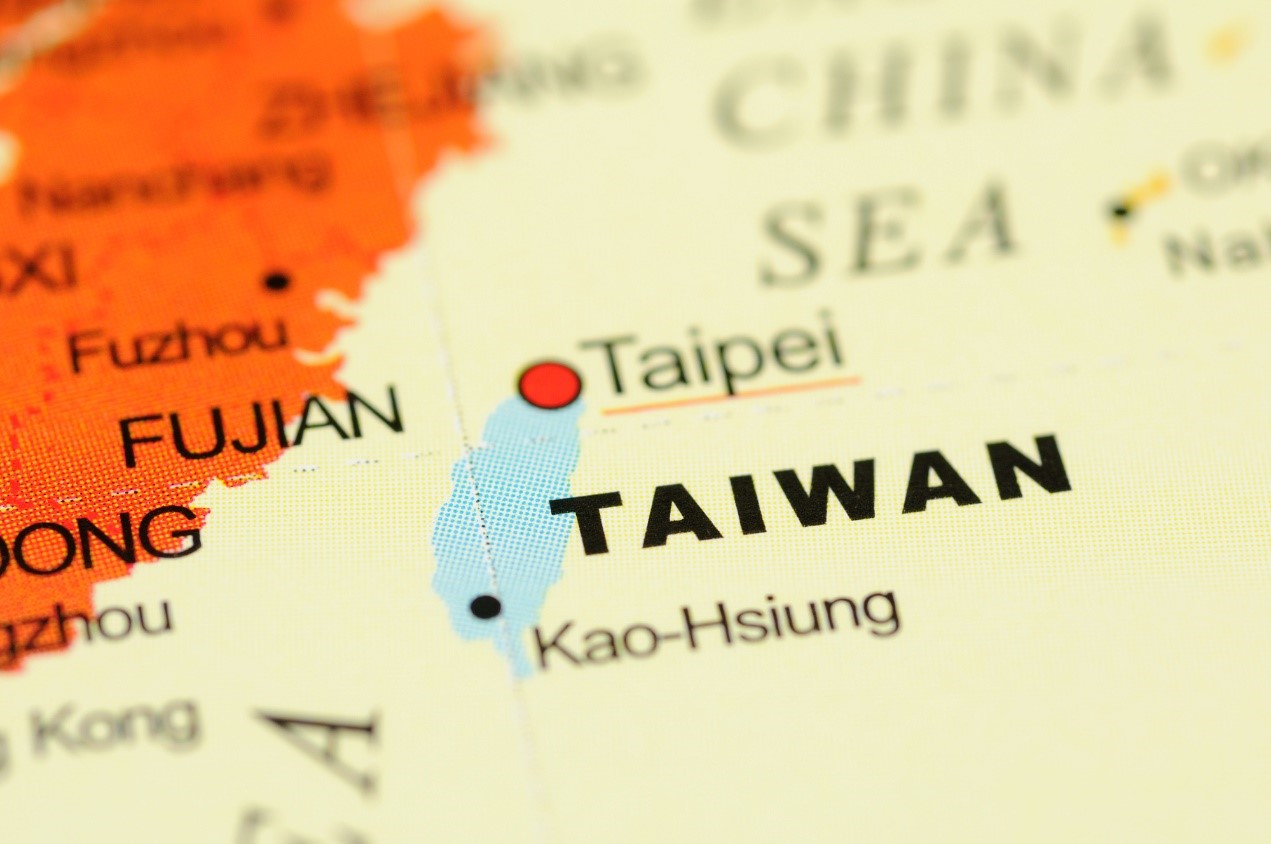
What are the implications of Zhang’s purge for the Taiwan Strait? If the above analysis is correct, it will take tremendous time for Xi to address the fundamental problems he created, and, as a result, the likelihood of him launching large-scale military operations in the short term, including grey zone coercion, is relatively low.
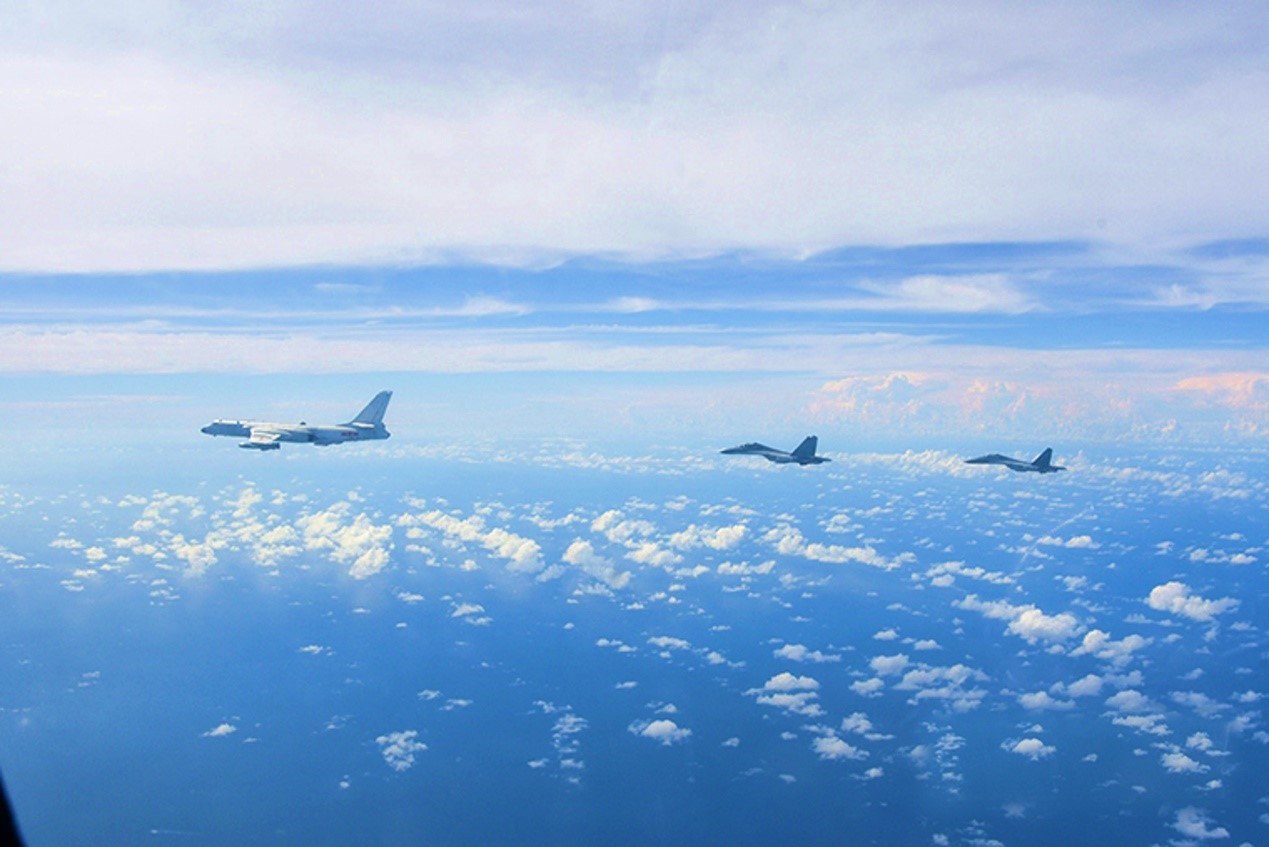
This does not exclude continuing incursions into Taiwan’s ADIZ at current levels. Since regular incursions began in 2016, the Chinese military has refined and routinized the operational plans for such power projection. And politically, Xi needs to keep the incursions in order to continuously pressure Taiwan militarily and politically.
Xi’s 2027 timeline to complete preparations for invading Taiwan may have been pushed back as he has to address the problems he has created with his purges in the military. The timeline may be shifted to sometime around 2032 when the CCP’s 22nd party congress will be convened. By then, Xi will be 79 years old, which would create new pressure to achieve his "great rejuvenation of China” by “reunifying” Taiwan.
(Dr. Ding is Professor Emeritus, National Chengchi University.)
Related Content
Prepare for War to Confront China’s ‘New Normal’ over Taiwan
The Impact of China’s Military Drills Around Taiwan on Indo-Pacific Security
An Old Dog’s New Tricks? China’s United Front Work and Taiwanese Internet Personalities

China’s Sweeping New ‘Foreign Policy Law’: Scope and Implications

Lessons for Europe from Lu Shaye's Controversial Interview
Canada Grapples with CCP Interference
Gallagher’s Committee on China: What Can We Expect?
Analyzing the CCP’s Strategy on Taiwan from China’s Two Sessions Report
What Can Taiwan and China Expect from the New U.S. Congress?
Lessons from the Defense of Ukraine for Taiwan: Territorial Defense and Energy Security
The Future Ruling Strategy of the Chinese Communist Party after the Twentieth National Congress
China’s Assault on the ‘Median Line’ in the Taiwan Strait: A New Challenge for Taipei
 Facebook
  Youtube
  Twitter