



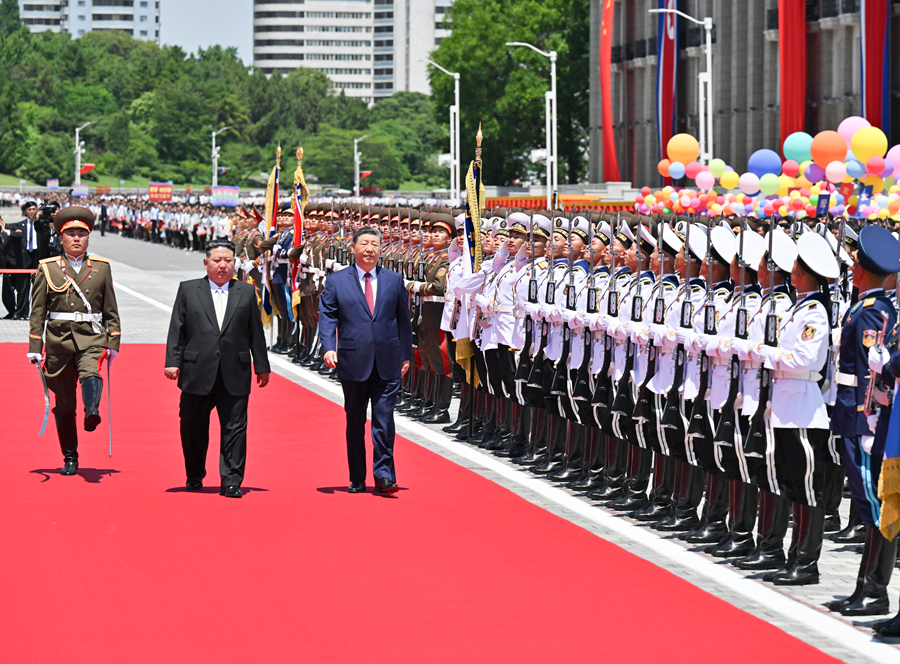
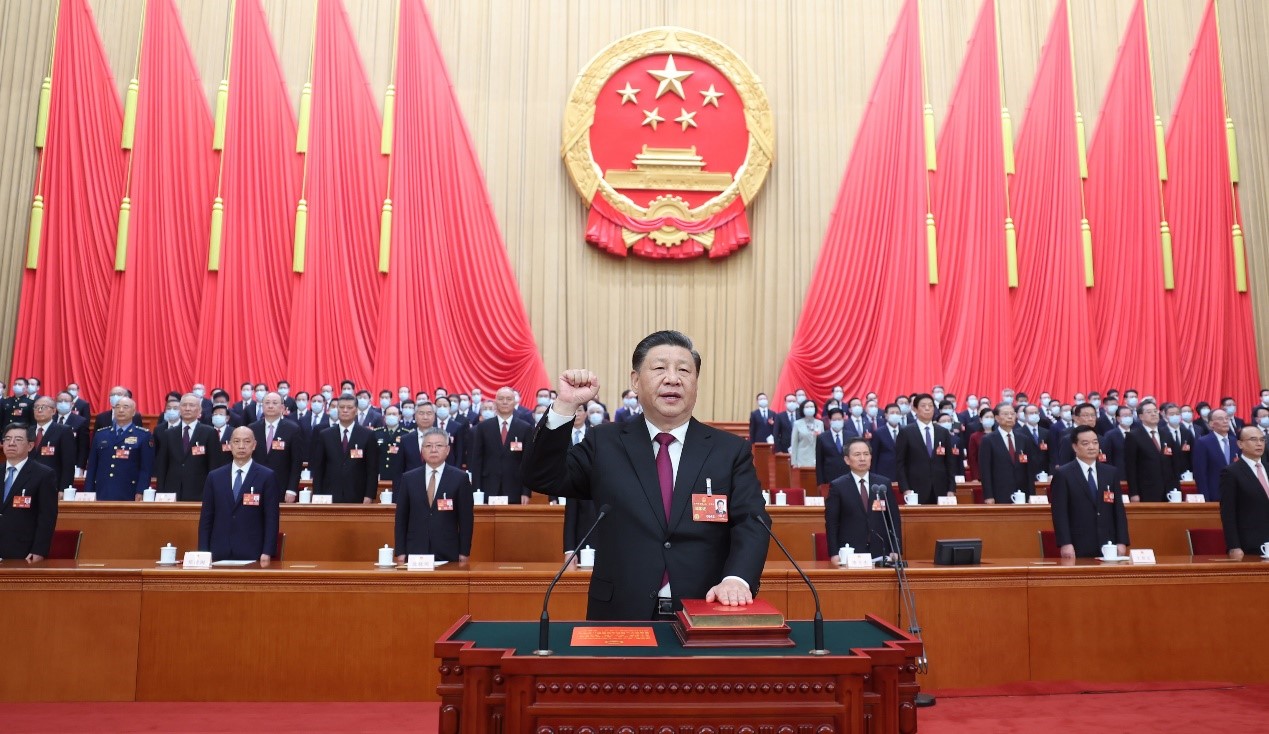
Xi Jinping’s June 8-9 state visit to Pyongyang — his first in seven years and a reciprocal visit following Kim Jong Un’s September 2025 trip to Beijing — was followed by an unusually dense series of senior exchanges in July. Together, they signaled Beijing’s effort to rebuild China–North Korea ties as a durable institutional relationship amid U.S.–China competition and expanding North Korea–Russia military cooperation. Picture source: CPC News, June 8, 2026, CPC News, https://cpc.people.com.cn/BIG5/n1/2026/0608/c435113-40736233-3.html.
Prospects & Perspectives No. 41
The China–North Korea Summit and East Asia’s Two-Theater Challenge
By Seong-Hyon Lee
Xi Jinping’s June 8-9 state visit to Pyongyang — his first in seven years and a reciprocal visit following Kim Jong Un’s September 2025 trip to Beijing — was followed by an unusually dense series of senior exchanges in July. Together, they signaled Beijing’s effort to rebuild China–North Korea ties as a durable institutional relationship amid U.S.–China competition and expanding North Korea–Russia military cooperation.
Beijing and Pyongyang have not formed a seamless strategic bloc. Mutual distrust persists, and Kim is unlikely to relinquish North Korea’s strategic autonomy. Their relationship is better understood as “symbiotic friction,” in which interdependence coexists with mutual hedging. Even so, the renewed partnership gives North Korea greater diplomatic depth, reduces Beijing’s incentive to pressure Pyongyang over its nuclear arsenal, and complicates allied planning across the Korean Peninsula and the Taiwan Strait.
From summitry to institutional co-optation
The defining feature of the rapprochement is the widening range of institutions drawn into it. Premier Li Qiang traveled to Pyongyang in October 2025, Foreign Minister Wang Yi in April 2026, and Xi in June; North Korean Premier Pak Thae Song led a delegation to Beijing in July, followed by Wang Huning’s reciprocal visit to Pyongyang.
At the summit, Xi called for stronger “top-level design and strategic guidance” (頂層設計和戰略指引), broader party-to-party contact, deeper exchanges of experience in “party and state governance” (治黨治國), and stronger cooperation among diplomatic, law-enforcement, and military organs. Wang Huning’s presentation of “Xi Jinping Thought on Party Building” (習近平黨建思想) to Jo Yong Won was especially revealing: it brought party-building doctrine and governance practice into the formal bilateral agenda, extending the relationship into the organizational foundations of regime management.
This is best understood as institutional co-optation: supplementing summitry and aid with recurring organizational ties intended to make North Korea’s choices more predictable.
The Treaty of Friendship, Cooperation and Mutual Assistance (조중 우호, 협조 및 호상원조에 관한 조약; 中朝友好合作互助條約), signed on July 11, 1961, provides more than a ceremonial backdrop. Xi described it as an “important political and legal foundation” (重要政治法律基礎), while Kim called it a “firm legal foundation” (堅實的法律基礎). Invoking the treaty after their summit, both leaders underscored that the relationship rests on an enduring interstate commitment with a security dimension, even though neither side announced new operational commitments.
More consequential is what Beijing did not say. Neither the summit readout nor the anniversary messages referred to the “denuclearization of the Korean Peninsula” (朝鮮半島無核化). This does not amount to formal Chinese recognition of North Korea as a nuclear-weapon state. Rather, it points to structural acquiescence: Beijing now places regime stability, bilateral coordination, and competition with Washington ahead of any near-term effort to press for denuclearization. China remains North Korea’s principal economic partner, with bilateral trade reaching approximately US$2.73 billion in 2025. Yet Pyongyang will continue to accept Chinese support selectively, mindful of the autonomy at the heart of Juche (주체).
A stronger strategic rear for Pyongyang
Closer ties with China give Pyongyang a more secure strategic rear, allowing Kim to engage Washington, Seoul, and Tokyo selectively and from a stronger bargaining position.
For South Korea, the principal danger is not the resumption of U.S.–North Korea dialogue itself, but “symbolic summitry” in which political spectacle substitutes for verifiable threat reduction. Seoul has moved from “denuclearization first” toward “peace first,” seeking an initial halt to North Korea’s nuclear activities while retaining denuclearization as the ultimate objective. The Stockholm International Peace Research Institute estimates that North Korea may have assembled approximately 60 nuclear warheads and possesses enough fissile material for at least 30 more.
A nuclear freeze may be a defensible starting point, but only if tied to a declaration of nuclear facilities, credible verification, and sequenced implementation. Without those requirements, it could institutionalize North Korea’s nuclear arsenal as a permanent condition. Seoul must establish this linkage with Washington before another U.S.–North Korea summit takes shape.
South Korea also faces a wider regional burden. In a Taiwan contingency, its most consequential contribution would be to deter North Korean opportunism and prevent a second front from opening on the Korean Peninsula. Large-scale redeployment of U.S. forces from South Korea toward Taiwan would weaken deterrence against North Korea. Seoul therefore needs both credible alliance-based deterrence and limited crisis-management channels with Beijing—a form of “minimum stability cooperation” (최소 안정 협력) that reduces miscalculation without weakening the alliance.
Japan faces a different but connected challenge. North Korean missiles threaten Japanese territory and U.S. bases that would support operations in a Taiwan contingency. Simultaneous crises could force Tokyo and Washington to divide missile-defense interceptors, intelligence assets, aircraft, naval forces, munitions, and logistics between the Korean Peninsula and Japan’s southwestern approaches. Prime Minister Sanae Takaichi’s pursuit of a summit over the abductee issue illustrates a further asymmetry: Tokyo seeks an opening, while Pyongyang controls whether talks occur and on what terms.
The Taiwan Strait and the two-theater challenge
North Korea’s position on Taiwan has become progressively more explicit. In April, Kim publicly endorsed China’s position under the “one-China principle.” At the June summit, he stated that North Korea would “consistently uphold the one-China principle” (始終不渝地堅持一個中國原則) and firmly support China’s defense of its core interests. In July, Pak Thae Song referred to Taiwan directly, declaring support for China in “defending its core interests on issues including Taiwan” (堅定支持中方在臺灣等問題上捍衛核心利益).
This progression matters to Taipei. It enables Beijing to present its position on Taiwan as part of a broader political alignment among authoritarian states. It also shows that support for China’s core interests has become part of the reciprocity sustaining renewed China–North Korea ties.
The strategic danger does not depend on an integrated two-theater war plan. A simultaneous or opportunistic crisis would be enough. North Korea could intensify missile testing or coercive pressure against South Korea and Japan while China increases pressure on Taiwan—either through prior coordination or because Pyongyang perceives an opening. Concurrent crises could stretch U.S. and Japanese resources and complicate decision-making in Washington, Tokyo, Seoul, and Taipei.
The “one theater” concept (單一戰區) treats the Korean Peninsula, the East China Sea, the Taiwan Strait, and the South China Sea as one operational environment, where a crisis in one area could affect deployments and decisions elsewhere. Its scope remains unsettled. Japanese reporting has included the Korean Peninsula, while the Philippines later endorsed a narrower maritime formulation that excluded it. Taiwan has applied it to first-island-chain resilience, emphasizing shared monitoring, early warning, deployment, and preparedness.
The most practical response is deeper functional coordination within existing regional partnerships. Washington, Seoul, and Tokyo should prepare for concurrent Korean and Taiwan contingencies, including missile defense, base dispersal, munitions, logistics, intelligence sharing, and crisis communications. Taiwan should strengthen its security dialogue with Japan and broaden low-profile expert exchanges across the region on second-front risks, infrastructure resilience, and supply-chain continuity.
The summit did not create an integrated China–North Korea military bloc. It produced something subtler but still consequential: a more resilient relationship that gives Pyongyang greater room for maneuver, while reducing Beijing’s concern that instability on the Korean Peninsula could distract from its broader competition with the United States. South Korea, Japan, and Taiwan should now treat the tightening China–North Korea alignment as a durable strategic reality, not a temporary diplomatic cycle. Even without an integrated command structure, Beijing and Pyongyang are increasingly positioned to apply mutually reinforcing pressure across the Korean Peninsula and the Taiwan Strait.
(Dr. Seong-Hyon Lee is a Senior Fellow, George H. W. Bush Foundation for U.S.-China Relations, Associate-in-Research at the Harvard University Asia Center.)
Related Content
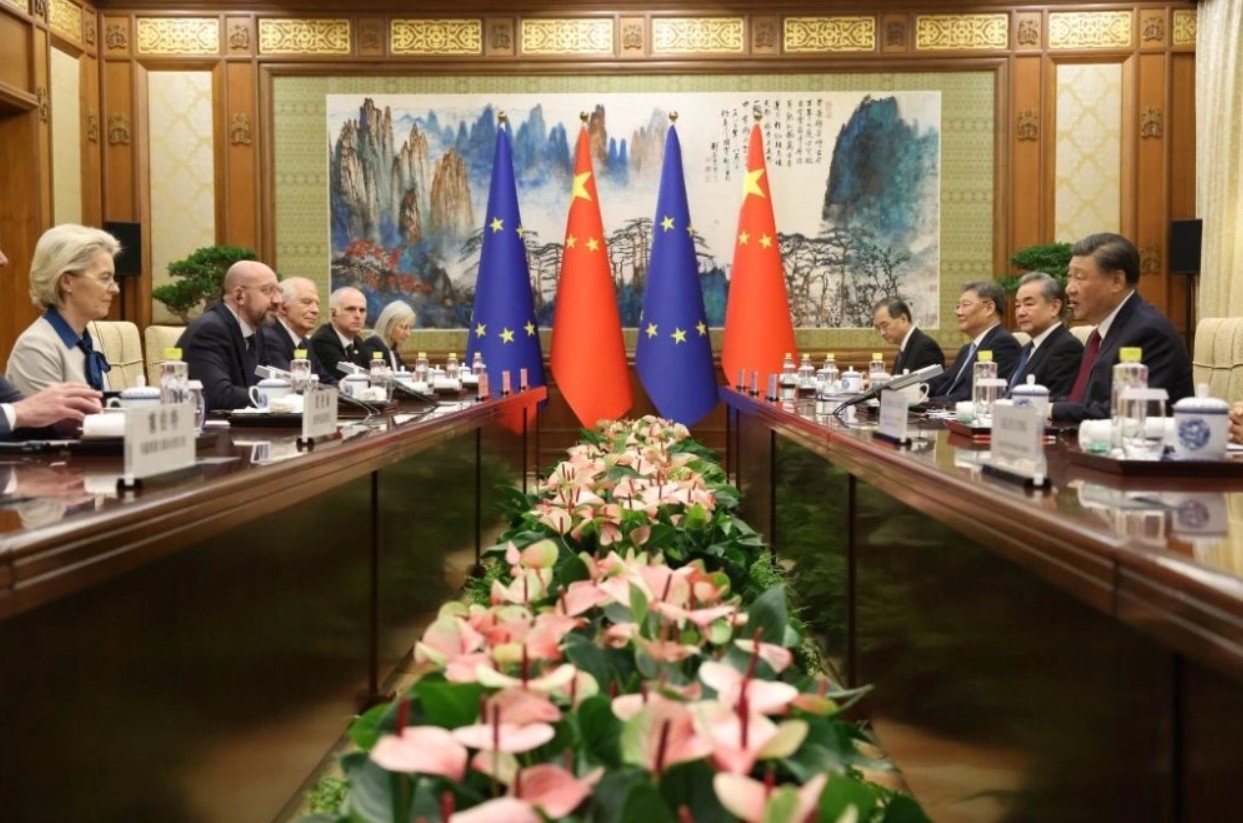
Another ‘Dialogue of the Deaf’? Evaluating the 24th EU-China Summit
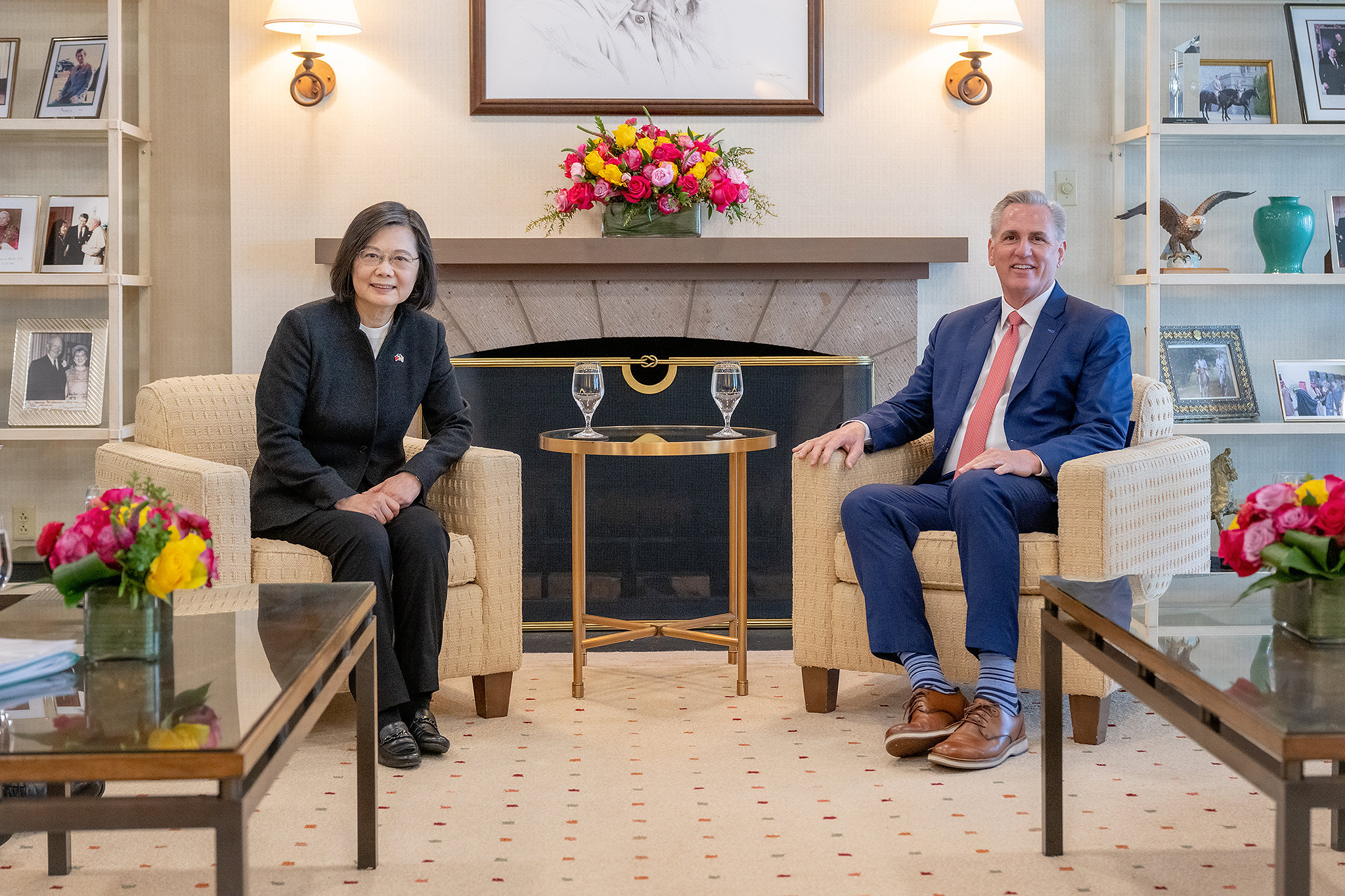
Beijing’s Overreaction to President Tsai’s Transit in the U.S.
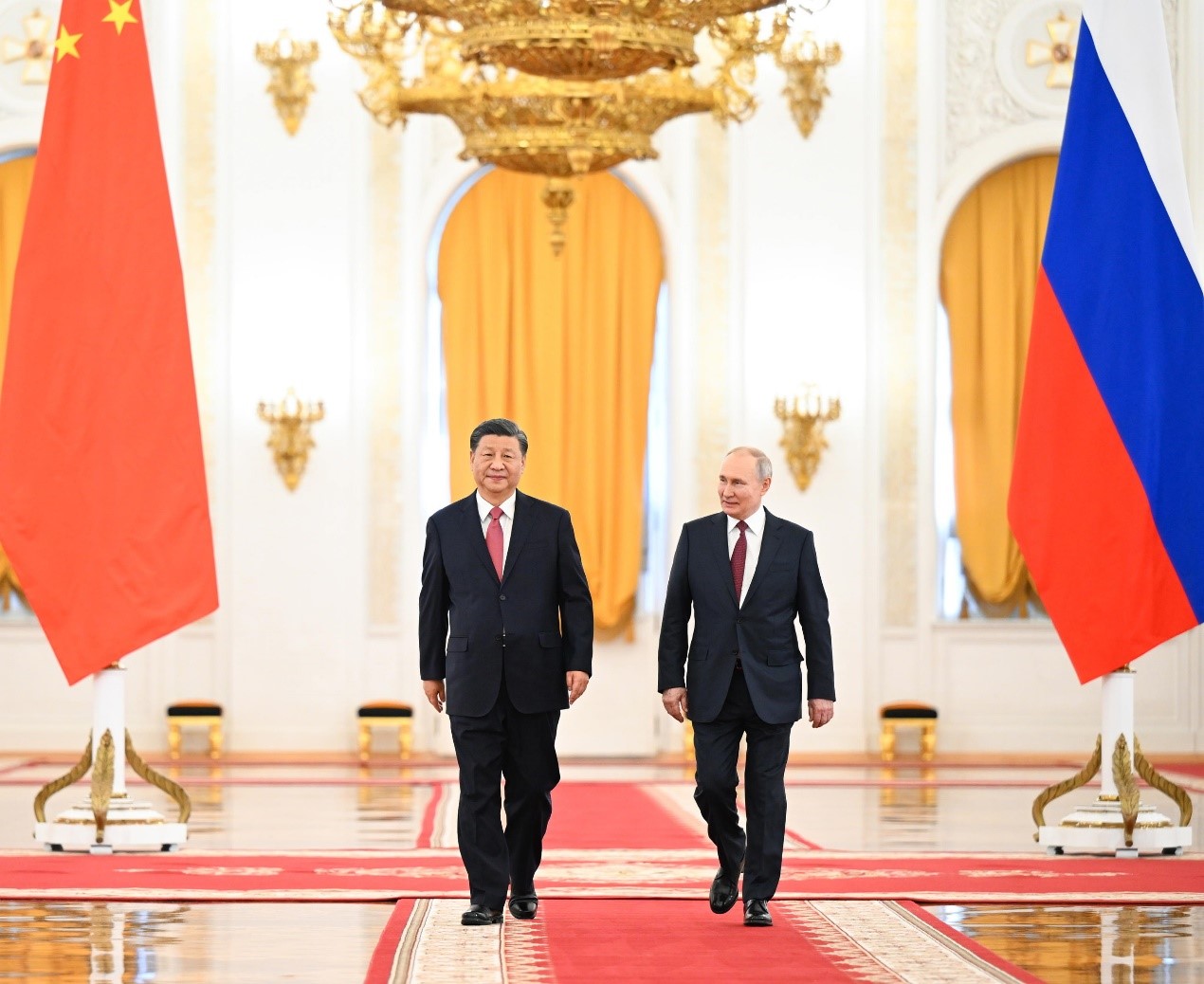
China’s Peace Plan for the Russo-Ukrainian War and its Impact on International Security
Analyzing the CCP’s Strategy on Taiwan from China’s Two Sessions Report
Has Xi Jinping Retired China’s ‘Wolf Warrior’ Diplomats?
The Impact of China’s Lifting of Covid Prevention Measures
The Significance of the Biden-Xi G20 Meeting
China’s Policy towards Taiwan after the 20th Party Congress: US Warnings about the Situation in the Taiwan Strait
The Future Ruling Strategy of the Chinese Communist Party after the Twentieth National Congress
Why Is Xi Jinping Insisting on Zero-COVID? Politics in Command and Institutional Confidence

Analysis of China’s Strategy Toward Taiwan After the Two Sessions
Xi’s Bluster Reflects Fear
 Facebook
  Youtube
  Twitter