


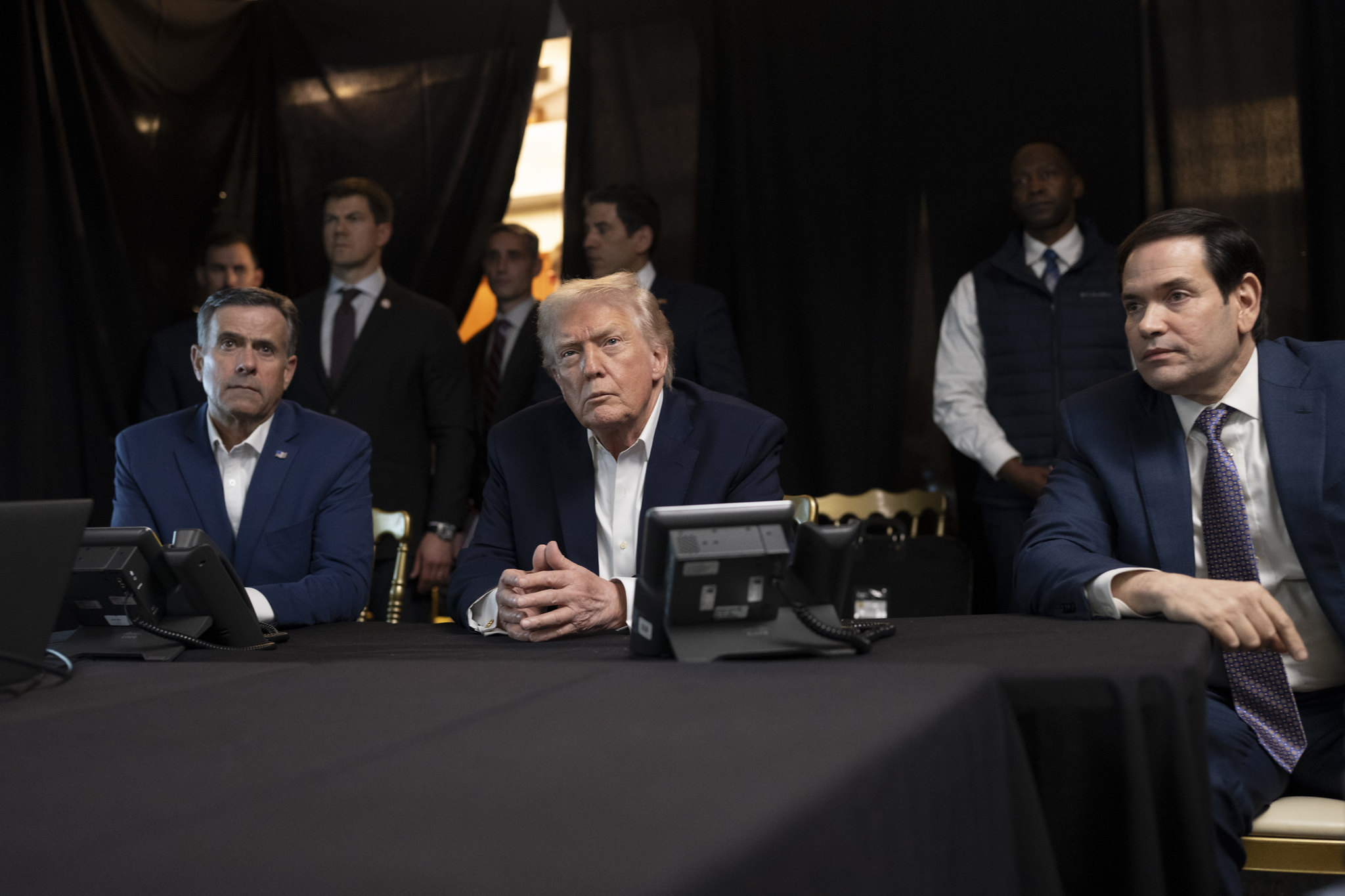
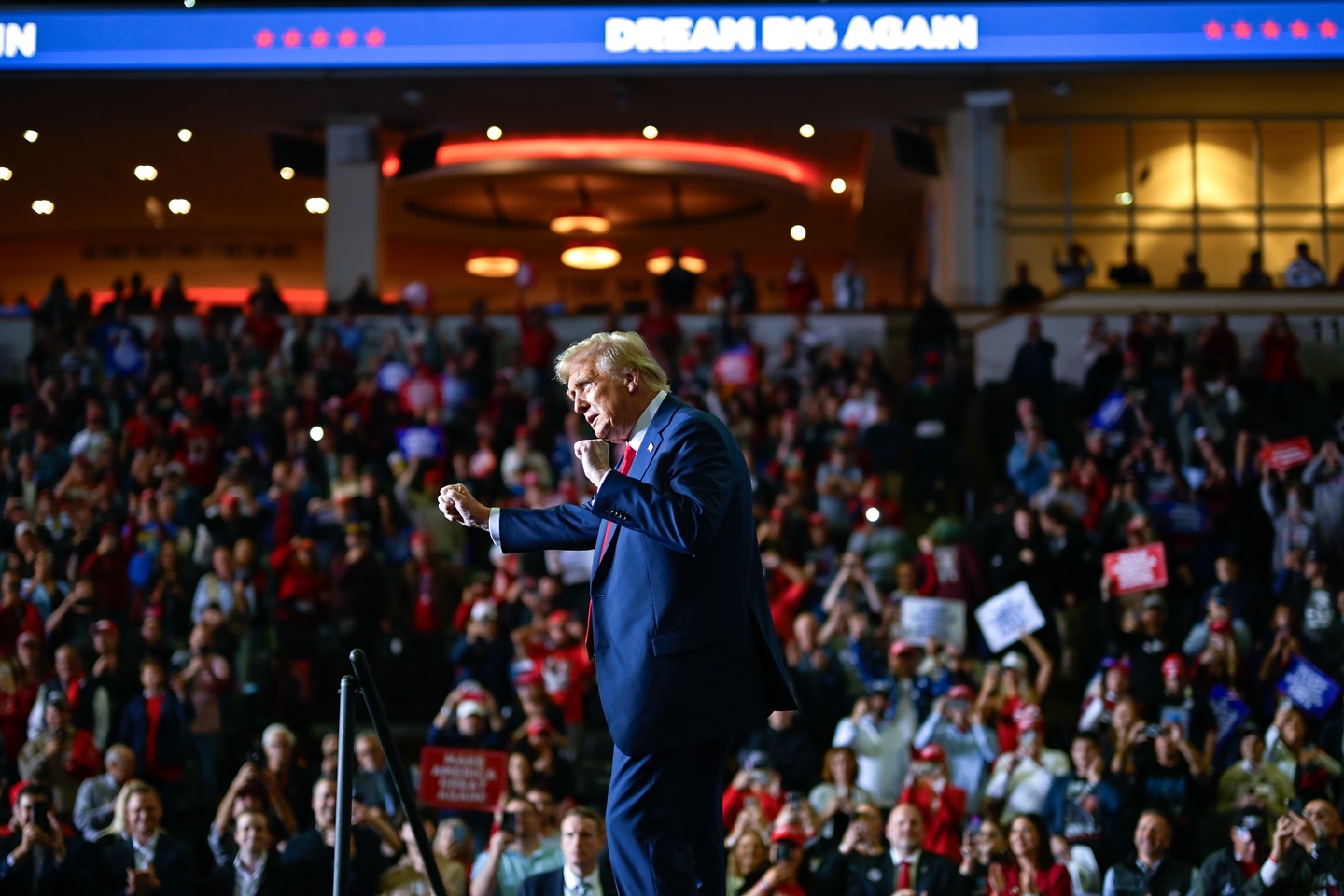
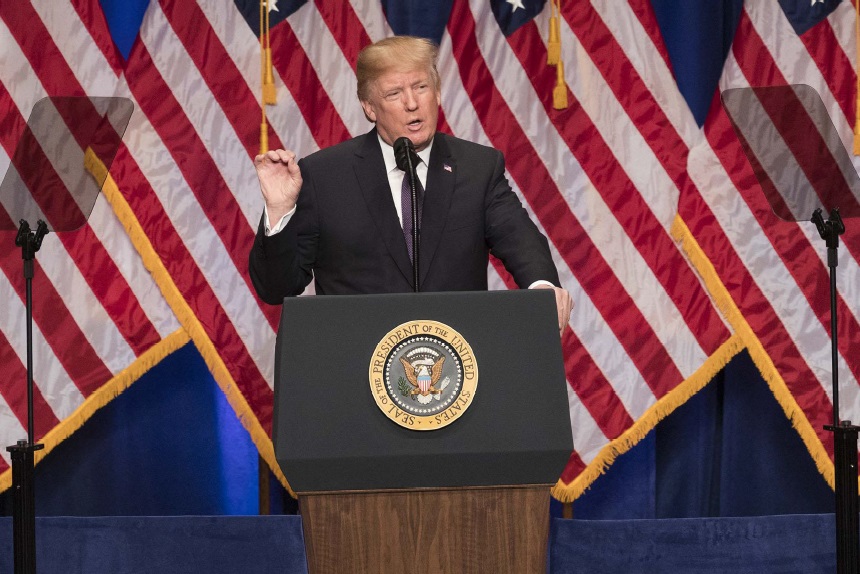
The people of Ukraine and Taiwan are demonstrating their commitment to democracy; they need only the requisite support from the United States, the world’s avatar of democracy, to succeed in their defense of democracy. President Trump should step forward at the critical moment, a historic opportunity to secure the world as we know it. Picture source: The White House, January 6, 2026, Facebook, https://www.flickr.com/photos/whitehouse/55022346073/.
Prospects & Perspectives No. 4
Trump’s National Security Strategy and the Future of the World Order
By Joseph Bosco
In December 2025, the Defense Department released its National Security Strategy (NSS) which effectively reverts back to President Obama’s NSS that officially abandoned the decades-long U.S. policy of being able to fight two major wars simultaneously. The likely adversaries at that time, as now, were Russia and China, with lesser hostile threats emanating from Iran and North Korea. Two months after Obama scrapped the U.S.’ two-wars strategy, he told Vladimir Putin that he would be “more flexible” on national security after his re-election, strongly implying that the U.S. no longer saw war with Russia as a realistic possibility.
According to that new thinking, Washington could now focus its attention on its primary adversary, the People’s Republic of China (PRC), and Obama accordingly announced a U.S. “pivot” to the Indo-Pacific. But the Obama administration’s one-war-at-a-time strategy, with then-Vice President Joe Biden managing the foreign policy portfolio, proved more than it could handle. Chinese leader Xi Jinping promised Obama during their California summit in 2013 that he would not militarize the artificial islands China was building throughout the South China Sea. But he proceeded to do just that. He also maintained his steady escalation of diplomatic, economic, and especially military, pressure on Taiwan. China suffered no unacceptable consequences from either action.
In February 2022, Putin visited Beijing where he and Xi jointly signed a “no-limits strategic partnership.” The two leaders pledged support for each other’s expansionist plans, Russia’s designs on Ukraine and China’s on Taiwan.
Back to the two-front war
Their collusion revives the dreaded prospect of a two-front war. Members of the loose authoritarian coalition have already coalesced around Russia’s leading role in confronting the United States and its allies. Iran provides combat drones and short-range ballistic missiles to buttress Russia’s efforts in Ukraine, and North Korea furnished not only millions of pieces of artillery, missiles and drones, but also more than 14,000 North Korean soldiers to help dislodge Ukrainian forces that had launched a successful surprise operation near the Russian city of Kursk. Despite massive casualties, which never inhibit dictatorships, the North Koreans eventually succeeded in driving the Ukrainian counter-invasion forces out of Russia. This first experience since the Vietnam War of a joint military operation by members of the anti-Western quasi-alliance has encouraged further coordination. The most serious danger the international community will face beyond Russia’s aggression and war crimes against Ukraine is China’s stated intention to subjugate Taiwan, either “peacefully” or using force, and its other aggressive moves in the Indo-Pacific.
Given the pledged Russia-China strategic coordination and the U.S. self-constraints of the 2025 NSS, Russia can be expected to provide both diplomatic and material support to China’s aggression against Taiwan. The fate of Taiwan—like that of Ukraine—implicates the fate of global democracy itself. The NSS addresses Taiwan’s pivotal but precarious role in the conflict though it never mentions democracy or Taiwan’s role as a democratic model in the Asia-Pacific. It focuses first on Taiwan’s geographical location in the First Island Chain dividing Northeast and Southeast Asia which controls the vital shipping lanes for one third of the world’s commerce.
Taiwan’s second economic determinant is as the world’s leading producer of semiconductors.
As the NSS states, “This has major implications for the U.S. Hence, deterring a conflict over Taiwan, ideally by preserving military overmatch, is a priority.”
A test of will
While military superiority—“overmatch”—is obviously an essential component to prevailing in a kinetic conflict, the most important element of deterrence is the will to use military force to achieve the political objective. Trump’s two recent military operations–destruction of much of Iran’s nuclear weapons capabilities and the U.S. operation to remove Nicolas Maduro from power in Venezuela, both brilliantly conceived and executed–did not involve the kind of major power confrontation that Presidents Bush II, Obama, Trump I, Biden, and Trump II all shrank from when it came to confronting Russian expansionism. All were intimidated by Russia’s brandishing the possibility of triggering World War III. When Ronald Reagan spoke of “peace through strength,” words Trump and his team regularly invoke, it was not just military power he praised, but moral example. The “shining city on the hill” was not simply glittered with gold.
From values to interests
The NSS disregards the values element in favor of an exclusive short-term, interests-based focus. The approach is styled geopolitical realism. But wars have started over values. As Iran is demonstrating today, people are willing to die to secure their rights and freedom. “Give me liberty or give me death” motivated the American Revolution and the U.S. is unique in world affairs because its values help define its interests. The U.S. Congress still adheres to that approach, whatever a temporary occupant of the White House may believe at any given time, and Beijing would make a fatal strategic mistake if it planned otherwise. The U.S. policy of strategic ambiguity on defending Taiwan is counter-productive by tempting China to believe it can create circumstances that will deter a U.S. intervention to protect Taiwan. A values-based American public represented by a values-based Congress will demand a strong U.S. response.
The NSS focuses on spheres of interest and backyards —the Western Hemisphere as the U.S.’ — reinforces China’s claim to the entire South and East China Seas, and Russia’s designs on Ukraine. The U.S.’ and the West’s emphasis on democratic values, such as freedom of expression and peaceful protest, consent of the governed, rule of law, express universal impulses and give the West an actual strategic advantage over its authoritarian challengers. Modern history has demonstrated that truth time and time again, but it needs refreshing and reaffirmation by each generation–and in locations other than the U.S. The people of Ukraine and Taiwan are demonstrating their commitment to democracy; they need only the requisite support from the United States, the world’s avatar of democracy, to succeed in their defense of democracy. President Trump should step forward at the critical moment, a historic opportunity to secure the world as we know it.
(Joseph Bosco served as China country director for the Secretary of Defense from 2005 to 2006 and as Asia-Pacific director of humanitarian assistance and disaster relief from 2009 to 2010. He is a nonresident fellow at the Institute for Corean-American Studies, a member of the advisory board of the Global Taiwan Institute and member of the advisory board of the Vandenberg Coalition.)
相關文章
President Trump’s National Security Strategy and Tensions Across the Taiwan Strait
The G7 Leaders’ Summit in France: An Unexpected Success
What Does the U.S. War Against Iran Mean for the Indo-Pacific?
The Impact of South Korean President Lee Jae-myung on the Regional Situation
The Israel-Iran War and its Potential Impact on China-Taiwan and the Indo-Pacific
From America First to the Global Landscape: The Impact of Trump’s Comeback on International Dynamics
Trump and the Axis of Disorder
Trump's National Security Strategy and Taiwan's Changing Security Environment
Reading Korea’s Early Autumn Winds: Trump Abruptly Scales Down a Major Joint Exercise
Re-Establishing Deterrence in Taiwan’s Maritime Periphery Following the China-Indonesia Naval Exercise
In a Year of Global Upheaval, ASEAN Scrapes by, Divided but Resilient
Washington Reassures (and Worries) Taiwan

 Facebook
  Youtube
  Twitter
  Podcast