

From Undersea Cable Protection to Maritime Security: Prospects and Challenges for Taiwan-Philippines Cooperation


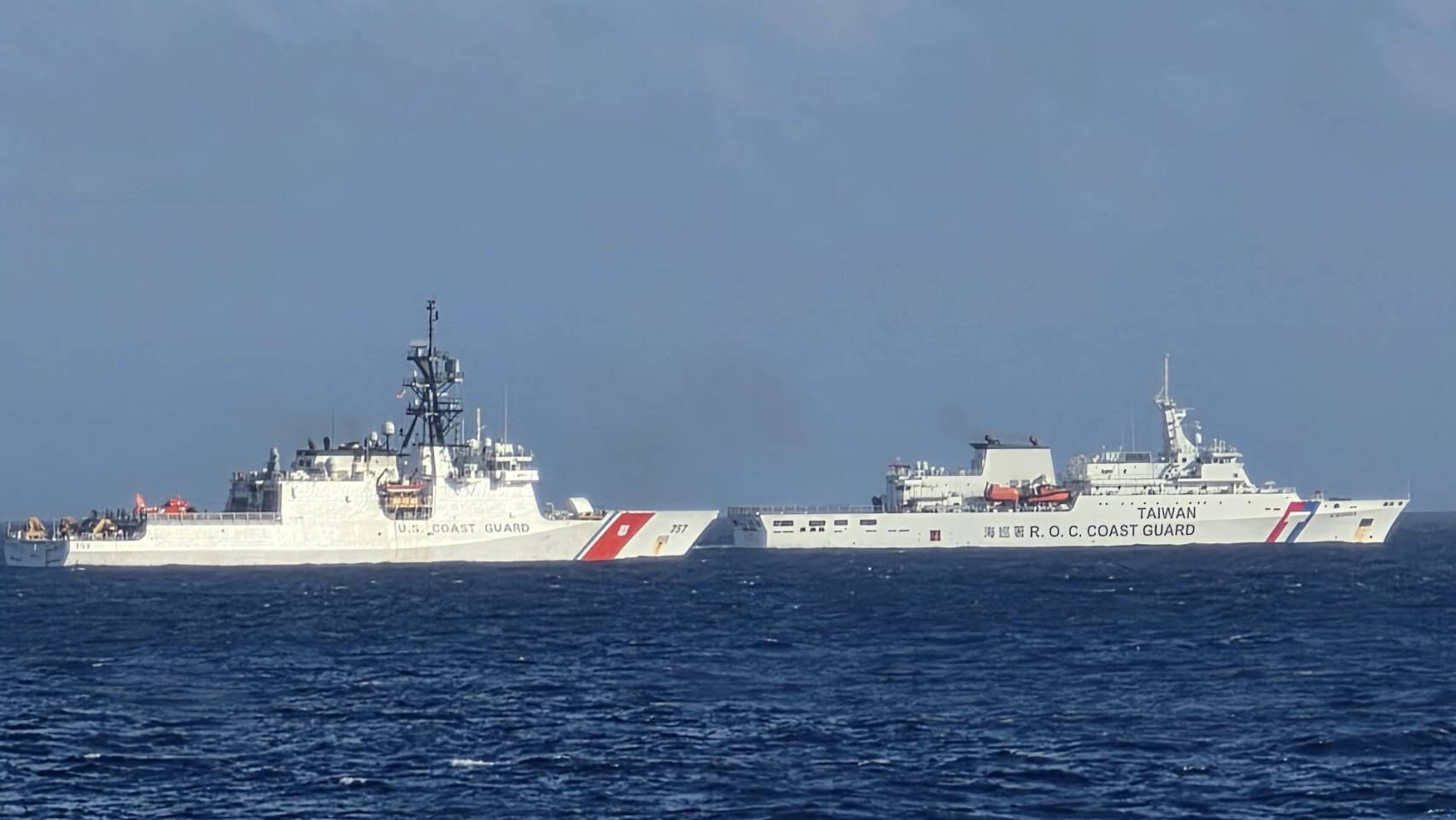
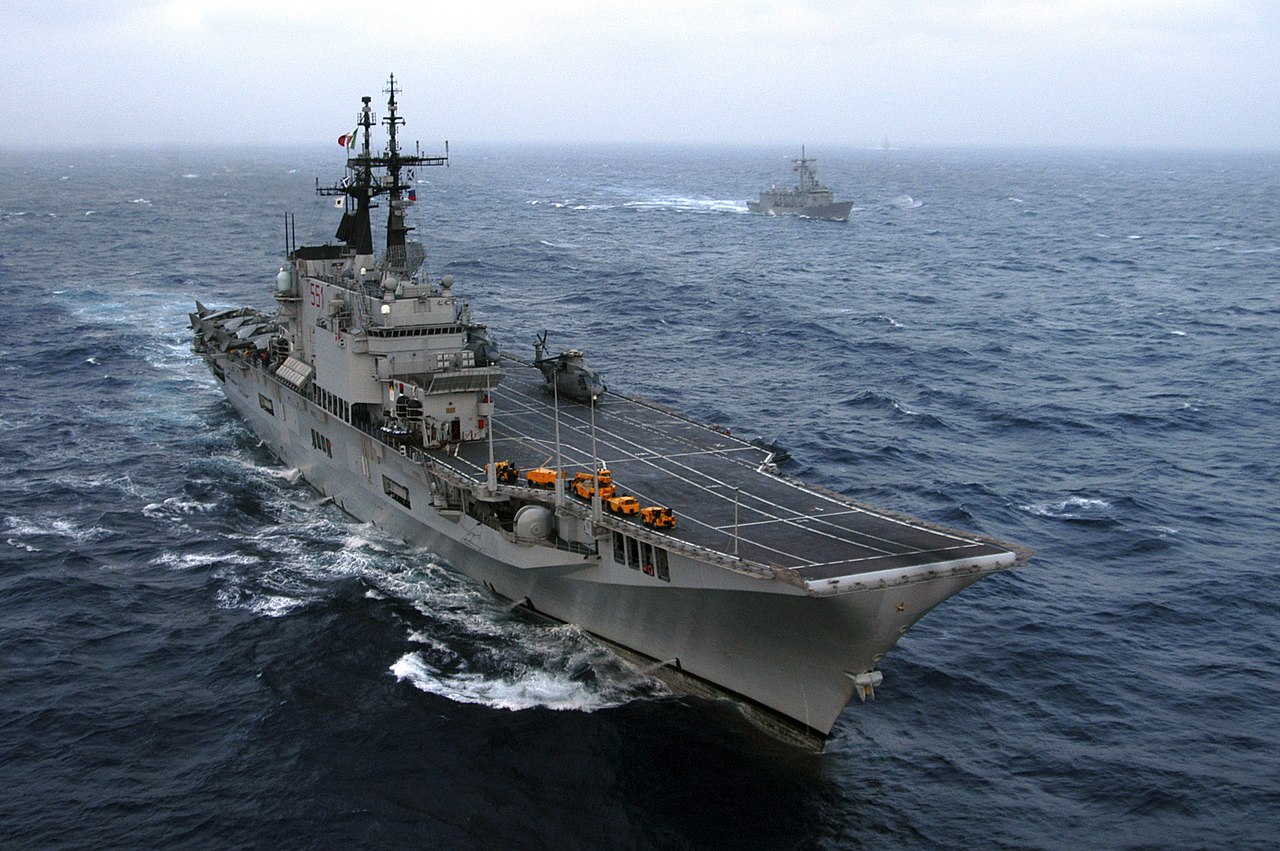
The parallel development of closer Taiwan-Philippines relations and deteriorating Philippines-China relations creates opportunities for greater cooperation between Taipei and Manila, particularly in the maritime domain, where both face increasingly similar security challenges. Picture source: Ocean Affairs Council, August 7, 2026, Ocean Affairs Council, https://www.oac.gov.tw/ch/home.jsp?id=661&parentpath=0,660&mcustomize=news_view.jsp&dataserno=202608080001.
Prospects & Perspectives No. 64
From Undersea Cable Protection to Maritime Security: Prospects and Challenges for Taiwan-Philippines Cooperation
By Yi-Chieh Chen
On October 21, Felipe F. Cariño III, Deputy Chief of Mission at the Embassy of the Republic of the Philippines, stated at a seminar held by the Center for New American Security (CNAS) that the Philippines was exploring deeper cooperation with Taiwan on undersea cable security. Five days later, however, the Philippines’ Department of Foreign Affairs (DFA) clarified that no such cooperative arrangement was in place while Beijing reiterated Manila’s commitment to its “one China” policy. These seemingly contradictory statements illustrate the diplomatic dilemma faced by countries seeking closer relations with Taiwan while maintaining ties with China.
Nevertheless, deteriorating Philippines-China relations, expanding maritime cooperation among the U.S., Japan, and the Philippines, and increasingly close Taiwan-Philippines ties have created opportunities for pragmatic maritime security cooperation to strengthen shared resilience across the Indo-Pacific.
Growing Taiwan-Philippines relations amid the Philippines-China dispute
Although advancing security-related cooperation remains challenging under Manila’s “one China” policy, economic ties and people-to-people exchanges between Taiwan and the Philippines have steadily expanded, particularly since the launch of Taiwan’s New Southbound Policy in 2016.
Bilateral engagement has also gained diplomatic momentum. In 2025, the Office of the President in the Philippines eased restrictions on Filipino officials’ travel to Taiwan, while Taiwan’s Foreign Minister, Lin Chia-lung, allegedly visited the Philippines that year. In September 2026, Taipei further confirmed plans to establish a second representative office in Cebu. These developments reflect growing engagement despite the absence of formal diplomatic relations.
Meanwhile, relations between Manila and Beijing have become increasingly strained, particularly over maritime security. At the Seoul Security Forum in September, Philippine Defense Secretary Gilberto Teodoro Jr. openly criticized China’s assertive behavior in the South China Sea and its disregard for the international rules-based order. This growing friction provides Manila with further incentives to diversify its security partnerships.
The parallel development of closer Taiwan-Philippines relations and deteriorating Philippines-China relations creates opportunities for greater cooperation between Taipei and Manila, particularly in the maritime domain, where both face increasingly similar security challenges.
The need and prospect for undersea cable security cooperation
The Luzon Strait, located between Taiwan and the Philippines, is a critical passage for digital connectivity between East Asia and the U.S. An estimated 18 undersea cables pass through the region, including at least seven directly connecting East Asia with the U.S. While natural disasters already threaten this strategic chokepoint, China’s increasing gray-zone activities have further highlighted the need to strengthen undersea infrastructure protection.
Recent incidents highlight the consequences of undersea cable disruptions. In 2023, two cables connecting Taiwan’s outlying Matsu Islands to Taiwan proper were allegedly damaged by Chinese vessels, leaving the islands largely disconnected for approximately 50 days. In October 2026, a cable connecting the Philippines and Singapore was also damaged, disrupting internet services and forcing providers to reroute traffic. Although the cause remains under investigation, the Chinese research vessel Jia Hai Ke 7 was reportedly observed loitering near a cable corridor off the Batanes Islands, raising further concerns about gray-zone operations near critical undersea infrastructure.
Taiwan and the Philippines therefore face shared maritime challenges, including potential damage to undersea cable, unauthorized seabed surveys, and suspicious vessel activities near critical infrastructure and within restricted waters. These activities vary from Chinese research vessels operating suspiciously within their respective exclusive economic zones (EEZs), Chinese-owned cargo ships lingering near cable routes, and suspected Chinese maritime militia activity. Addressing these challenges requires stronger information sharing, exchanges of operational experience, and closer coordination.
Although no formal Taiwan-Philippines maritime security cooperation currently exists, recent developments suggest opportunities for closer engagement. In October, Taiwan’s Coast Guard Administration (CGA) donated a decommissioned patrol vessel to the Philippine Coast Guard (PCG) through We Protect Our Seas (WPS), a Manila-based NGO. The CGA has also announced plans to visit the Philippines in 2027. These developments indicate the Philippines’ growing willingness to explore maritime engagement with Taiwan and could create an entry point for more concrete cooperation on undersea cable protection.
Potential pathways for cooperation
Given the diplomatic constraints imposed by Manila’s “one China” policy, involving third parties could provide a practical way to facilitate maritime security cooperation with Taiwan, thereby creating a better protected environment for undersea cables.
- Multilateral cooperation as a foundation
In both 2024 and 2025, Taiwan and Japan reportedly conducted joint coast guard drills, while pushing toward regular joint exercises involving allies and like-minded partners. These activities have been coordinated through the Japan-Taiwan Exchange Association and the Taiwan-Japan Relations Association, allowing both sides to maintain practical cooperation without formal diplomatic ties. Furthermore, in July 2026, U.S. and Taiwanese officials disclosed that their coast guards conducted a joint exercise.
These developments demonstrate that maritime security cooperation with Taiwan remains possible, despite Beijing’s diplomatic pressure. Existing cooperation involving Taiwan, Japan, and the U.S. could therefore provide both a practical framework and political motivation for Manila to explore maritime security engagement with Taipei. Involving established partners could also help mitigate the diplomatic sensitivities associated with direct bilateral cooperation.
- Areas of cooperation under multilateral frameworks
Cooperation could begin with less sensitive areas such as information sharing and exchanges of experiences. Taipei and Manila could exchange their respective legal frameworks, institutional arrangements, and response mechanisms for addressing undersea cable sabotage and other gray-zone activities at sea. Such exchanges could initially take place through third-party platforms, including international seminars similar to the CNAS event. These platforms would help normalize professional contacts while allowing both sides to assess Beijing’s reactions.
Building on informal exchanges, the two sides could subsequently explore a joint incident-reporting mechanism and participation in exercises involving a third country, such as Japan. Manila could explore the possibility of joining Taiwan-Japan coast guard exercises, particularly if Tokyo continues to seek broader participation from like-minded partners. Taipei could also explore the potential to participate in the Philippines-U.S.-Japan multilateral Maritime Cooperative Activity as an observer. The latest Activity was conducted in the West Philippine Sea in October.
Challenges ahead under Manila’s ‘one China’ policy
Despite these opportunities, the “one China” policy remains a significant obstacle for Manila. Taiwan’s international partners must navigate the diplomatic sensitivities arising from Beijing’s insistence on its “one China” principle and their own respective “one China” policies. Major powers such as the U.S. and Japan generally possess greater diplomatic and strategic leverage to manage Beijing’s reactions. The Philippines, by contrast, faces greater constraints given its comparatively limited diplomatic leverage and economic ties with China.
These constraints were evident on November 8, when the Philippines’ DFA issued a press statement urging its officials to align their comments with Manila’s foreign policy. The statement underscores the sensitivity surrounding official remarks in relation to China and implies the limits for Manila’s outreach to Taiwan.
In other words, amid the tense relations between China and the Philippines, Manila’s “one China” policy will continue to be one of the major obstacles in pushing forward Taiwan-Philippines cooperation on protecting undersea cables, even though the relationship between Taiwan and the Philippines has grown over the past few years, especially through economic cooperation and people-to-people exchanges.
(Yi-Chieh Chen is a Research Fellow at the Institute for Security and Development Policy’s Stockholm Taiwan Center.)
相關文章
Beijing’s Intensifying Pressure on Taiwan’s Passport and Consular Affairs
The China–North Korea Summit and East Asia’s Two-Theater Challenge
What If the Quarantine of Taiwan Has Already Begun?
Maritime Security in Southeast Asia: Still Business as Usual?
PM Carney’s Bold New Vision: The Good and the Bad
China After General Zhang Youxia’s Purge
August Summitry and the Russo-Ukrainian War
Whither the Cambodia-Thailand Conflict?
Narrative-Building Trumps Island-Building for Beijing in Sandy Cay
Support Behind the Façade of Neutrality: How China Shapes the Course of the Russia-Ukraine War
Assessing China’s Economic Outlook through the Two Sessions Policy and Trump’s Tariff Strategy
An Old Dog’s New Tricks? China’s United Front Work and Taiwanese Internet Personalities

 Facebook
 Youtube
 Twitter
 Podcast