

Israel’s 2026 Election: Political Change, Strategic Continuity, and the Future of the Middle East


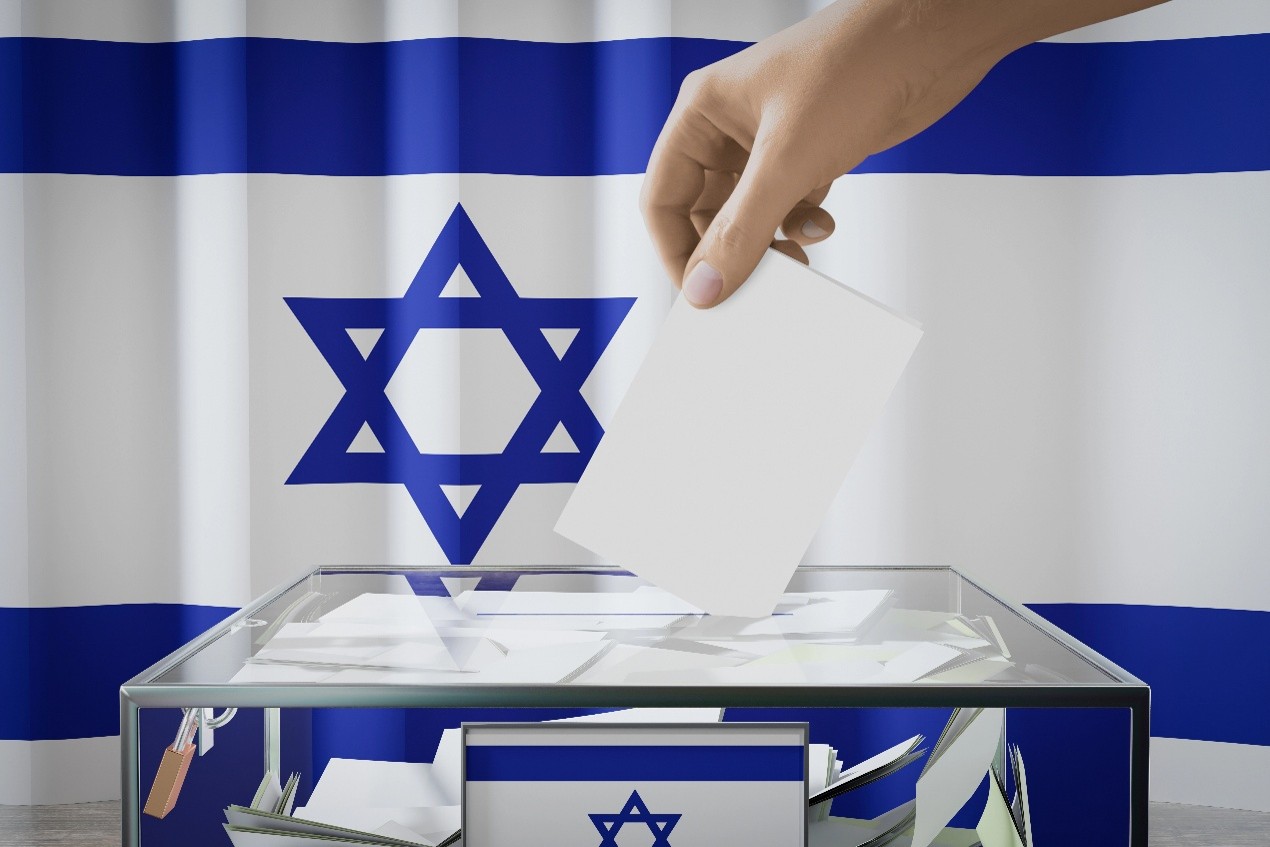
Israel’s parliamentary election on October 27, 2026, was a major political setback for Prime Minister Benjamin Netanyahu. The election also created new uncertainty over Israel’s future political leadership. Picture source: Depositphotos.
Prospects & Perspectives No. 63
Israel’s 2026 Election: Political Change, Strategic Continuity, and the Future of the Middle East
By Kuo-Cheng Chang
Israel’s parliamentary election on October 27, 2026, was a major political setback for Prime Minister Benjamin Netanyahu. The election also created new uncertainty over Israel’s future political leadership.
The results reflected deep divisions within Israeli society after three years of regional warfare, domestic political conflicts, and growing international criticism. More importantly, the election raised important questions about Israel’s future strategy and the balance of power in the Middle East.
An election victory without a parliamentary majority
Netanyahu’s Likud Party remained the largest party in the 120-seat Knesset, winning 27 seats. However, his right-wing and religious coalition secured only 53 seats, eight short of the 61 seats required for a parliamentary majority.
Former Israeli military chief Gadi Eisenkot’s Yashar Party became the second-largest party with 21 seats. Former Prime Minister Naftali Bennett’s Be’Yachad Party won 12 seats. The main opposition bloc secured 48 seats, while two Arab-led parties won a historic combined total of 19 seats.
An important political development took place on November 5. During consultations over the formation of a new government, 67 lawmakers recommended Eisenkot as the next prime minister, while 46 supported Netanyahu. President Isaac Herzog was expected to appoint a candidate to form the new government on November 8. As expected, Eisenkot was asked to form a new coalition government.
Forming a stable government will remain difficult. The potential coalition partners have different positions on the participation of Arab parties in government, military conscription, and the special privileges of religious communities.
The election showed that many Israeli voters wanted to end Netanyahu’s existing political coalition. However, the opposition parties have not yet reached a common position on several important domestic and security issues.
Gaza and the Palestinian question
The election is unlikely to bring a fundamental change to Israel’s security policy toward the Palestinians.
Both Netanyahu and Eisenkot oppose the immediate establishment of an independent Palestinian state. Both also insist that Hamas must lose its military capabilities and political control over Gaza. The main differences between the two leaders concern how these policies should be implemented and how Israel should deal with their political consequences.
Netanyahu’s coalition has supported the expansion of Jewish settlements and large-scale military operations. An Eisenkot government may adopt stronger measures against radical settlers, improve relations with the Palestinian Authority, and participate more actively in international reconstruction programs.
Gaza will remain a major challenge for the new Israeli government. Although a ceasefire arrangement was established in 2025, the disarmament of Hamas, postwar reconstruction, and the establishment of a new governing system remain difficult problems.
A new government may allow more humanitarian assistance to enter Gaza and create better conditions for diplomatic negotiations. Nevertheless, the fundamental conflicts over Palestinian sovereignty, territorial control, and Israel’s security will continue to influence regional stability.
Iran and the regional military balance
Regardless of the election results, Iran will remain Israel’s most important strategic opponent.
The joint American-Israeli military campaign against Iran, which began in February 2026, significantly changed the regional security environment. However, the subsequent ceasefire arrangements did not resolve the major disputes over Iran’s nuclear capabilities, ballistic missiles, and regional influence. Netanyahu has consistently supported military pressure against Tehran. If he remains politically influential, he may continue to advocate renewed military operations to prevent Iran from rebuilding its military capabilities.
Eisenkot has a more moderate political image, but he is also an experienced military commander. His strategy may combine military deterrence, closer coordination with Washington, and a more active diplomatic approach toward neighboring countries.
Therefore, the main difference between Netanyahu and Eisenkot concerns how Israel manages its security strategy. Their fundamental strategic objectives remain similar.
Israel’s future military strategy will depend increasingly on three important factors: maintaining air superiority, expanding its domestic defense production, and securing continued American military support. These factors will determine Israel’s ability to maintain its military advantage over Iran and other regional opponents.
Lebanon, Syria, and the risk of regional conflict
Security considerations will continue to dominate Israel’s relations with Lebanon and Syria.
In Lebanon, the weakening of Hezbollah’s military capabilities has created new opportunities for diplomatic negotiations. However, Hezbollah still maintains an armed wing and remains a long-term security challenge for Israel.
An Eisenkot government may cooperate more closely with the Lebanese government and American mediators while maintaining military pressure on Hezbollah.
In Syria, Israel’s main security concerns include hostile armed groups, Iranian influence, and control over strategically important border areas. Israel’s military operations beyond its internationally recognized borders have also caused political opposition from neighboring countries. The next Israeli government will therefore face an important strategic decision. It may continue to maintain extensive military buffer zones, or it may seek more stable security arrangements through diplomatic negotiations.
The future of Lebanon and Syria will also depend on whether regional governments can establish effective security arrangements and limit the activities of armed groups.
The United States and Arab-Israeli relations
The United States remains the most important external factor affecting Israel’s national security.
On November 3, U.S. President Donald Trump announced a policy concerning the termination of approximately US$4 billion in annual American military assistance to Israel. This announcement created new uncertainty over the future of American-Israeli security cooperation.
The existing military assistance agreement will continue until 2028. Therefore, the proposed policy change will become an important issue in future negotiations between Washington and Jerusalem.
An Eisenkot government may attempt to rebuild bipartisan support for Israel in the United States and reduce the political consequences of possible changes in American military assistance.
At the regional level, Israel also faces new diplomatic opportunities. Saudi Arabia has strong reasons to promote regional stability, technological cooperation, and economic development. However, the continuing suffering of the Palestinians and the uncertain future of their political rights have made the normalization of Saudi-Israeli relations more difficult.
Egypt and Jordan are especially concerned about the situation in Gaza and the West Bank. Their major concerns include large-scale population movements and the possibility of renewed military violence.
A new Israeli government may improve relations with Arab countries by reducing tensions over Jewish settlements, promoting peace efforts in Gaza, reducing the frequency of military operations, and adopting more moderate policies toward the Palestinians. Improved relations with moderate Arab states may also help Israel establish a more stable regional security environment.
Political change and strategic continuity
Israel’s 2026 election may become an important turning point in its domestic politics. However, the regional security environment and future American policies will continue to influence the decisions of any new Israeli government.
The weakening of Netanyahu’s political position has created an opportunity for Israel to reduce domestic political conflicts, improve international relations, and adjust its regional diplomacy. If Eisenkot becomes prime minister, Israel may adopt a more predictable foreign policy and strengthen strategic coordination with the United States and other Western countries.
Nevertheless, Israel’s fundamental strategic objectives will remain largely unchanged. These include preventing the expansion of Iranian military power, eliminating threats from hostile armed groups, and maintaining overwhelming military superiority. Therefore, the most important impact of this election on the Middle East may concern how Israel uses its military and political power.
The inconclusive results of the war against Iran may also encourage Israel to improve relations with moderate Arab countries. A more cooperative regional relationship could help Israel reduce diplomatic isolation and create better conditions for long-term security. The intensity of military conflicts in the Middle East may gradually decline. However, achieving comprehensive peace will require much more time.
The disputes over Iran’s military capabilities, Palestinian sovereignty, territorial security, and regional political influence will continue to shape the future of the Middle East. The region is now entering a new historical stage. Israel’s military capabilities, American strategic commitments, Palestinian political demands, and the policies of neighboring Arab countries will jointly determine the future balance of power.
(Dr. Chang is Professor, Center for General Education, Taipei Medical University.)
 Facebook
 Youtube
 Twitter