

Taiwan’s Unmanned Systems Industry: Contributions to National Security and Future Development


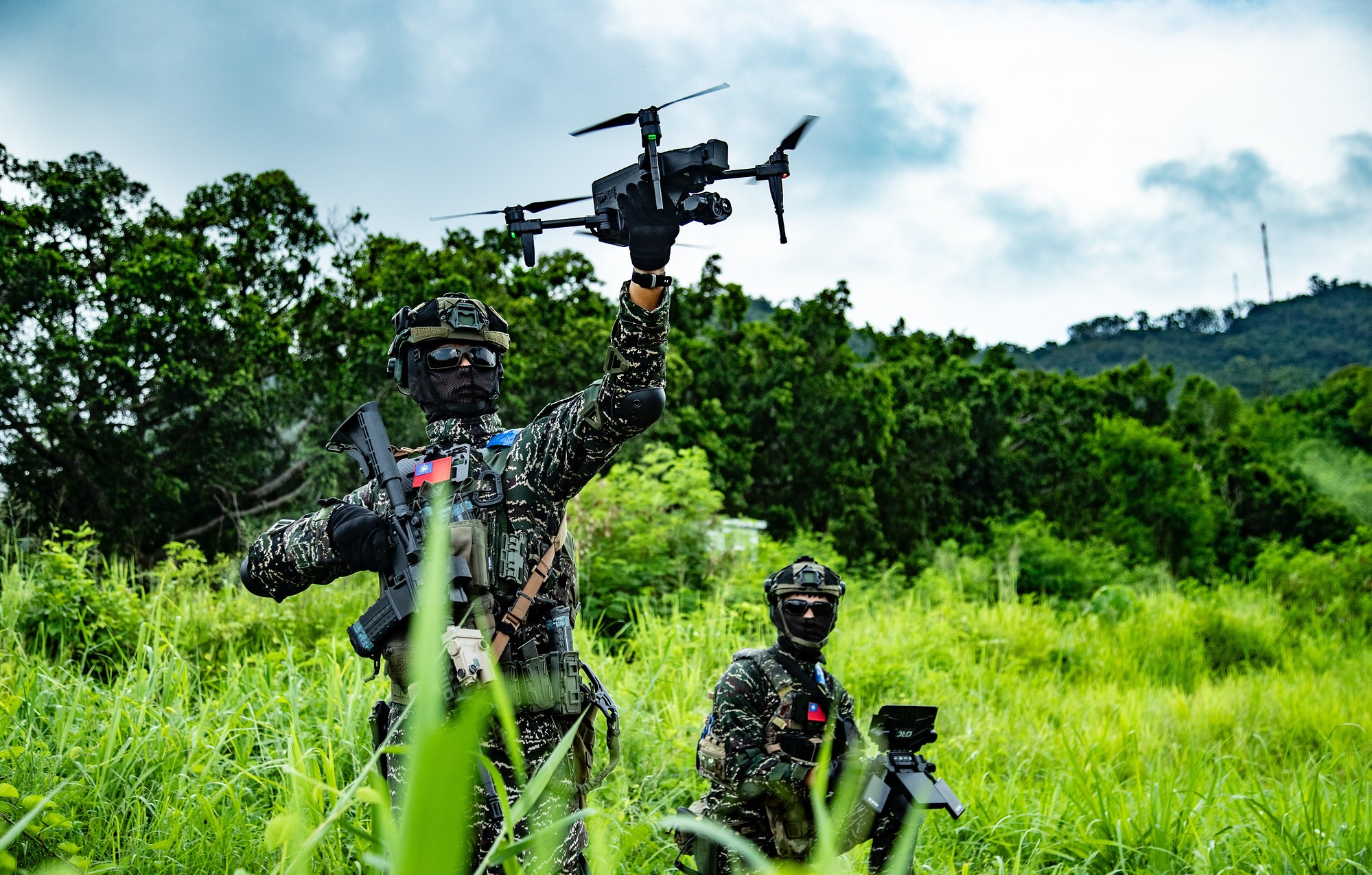
Drones and other unmanned systems are changing the way wars are fought. Taiwan already has much of what this industry needs: precision manufacturing, strong component suppliers, and a reputation for secure and reliable supply chains. If companies in different fields can work together, those strengths could be turned into new products and a real place in the global market. Picture source: 國防部 軍聞社, July 18, 2025, flickr, https://www.flickr.com/photos/141558741@N07/54662287923/in/album-72177720327615992.
Prospects & Perspectives No. 51
Taiwan’s Unmanned Systems Industry: Contributions to National Security and Future Development
By Tzu-Yun Su
Drones and other unmanned systems are changing the way wars are fought. Their uses also reach well beyond the battlefield, from commercial work to public services, so the market is likely to keep growing. Taiwan already has much of what this industry needs: precision manufacturing, strong component suppliers, and a reputation for secure and reliable supply chains. If companies in different fields can work together, those strengths could be turned into new products and a real place in the global market.
Recent wars have shown why this matters. In Ukraine, relatively cheap drones have repeatedly forced defenders to fire missiles that cost many times more. That is the logic of cost exchange. For Taiwan, fielding strike drones in large numbers could put the same pressure on China’s air defenses, wear down expensive systems, and make an attack across the Taiwan Strait far more costly.
China’s emerging military capabilities
China’s military threat to Taiwan is not new. An amphibious invasion would still be difficult and dangerous, which is one reason Beijing cannot take such a decision lightly. But peace depends in part on being ready for the worst. The international community is also watching closely. If a crisis comes, support from international partners could become part of Taiwan’s broader defense effort. That, too, belongs in the idea of defense resilience.
Beijing has spent years strengthening its anti-access/area-denial, or A2/AD, network. The aim is straightforward: even if U.S. forces enter the Western Pacific, intervention should be slow, difficult, and costly.
The People’s Liberation Army Rocket Force (PLARF) sits at the center of this effort. Systems such as the Dong Feng 16 (DF-16) threaten Taiwan and the First Island Chain, while the longer-range DF-26 and the hypersonic DF-17 are meant to hold aircraft carriers, Guam, and bases in the Philippines at risk. China has also extended the reach of its cruise missiles, long-range rockets, H-6 bombers, and submarines. Behind these weapons is a growing kill chain built from satellites, drones, over-the-horizon radar, ocean-surveillance ships, and electronic intelligence. Cyberattacks, electronic warfare, and counterspace operations are intended to blind or disrupt U.S. and Japanese forces early in a conflict, before they can respond effectively.
China’s pressure is visible around Taiwan almost every day. PLA aircraft and warships, together with coast guard vessels, operate close to Taiwan proper, shortening warning time and giving Chinese forces repeated opportunities to learn the local battlespace. The missile threat is equally serious. Air bases, ports, radars, command centers, and energy facilities could all be struck. Drones, satellites, cyber operations, and electronic attack would support those strikes by weakening Taiwan’s ability to see, communicate, and make decisions — and by putting pressure on society as a whole.
The threat has therefore moved beyond simply preparing for a future invasion. China is applying pressure now while making its forces more ready for real combat. A full amphibious assault remains one option, but it is not the only one. Beijing could also choose a blockade, missile strikes, seizure of an offshore island, cyberattacks, cognitive warfare, or a prolonged gray-zone campaign. Most of these operations would be led by the Eastern Theater Command and would require the PLA's ground, naval, air, and rocket forces to work together.
Unmanned systems as a force multiplier for Taiwan’s defense
For Taiwan, uncrewed systems can be a lever and a way to get more military effect from limited manpower and a limited budget. The PLA has many more ships, aircraft, and missiles, so matching China platform for platform is neither realistic nor necessary. Taiwan can take a different route. Air, surface, and underwater drones can form a dispersed network that is harder to find and harder to destroy. Small drones can watch the battlefield, locate targets, relay communications, and correct artillery fire. Loitering munitions can hit landing troops, armored vehicles, and supply points. Unmanned boats and underwater vehicles can lay mines, track ships, defend ports, and monitor activity below the surface. Each task adds another risk for a force trying to cross the Strait.
The advantage does not come from one exquisite drone. It comes from numbers, networking, and the willingness to lose some systems while the rest keep fighting. A large, dispersed force can make the PLA expend expensive missiles, air-defense rounds, and electronic-warfare resources on much cheaper targets. That is a favorable cost exchange for Taiwan. Drones can also take on missions that would otherwise put pilots, sailors, or soldiers in danger. This matters even more as Taiwan’s shrinking population makes military recruitment harder. Unmanned systems will not replace people, but they can help combine manpower, firepower, and computing power into a larger whole. Preparation cannot wait until a crisis begins.
The answer is not to buy a handful of highly sophisticated systems and stop there. Taiwan needs designs that are modular, standardized, and simple enough to build quickly in large numbers. It also needs communications that can survive jamming, navigation that does not collapse when satellite signals disappear, and software that allows systems to operate with greater autonomy. Civilian factories must be part of the plan. Done properly, this approach would give Taiwan more eyes, more striking power, and a better chance of continuing to fight after taking losses. That is how unmanned systems can strengthen deterrence: by making aggression more costly and its outcome less certain.
The UAS industry: Asymmetric cost advantages and a defense-economy dividend
Taiwan’s defense resources are limited, and China is gaining strength in both numbers and technology. Taiwan will need new ideas if it is to fight and win a defensive war, especially at sea and in the air. Geography alone is no longer enough. The Strait is narrow, and modern missiles, sensors, and aircraft have reduced the protection that distance once provided.
This security challenge also presents an industrial opportunity. Only a few countries — the United States, Russia, and China among them — can build complete military and civilian aircraft largely on their own. Most others depend on international partners for designs, engines, systems, and components. This division of labor keeps costs under control, but it also leaves countries dependent on foreign technology and suppliers. Drones are different. They are a newer class of aircraft, and the market is still expanding and moving quickly. That gives Taiwan room to enter. Because drones do not carry a pilot, they can usually be smaller and allow more freedom in the choice of structure, materials, engines, and system layout. These are areas that fit Taiwan’s existing strengths in precision manufacturing, electronics, machinery, and control systems. An industry alliance could bring those capabilities together instead of leaving companies to work alone. If manufacturers also cooperate with firms that understand different civilian and military uses, Taiwan could build more of the ecosystem at home, create products jointly, and compete in a market that has not yet settled into a fixed hierarchy.
(Dr. Su is Research Fellow and Director, Division of Defense Strategy and Resource, Institute for National Defense and Security Research.)
相關文章
Re-Establishing Deterrence in Taiwan’s Maritime Periphery Following the China-Indonesia Naval Exercise
The Real Shield Is in Space: Taiwan’s Path to a Resilient ‘Kill Web’
The ‘Hong Tai 58’ Case and Criminal Jurisdiction Over Submarine Cable Sabotage in ‘New’ Internal Waters

Key Takeaways for Taiwan from the Pentagon’s PLA Report
 Facebook
  Youtube
  Twitter
  Podcast