

Japan-Taiwan Relations After the Japanese House of Representatives Election


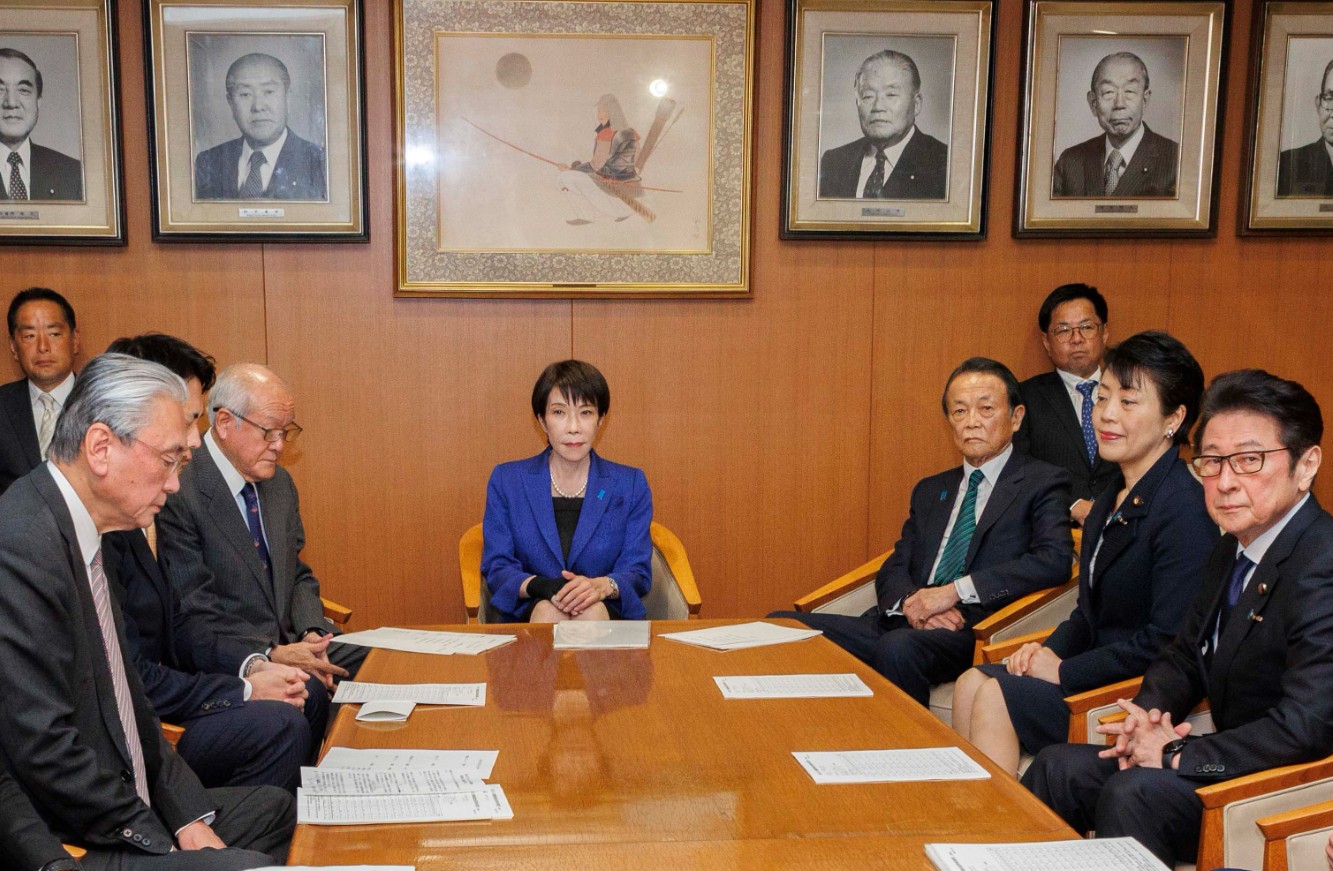
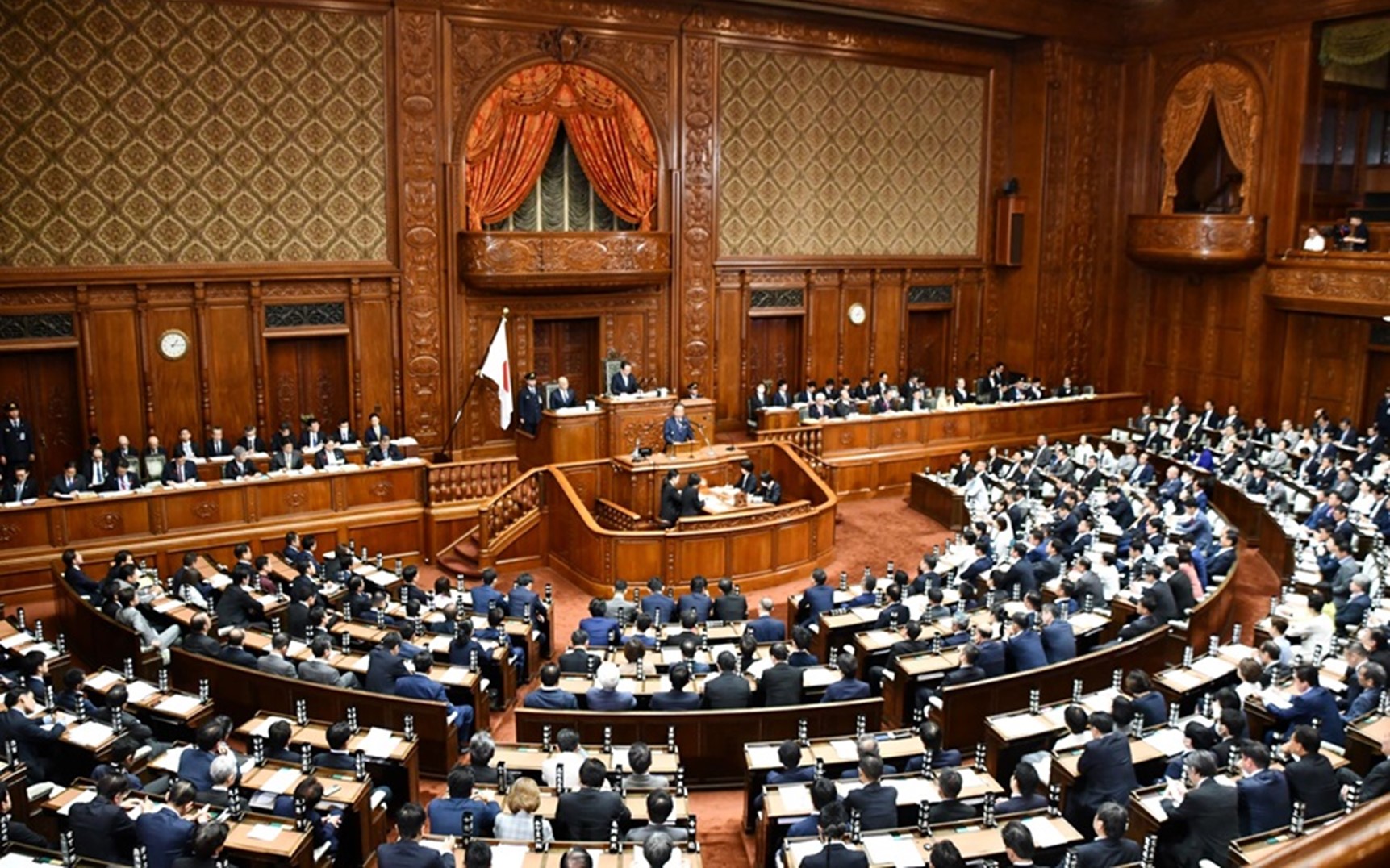
The Japanese House of Representatives election on February 8, 2026 was a resounding victory for the Liberal Democratic Party, which secured 316 of the 465 seats in the Diet. This was the first time since World War II that a single party has secured more than two-thirds of the seats in the House of Representatives. Picture source: 高市早苗, February 9, 2026, X, https://x.com/takaichi_sanae/status/2020826860532412618.
Prospects & Perspectives No. 10
Japan-Taiwan Relations After the Japanese House of Representatives Election
By Hong-Hsin Hsu
The Japanese House of Representatives election on February 8, 2026 was a resounding victory for the Liberal Democratic Party (LDP), which secured 316 of the 465 seats in the Diet. This was the first time since World War II that a single party has secured more than two-thirds of the seats in the House of Representatives. The ruling coalition formed by the LDP and the Japan Innovation Party achieved an overwhelming victory with 352 seats, exceeding three-quarters of the total, thereby seizing control of the House of Representatives.
This election result not only symbolizes the arrival of a new era in which Prime Minister Sanae Takaichi fully dominates the Japanese political scene but also establishes Japan’s future trajectory in the international community towards becoming a “normal country” with a strong national profile and major power status. It also implies the advent of the “Reiwa Restoration” era. The constitutional amendment issue became one of Prime Minister Takaichi's political platforms in this election, directly linked to Japan’s security approach to a Taiwan contingency. Therefore, the development of Taiwan-Japan relations is expected to see new opportunities with the inauguration of Takaichi’s new cabinet.
Impact on the strategic landscape
This election also had an impact on the power balance and strategic landscape in the Indo-Pacific region. Prime Minister Takaichi hopes to promote constitutional amendments to strengthen the role of the Self-Defense Forces (SDF), aiming to incorporate the SDF into the Constitution and clearly define its constitutional status. According to the current Article 9 of the Japanese Constitution, Japan renounces war as a sovereign right and prohibits the maintenance of land, sea, and air forces, as well as other war potential. In other words, Japan is prohibited from initiating war and using offensive weapons, which is why the Constitution is referred to as a “peace constitution” centered on the concept of “exclusive defense.”
However, in recent years, the frequent presence of Chinese and Russian aircraft and ships in Japan’s surrounding waters and airspace, along with North Korea’s missile tests, have posed military threats to Japan’s security. These circumstances have compelled Prime Minister Takaichi to urgently address the constitutional amendment process to align the SDF’s status and role with those of a normal country, transforming it into a legitimate “military” for national defense. On February 2, during a speech in Joetsu City, Niigata, Takaichi asked: “Why isn’t the Self-Defense Forces written into the Constitution?” She expressed her hope to amend the Constitution to elevate the SDF’s status within it.
Potential constitutional amendment
To amend the Constitution, Article 96 of the current Japanese Constitution requires that any amendment proposal must receive approval from two-thirds of the seats in both houses of the Diet and pass a national referendum with a majority vote, presenting a high threshold for constitutional change. This makes amending Article 9 a formidable constitutional obstacle for Prime Minister Takaichi. Therefore, the Japanese people, through the results of the February 8 House of Representatives election, have granted Takaichi the political power to overcome this constitutional barrier and accomplish what was previously considered an impossible task.
Good news for Japan-Taiwan ties
As early as April 2025, during Takaichi’s visit to Taiwan and her meeting with President Lai Ching-te, she pointed out that Japan’s trade heavily relies on maritime transport, and consequently any regional contingency threatening maritime routes would be a matter of life and death for Japan. Both Taiwan and Japan are island nations, and in the event of a crisis, they would face similar challenges regarding food and energy security, as well as threats to supply chains. Therefore, Takaichi believes that Taiwan and Japan should strengthen exchanges in three areas: defense, economic security, and democratic ties, emphasizing the importance of peace and stability in the Taiwan Strait. She said: “We must not give China an excuse to invade Taiwan.” Takaichi outlined three aspects to enhance Taiwan-Japan cooperation:
Firstly, exchanges in defense security, such as the Free and Open Indo-Pacific Strategy. By uniting Taiwan, the U.S., Japan, the Philippines, Australia, and even European countries with similar values, a stronger network can be constructed to jointly safeguard our security.
Secondly, connections in economic security concerning non-red supply chains, semiconductors, and advanced technologies. Both sides must first maintain and strengthen supply chain resilience. Taiwan and Japan can collaborate in fields such as AI, semiconductors, quantum computing, dual-use industries, drones, and new energy technologies to build a more resilient supply chain. Takaichi also expressed support for President Lai’s proposal to negotiate an economic partnership agreement between Taiwan and Japan.
Thirdly, democratic ties. Taiwan-Japan relations can be expanded to include cooperation with allied countries sharing values, such as the Philippines, Australia, and the United States. It is hoped that Taiwan and Japan will continue to strengthen substantial non-governmental relations, including personnel exchanges and information sharing, so that we can jointly face and address crises when they occur.
Looking ahead to the development of Taiwan-Japan relations, although formal diplomatic ties have not been established, it is inevitable that cooperation will expand across various dimensions, including party, government, economy, industry, academia, and civil society, under a quasi-official framework. Particularly, the Japan-Taiwan Exchange Association, a pro-Taiwan parliamentary group, plays a crucial role within Takaichi’s cabinet and the party’s senior ranks, indicating that as the new era of Takaichi’s administration begins, a more forward-looking and substantial Taiwan-Japan relationship will be developed.
(Hong-Hsin Hsu is Associate Professor at the Master’s Program in Japanese Political and Economic Studies, Department of Global Politics and Economics, Tamkang University.)
相關文章
Japan’s High-Stakes Snap Election and Japan’s Role in the Indo-Pacific
The “Justice Mission 2025” PLA Exercise and Japan’s National Security
Compromises in Domestic Politics and Foreign Policy: The Aftereffects of Takaichi’s Victory in the LDP Presidential Election
The Regime on a Tightrope: The Political Situation After the Japanese House of Representatives Election
Prime Minister Takaichi’s First Test in the Face of China’s Anger
The Political Landscape After the 2025 Japan House of Councillors Election
 Facebook
  Youtube
  Twitter
  Podcast