

The Eswatini Incident: Is China Changing Its Pressure Campaign Against Taiwan?


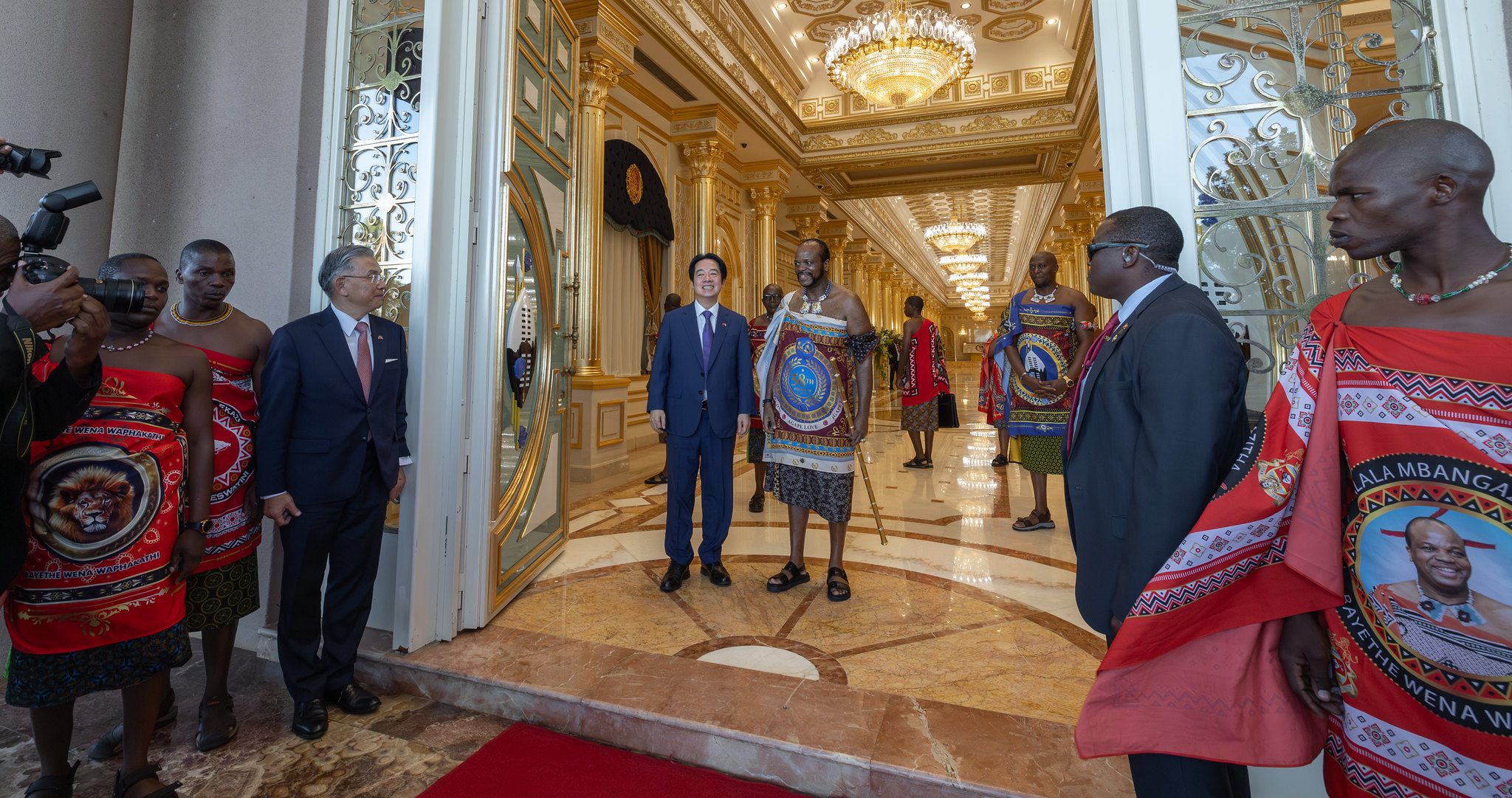
A lesson from the Eswatini incident may be Taiwan’s resilience under such pressure, one that may win it more substantive, albeit often informal, diplomatic ties. Picture source: Office of the President, May 3, 2026, flickr, https://www.flickr.com/photos/presidentialoffice/55244947673/in/photostream/.
Prospects & Perspectives No. 26
The Eswatini Incident: Is China Changing Its Pressure Campaign Against Taiwan?
By Timothy S. Rich
President Lai Ching-te postponed an April visit to Eswatini after Madagascar, Mauritius, and Seychelles abruptly revoked overflight permits on the eve of departure. (President Lai successfully broke through China’s blockade and visited the African country the following week. Lai and his delegation boarded the aircraft used by King Mswati III’s special envoy when the latter was on his return trip to Eswatini) This may not be simply a diplomatic disruption. Rather, this incident potentially represents how China intends to adapt its efforts to reduce Taiwan’s international space beyond targeting the states that recognize Taipei by targeting the pathways through which Taiwan sustains its diplomatic presence.
China’s strategy to constrain Taiwan’s diplomatic efforts is hardly new. For decades, Beijing has sought to peel away Taiwan’s remaining formal diplomatic partners, typically through a mix of economic incentives and political pressure, even using its veto in the UN Security Council to emphasize the political costs of maintaining relations with Taiwan. The result is clear: reducing Taiwan’s formal recognition to just 12 countries, compared to nearly double this just 10 years ago, with Eswatini now its sole remaining diplomatic partner in Africa after the loss of Burkina Faso in 2018. State visits to these remaining partners thus take on symbolic and strategic importance, reinforcing sovereignty claims, while providing Taiwanese leaders opportunities to deepen partnerships that Beijing actively seeks to erode.
China ramps up the coercion
Chinese pressure on Taiwan’s formal partnerships expanded both with Chinese capabilities to offer increased aid and investment opportunities and with the return of the Democratic Progressive Party (DPP) to the presidency in 2016, thus ending the so-called diplomatic truce of the previous eight years. What may be new is China’s willingness to pressure countries already recognizing Beijing to obstruct Taiwan’s ability to engage in diplomacy, all while both denying involvement and congratulating states for acting consistently with their own “One China” principle.
That distinction matters. The denial of flight permits does not appear to be a direct attempt to push Eswatini itself to switch recognition, but rather an effort to make the maintenance of that relationship logistically and politically onerous. In other words, rather than targeting Taiwan’s diplomatic partners, China may now be extending pressure to the broader ecosystem allowing Taiwan’s international space.
This is coercion through logistics, and its implications are clear.
Flight permits usually are rather routine. Yet for a country like Taiwan, access to airspace, transit points, and refueling routes, can serve as a diplomatic chokepoint, making many routine diplomatic activities for any other country logistically difficult, even when formal relations remain intact.
This suggests that China may be broadening its efforts beyond limiting formal recognition to functional access, depriving Taiwan of the typical benefits associated with the remaining diplomatic partners. Such a strategy would be consistent with a broader trend of increased Chinese pressure tactics across economic, political, and security domains.
It also reflects Beijing’s confidence in leveraging growing influence in the Global South and Africa in particular. States dependent on Chinese trade, financing, aid, or political support may not need explicit coercion to act in ways consistent with Beijing’s preferences. Eswatini already faces significant costs for remaining with Taiwan. It is the only African country excluded from the Forum on China-Africa Cooperation (FOCAC) or denied zero tariffs on exports to China, while cut off from many channels of Chinese aid and investment.
Probing Taiwan’s resilience
Forcing the Lai administration to postpone this state visit may be read as probing the resilience of relationship that have endured since shortly after eSwatini’s independence in 1968.
What makes this tactic potentially effective is precisely that it avoids the traditional costs associated with poaching one of Taiwan’s diplomatic partners, while slowly increasing the burdens of maintaining ties with Taiwan.
Such a strategy may not always favor China. This type of coercion can generate backlash as it moves beyond ordinary diplomatic competition into obstruction. Such pressure may also strengthen rather than weaken partnerships as countries commit to standing against China. Lastly, the tactic may be harder to replicate elsewhere. This strategy requires concentrated Chinese leverage. However, in areas such as Central America and the Caribbean, where many of Taiwan’s remaining partners are located, US support may offset some of this pressure.
Taiwan’s potential response
The Lai administration should not assume this tactic was a one-off but should anticipate similar actions in the future.
First, Taiwan should treat logistical resilience as a diplomatic priority. That means planning official travel with greater route redundancy, securing quiet contingency arrangements in advance. That Taiwan’s Foreign Minister Lin Chia-lung arrived days later in Eswatini suggests options remain.
Second, Taiwan should attempt to internationalize the issue. If flight permit denials are coercive, Taipei should frame these not as just a concern to them but an attack on international civil aviation norms, increasing the potential reputational costs for states aiding in China’s obstruction.
Third, Taiwan cannot respond through traditional dollar diplomacy, but should build on comparative strengths such as democratic governance, technical assistance, and public health cooperation. Increasing aid to formal partners is short-sighted. China can always offer more money and focusing on aid simply incentivizes some countries to increase demands or threaten to switch. Evidence suggests that the potential lure of the Chinese market incentivizes countries to switch recognition, creating an uncomfortable pattern: if Taiwanese aid improves a partner country’s ability to export goods, it may be exacerbating Taiwan’s own diplomatic isolation. In Eswatini’s case, having limited trade mostly with its African neighbors, likely aids Taiwan’s continued recognition.
Lastly, and perhaps most importantly, Taiwan must expand unofficial diplomatic efforts. Formal recognition matters symbolically, but Taiwan’s most consequential external relationships are its partnerships that lie outside formal diplomacy. Taiwan has increasingly blurred the distinction between formal and informal relations, which remains one of Taipei’s strongest responses to Chinese pressure.
A lesson from the Eswatini incident may be Taiwan’s resilience under such pressure, one that may win it more substantive, albeit often informal, diplomatic ties. The incident also suggests that if Beijing’s strategy has expanded to obstruct the logistics of diplomacy, then Taiwan must respond with a more diffuse diplomatic strategy as well.
(Timothy S. Rich is a Professor of Political Science and the Director of the International Public Opinion Lab at Western Kentucky University.)
 Facebook
  Youtube
  Twitter
  Podcast