



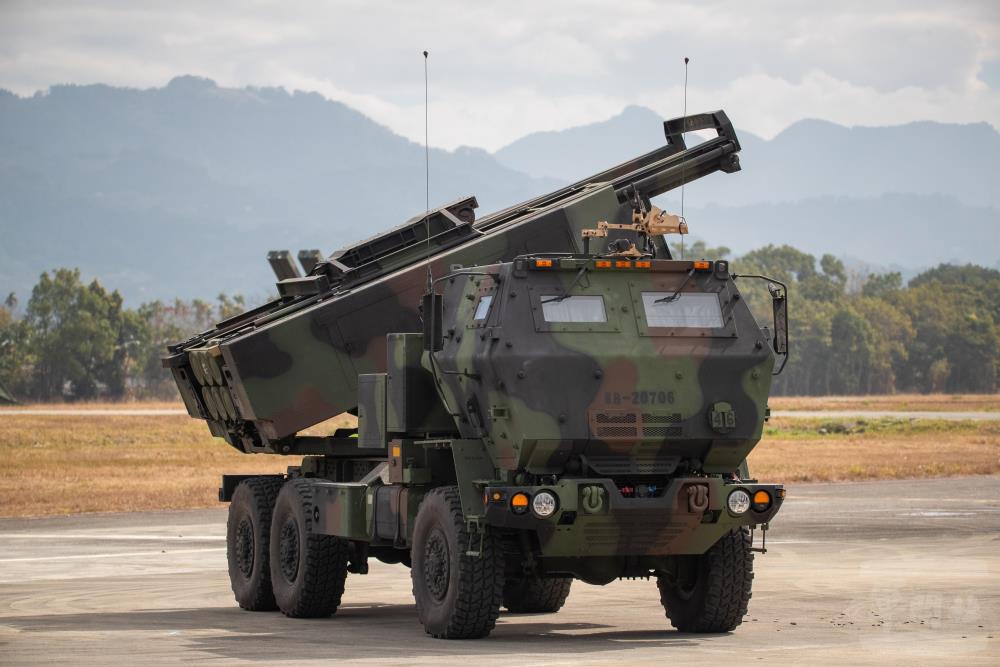
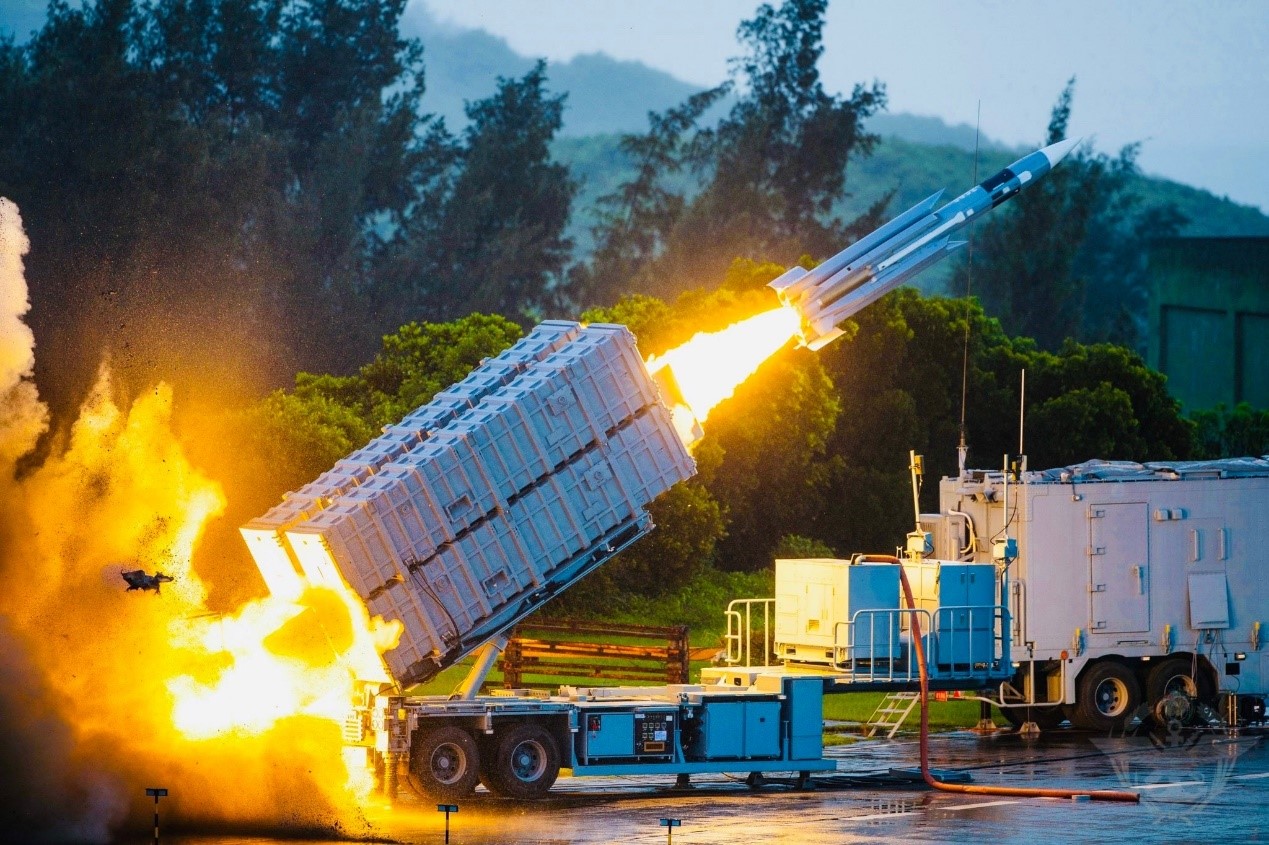
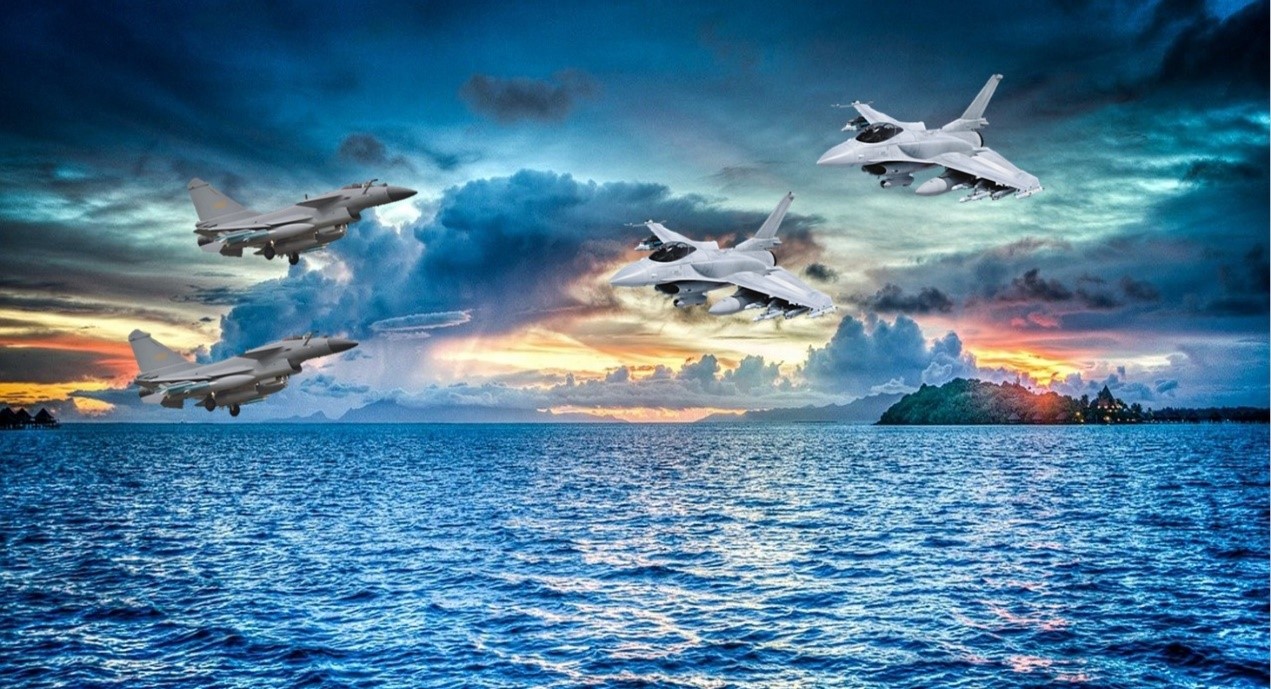
Efforts by Taiwan to bolster its deterrent capabilities are crucial. U.S. assistance in this endeavor, in the form of continued arms sales, is key — and the latest, US$11.1 billion arms package announced in December will go a long way in creating a force that can deter an attack by China. Picture source: Military News Agency, January 27, 2026, Military News Agency, https://mna.mnd.gov.tw/news/detail/?UserKey=b35e5d4d-9046-4039-a342-c3e16b064da2.
Prospects & Perspectives No. 6
Feeding the Porcupine: The U.S. December 2025 Arms Sales to Taiwan
By Richard D. Fisher, Jr.
Xi Jinping’s ongoing purge of the leadership of the People’s Liberation Army (PLA), the latest being the January 24, 2026, announcement that it will “investigate” Central Military Commission (CMC) Vice Chairman General Zhang Youxia, has fueled speculation that Xi may be seeking greater powers to launch a surprise strike against Taiwan. Given this possibility, efforts by Taiwan to bolster its deterrent capabilities are crucial. U.S. assistance in this endeavor, in the form of continued arms sales, is key — and the latest, U.S. $11.1 billion arms package announced in December will go a long way in creating a force that can deter an attack by China.
Purges and Xi’s plans
The context in which the arms sale occurred is of great relevance. Claims that General Zhang was considering a coup against Xi, or that he gave nuclear secrets to the United States, are as yet unverified. What is known is that General Zhang had family connections to CCP leader Xi and was a rare combat veteran to rise to the top of the PLA leadership. Yet he was sacrificed by Xi potentially to justify a wider PLA purge to create greater fear and obedience by the CCP, PLA, and the wider Chinese population.
As new PLA officers will more readily execute orders to avoid being purged/executed, Xi’s more direct control of the PLA means he can increase preparations for surprise aggression, like the December 2025 “Justice Mission” exercise, or fulfill reported goals of being ready to attack Taiwan in 2027 and beyond.
With his main goal of sustaining the CCP’s dictatorship, Xi understands well how a war over Taiwan could be used to sort out the leadership/loyalty and direction of the PLA.
From April 1979 to 1982 he was a low-level assistant in the General Office of the CMC, gaining a ringside seat to watch Deng Xiaoping’s use of his just concluded war with Vietnam to reform the PLA and reorder relations with Washington.
As such, it is even more essential that Xi himself understand he cannot win, and that Taiwan can defeat his blockade and invasion forces. The contents of the latest arms package should make Xi and the Chinese leadership think twice about attempting an invasion.
Deterring adventurism
This is the purpose of the record U.S. $11.1 billion arms sales package to Taiwan announced by the Trump Administration on December 17, 2025.
This largest-ever U.S. arms sales package for Taiwan includes weapons tailored specifically to help Taiwan defeat a PLA invasion, as Xi and the PLA cannot win without successfully landing thousands of troops on the democratic island.
Perhaps the most important anti-invasion weapon in this package is the M142 High Mobility Artillery Rocket System (HIMARS), with 29 sold in 2020 and 2022, and another 82 included in the December 2025 package for a total of 111.
These 111 M142 transporter-erector-launch (TEL) vehicles can carry one of the 300-400 kilometer-range Lockheed-Martin MGM-140 Army Tactical Missile System (ATACMS), which after the December 2025 arms package sale will total 502 missiles.
When launched from Northern Taiwan and the Penghu Islands, ATACMS missiles can disrupt PLA coastal invasion embarkation areas from Wenzhou in the north to Haimen Bay in the south; they can counter the PLA’s expected use of hundreds of embarkation points and thousands of civilian roll-on-roll-off (RO-RO) barges to carry armored invasion forces.
This ATACMS sales to Taiwan should be supplemented as soon as possible with the Lockheed Martin 500km to 1,000 km range Precision Strike Missile (PrSM) now entering production, with a dedicated anti-ship ballistic missile (ASBM) version expected in a few years, which can greatly extend anti-invasion operations and sink PLA Navy warships attempting to blockade Taiwan.
Furthermore, after the December arms package, Taiwan’s HIMARS will be equipped with 1,347 Guided Multiple Launch Rocket System (GMLRS) rocket pods, or Loader Launcher Modules (LLMs), which can carry up to six of the 90km range 227mm precision-guided artillery rockets, for a potential total of 8,082 rockets.
These artillery rockets likely will be used mainly in Taiwan, posing a significant threat to PLA amphibious and airborne forces that manage to land on Taiwan, and they should be supplemented as soon as possible with newer 150km extended range GMLRS-ER.
When counting the 400 150km range Harpoon anti-ship cruise missiles sold in 2020, the U.S. could be selling nearly 9,000 precision guided missiles to Taiwan, which helps explain why the U.S. is also assisting Taiwan’s Ministry of National Defense with a new Joint Firepower Coordination Center, that will in part coordinate missile operations — and hopefully, benefit from the massive U.S. surveillance and targeting network.
Another significant threat to PLA invasion forces included in the December 2025 package is the sale of 1,050 2-4km range FGM-184F Javelin soldier-launched anti-tank missiles, which since 2022 Ukraine has used to devastate Russia light, medium and heavy-weight armor.
To these will be added the sale of 1,545 4.5km range TOW-2B (BGM-71F-7-RF) optically guided anti-tank missiles.
Only PLA armor with active protection systems (APS) stands a chance against the Javelin and TOW anti-tank missiles.
Also contributing to the anti-invasion mission, the December 2025 package includes 16 M109A7 self-propelled 155mm artillery systems, half of a planned purchase of 120, to modernize previous sales of 225 M109A2/A5 systems.
This latest sale will be supported by the sale 4,080 precision guidance kits for 155mm artillery shells, that can reach up to 30km for rocket-assisted shells, which pose a significant threat to PLA amphibious forces at the shore-line, or airborne forces gathering to attack.
Of great future significance for the anti-invasion fight, the December 2025 package included a US$1.1 billion sale of an unknown number of U.S. unmanned-autonomous weapon maker Anduril’s ALTIUS-600M (400km range, four-hour endurance) and ALTIUS-700M (160km range, 75min endurance) loitering munitions.
These give Taiwan great flexibility to attack large numbers of invasion ships in the Taiwan Strait, or invading PLA armor, with autonomously guided small cruise missiles. It also advances Anduril’s ambition to co-produce in Taiwan its more advanced 500km range, low cost, Baracuda-500 autonomously-guided cruise missile.
Anduril and other U.S. companies such as General Atomics and Lockheed Martin are also leading American development of jet-fighter size unmanned autonomous combat aircraft, a group of which could be commanded by manned aircraft pilots or ground-controllers, giving Taiwan opportunities to exploit the next generation of long-range autonomous aerial combat capabilities.
All these systems — when added to the Lai Administration’s plans to procure 100,000 domestically built drones by 2028, including small soldier-operated drones and unmanned ship USVdrones, in addition to large numbers of Taiwanese produced missiles — serve to advance the longstanding American goal: shared increasingly by Taiwan’s military planners, of turning Taiwan into a military “porcupine” resistant to invasion and blockade.
Reflecting Trump’s NSS
The arms package is perfectly in line with the Trump Administration’s November 2025 National Security Strategy, which states:
“Hence deterring a conflict over Taiwan, ideally by preserving military overmatch, is a priority. We will also maintain our longstanding declaratory policy on Taiwan, meaning that the United States does not support any unilateral change to the status quo in the Taiwan Strait…We will build a military capable of denying aggression anywhere in the First Island Chain. But the American military cannot, and should not have to, do this alone.”
By stepping up to approve the Lai Administration’s spending plans for the defense of Taiwan, the KMT can help generate 11.1 billion reasons for Xi Jinping to reconsider his plans to invade Taiwan. They then can also unleash the billions in additional funding for arms sales being planned by Taiwan and the United States to create “overmatch” that deters.
(Richard D. Fisher, Jr. is Senior Fellow with the International Assessment and Strategy Center.)
相關文章
‘Tiger Head with a Snake Tail’: The PLA’s ‘2025 Justice Mission’ Exercise
The CCP’s 4th Plenum: Is China on the Right Path?
No Rain on This Parade: New Directions for China’s Military Thinking?
The Specter of a Broader Regional Maritime Conundrum Over Taiwan
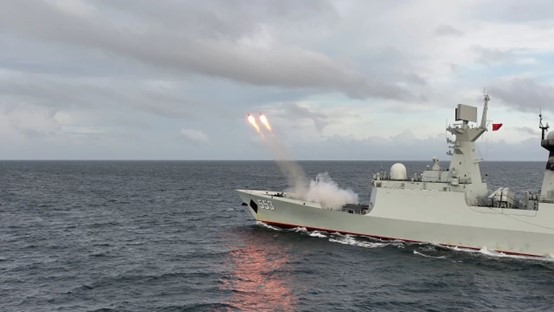
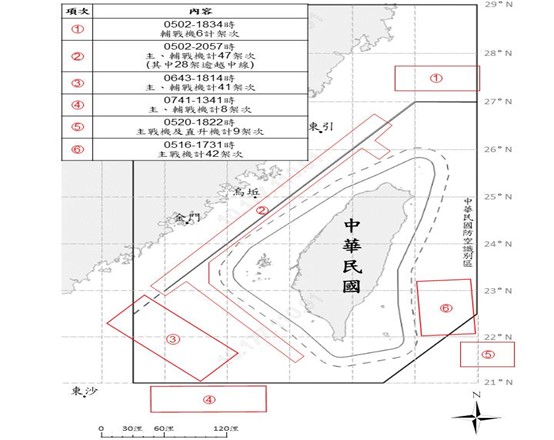
China’s ‘New New Normal’ Military Exercises Against Taiwan and Their Implications
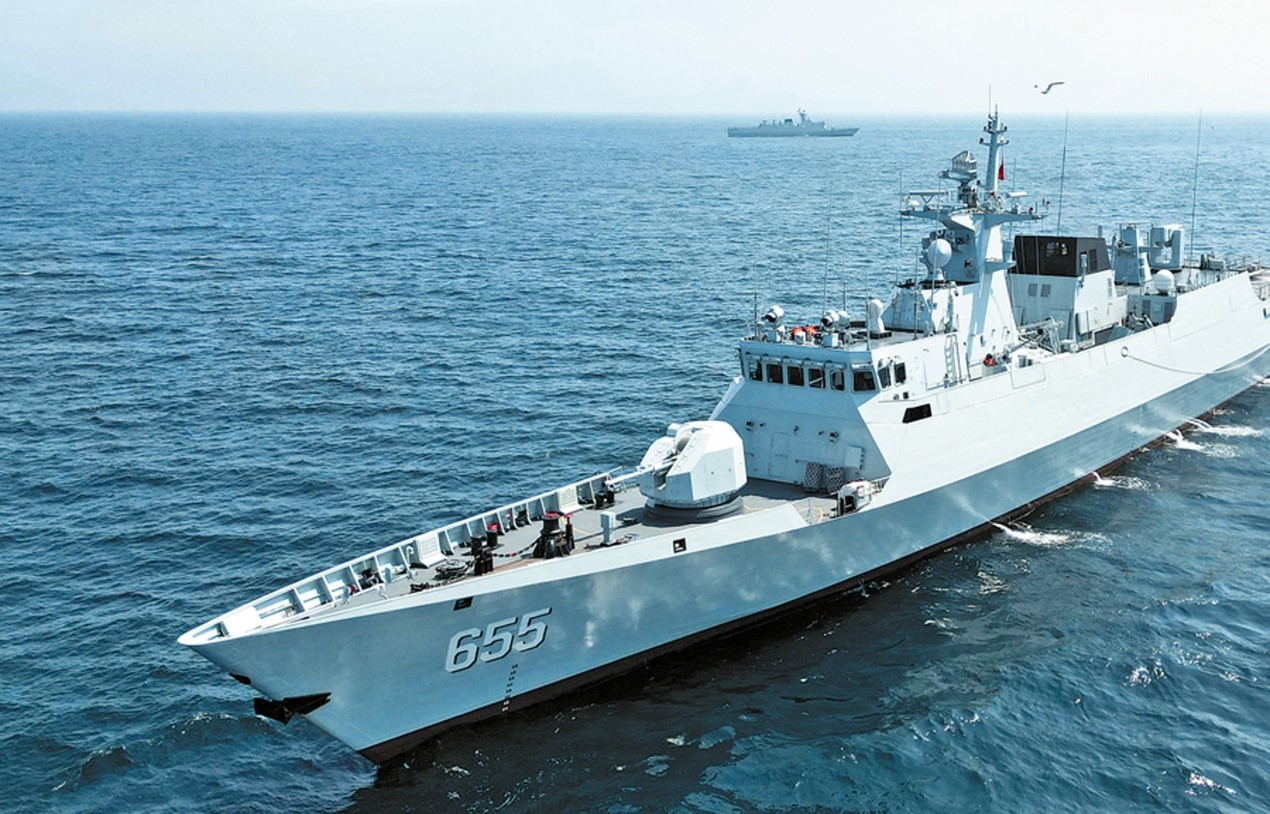
Four Major PLA Exercises Around Taiwan Since 2022: Significance and Possible Future Trends
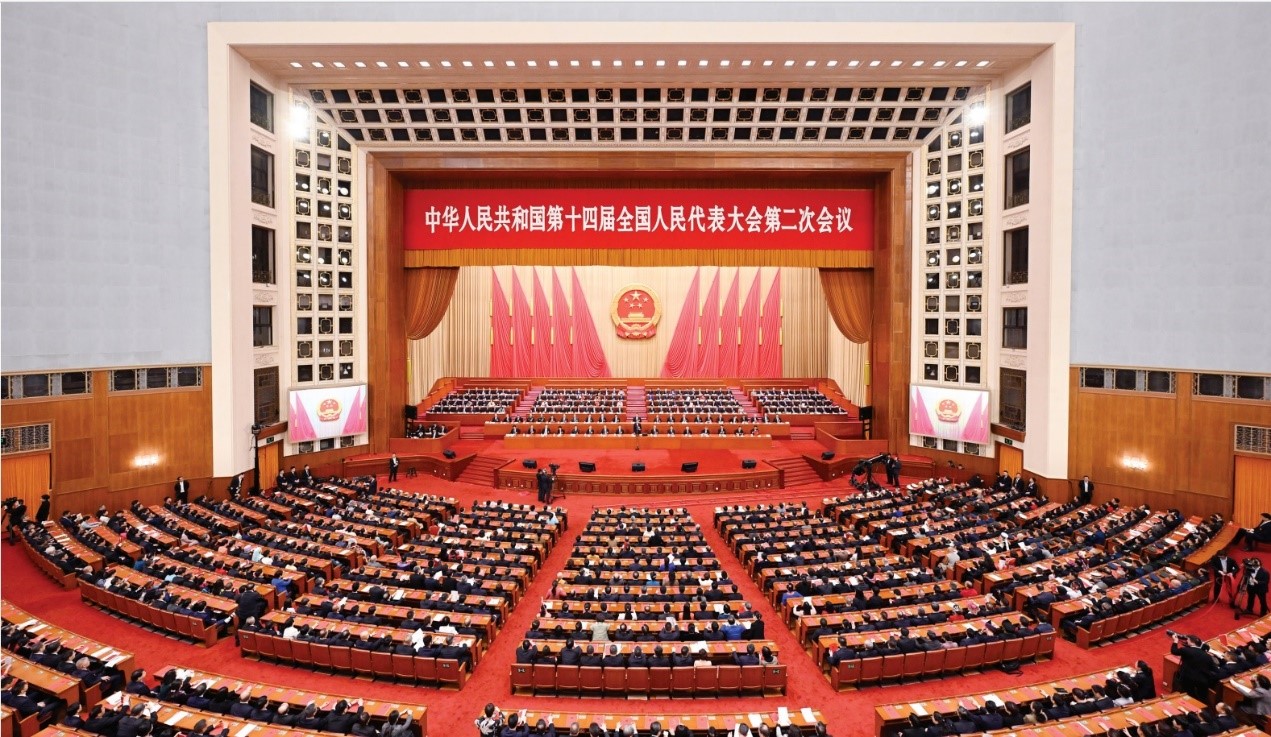
Key Takeaways from the 2024 National People’s Congress
Lessons from the Defense of Ukraine for Taiwan: Territorial Defense and Energy Security
Prepare for War to Confront China’s ‘New Normal’ over Taiwan
China’s Assault on the ‘Median Line’ in the Taiwan Strait: A New Challenge for Taipei
The Impact of China’s Military Drills Around Taiwan on Indo-Pacific Security
How the Russian War on Ukraine Will Change China’s Calculations in the Taiwan Strait
 Facebook
  Youtube
  Twitter
  Podcast